Sky deal heralds whole new era
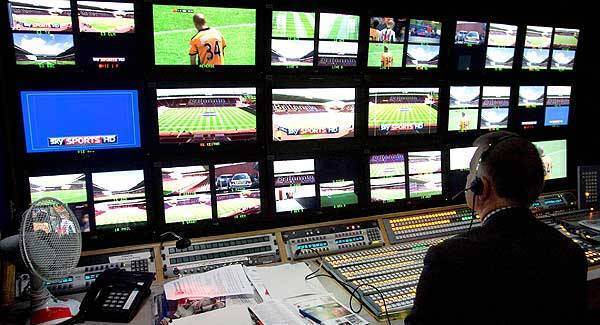

Although he did not specifically mention the Rupert Murdoch-owned corporation, O’Neill spoke of the possibility of the GAA establishing a digital television station if the cutbacks at RTÉ continued to reduce Gaelic games’ presence on the national airwaves. “Other sporting bodies have done so successfully,” he said.
O’Neill was in no uncertain terms stating the GAA were in the process of upping their game and expected prospective suitors to do otherwise.
Stadium and commercial director Peter McKenna and the association’s director of communications Lisa Clancy have taken the lead roles at the rights negotiating table, but O’Neill has always been well briefed on matters.
Going back to 2012, he privately mentioned the chances of the GAA doing business with Sky were more than likely as international rights became a priority.
After being stung in the last round of talks and seeing the package sold off to a third party for more money, they weren’t going to be fooled again.
Although the message from Croke Park hasn’t always been consistent, O’Neill’s public utterances haven’t altered. On the hurling All Stars trip last December, he refused to rule out a pay-per-view deal.
Sky themselves made an announcement of sorts in 2012 with their €1.2m HD Summer of Sport ad campaign on TV, online and billboards, which featured Bernard Brogan and Henry Shefflin.
At the time they had no connection to the Championships but they were ironically promoting the addition to their platform of RTÉ Two HD, who were showing the lion’s share of games and will do so again this year.
But it was former GAA president Nickey Brennan’s Kilkenny People column last November, which provided the biggest indication that Sky’s play for a tranche of rights was going to be successful.
Credited with bringing a more business-style ethos to the central GAA, Brennan is the group purchasing manager, business services and IT in Glanbia, and he headed up the IT and communications committee under his successor Christy Cooney. His contacts would also remain strong with Croke Park.
He wrote: “Of all the bidders now, none possess the resources of Sky Sports. Those resources are more than just financial because it is their technical input which must be exciting many in the GAA. In addition, the opportunity to broadcast Gaelic games to a UK audience is also an important consideration.
“Like Setanta Sports years ago, there will be opposition to awarding any Gaelic games contract to Sky Sports. The Rupert Murdoch-owned organisation will not get the primary contract this time but I expect that Sky Sports will be a GAA media partner in some capacity in 2014. The dilemma for the GAA is getting the financial rewards from the new contract, while at the same time ensuring maximum exposure across all successful media partners.”
Sky, from an international perspective, can provide the GAA with the expertise and gateway they so keenly want to elevate the profile of Gaelic games in the likes of Britain and the US. But the bigger challenge for the GAA may not be in convincing traditionalists and inter-county players that this imminent deal is good for the organisation; saying no to Sky and their unrivalled wherewithal when they come looking for a large wedge of games in 2017 will prove more difficult. And don’t be under illusions: the next time Sky come to the table, they will seek more just as they offer more. Industry experts see the 2014-17 deal as merely a stalking horse. As one told this column yesterday: “Sky are not interested in being bit-part players anywhere.”
If the level of indignation seen on social media after reports of the British company and the GAA being in advanced talks is anything to go by, there could be some awkward times ahead.
The GPA leadership are on record as saying they won’t seek TV money but with megabucks Sky now on the scene, their membership might soon be telling them something different.
We come back to players body founder Donal O’Neill’s warning in these pages three years ago: “The only really powerful player organisations in the world are those that have got a percentage of commercial income. Those that don’t simply don’t count in the long term. There’s no real precedent for it in Ireland but that’s how it works, that’s how the business of sport works.
“The biggest challenge now for the GPA is to remain relevant. It will always come back to money because that’s the one thing the GAA understands.” That’s what everyone appreciates as Sky are set to join the Championship party. The landscape has changed.
* Contact: john.fogarty@examiner.ie
Cork PRO Tracey Kennedy pointed out on Twitter on Sunday that the county will be without inter-county hurling for the entirety of this month.
The club schedule will take over during the hiatus but it’s more than a tad ironic that just as the clocks go forward, one of the leading teams must now — like Waterford — wait eight weeks for their next game.
Limerick’s hurlers don’t have another fixture for nine weeks, while Dublin’s next is a massive 11 weeks away.
Of course, had Cork and Limerick won their quarter-final games they wouldn’t be facing such a break, but it’s hardly in the interests of promoting hurling for them to be on the sidelines for so long.
Might the schedule of games been spread more evenly? After playing five games in just six weeks, it’s gone from feast to famine. Now there’s a three-week gap for the semi-finalists. Talk about running to stand still.
Tomás Ó Sé’s appearances on RTÉ’s League Sunday over the last month have been enlightening, and his comments about Stephen Cluxton’s kick at Kevin McLoughlin couldn’t have hit the nail harder on the head.
“I think it came from a bit of frustration,” he said of the sending off. “His kick-outs weren’t going as fluid all night. Mayo were squeezing up and it was something they did a bit of homework on, obviously, and last year in the second half [of the All-Ireland final] they fell down in that regard.”
Ó Sé added: “Dublin, 90% of their game is from Cluxton’s kick-outs and making sure they get possession, so he is definitely a loss.”
McLoughlin’s actions were wholly cynical but upsetting Cluxton’s rhythm at restarts is what any team with designs on beating the All-Ireland champions must do. Kerry achieved it in 2009 but both they, on two occasions, and Mayo have failed to curb his influence since, which says a lot about Cluxton’s ability to stay ahead of the curve.
But when he has shown so recently he can be unnerved more will surely chance their arm.