Walking the tightrope
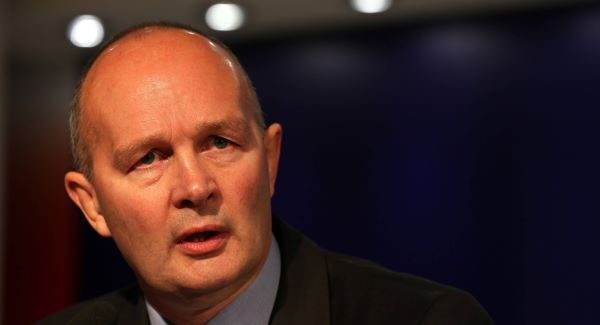

We’ve been here before. Whenever Derek McGrath’s unflappable nature temporarily and privately wavers and he gets frustrated like any other rugby person about the current uncertainty over the future of the sport’s biggest club competition, he quietly reminds himself of that.
We’ve been here before, we’ve overcome this before.
There was the English withdrawal from the 1998-1999 tournament before they promptly rejoined again. That was a couple of years before McGrath assumed his role as ERC chief executive but he has the files and correspondence from that time. Occasionally over the past few months he’s found himself sifting through them. The same arguments the clubs are making now, they were making back then to the European Commission; only the names and dates have changed.
The same in 2007 when it took up until the weekend of the Heineken Cup final itself for the following season’s tournament to be saved. History informs the future, he reminds himself, and the future can take solace and lessons from history. Brinkmanship has eventually segued into statesmanship, a lose-lose scenario turning into a win-win one, you just don’t win absolutely everything you want.
He’s been in situations like this before more than once himself, to some degree. Not just in 2007, but, in a way, before his personal breakthrough year of 1987. He was on some backfield of some farm at two in the morning. McGrath was working as a vet, treating a milk-fevered cow, all the while still expected to play later the same day for Leinster. It was just the way the world and his world was back then; the sport was still amateur, his veterinary work was professional but he was working in a small practice in Dunboyne and, he smiles, no one tells an animal when to be sick.
He smiles too when you mention the parallel between then and now; here he is still, both wrestling with and pacifying an animal of sorts, only this time hoping the remedy is dispensed the other side of midnight.
Back then it wasn’t sustainable. He wanted to give top-class rugby a proper shot so he moved to Cork to take a job with the Department of Agriculture which allowed him more flexibility. He joined Cork Constitution, took to them immediately and they took to him.
Everywhere there were big personalities. Obviously, there was Noel Murphy. When you ask McGrath why he thinks he landed the ERC chief executive role, he jokes that Murphy always jokes that McGrath was only the Cork Con man to apply for the job.
On the field there were internationals everywhere. Donal Lenihan, Michael Bradley, Moss Finn. But it didn’t matter if you played for your country or your province at the weekend; on the Monday you were expected to report to the club field and on the end line, ready for a gruelling, physical session. There, you were brought back down to earth — or lifted up off it if needs be. Leaders like the late Trevor Barry saw to that.
“I remember my first scrum session there,” McGrath recalls from the more refined confines of the ERC’s office on Stephen’s Green. “Trevor set the tone. He was loose-head prop and I was propping the side of the scrum and the first ball to go down there, I got a big smack across the head. It was Trevor, as if to say, welcome to Cork Con, welcome to Munster rugby. It was a tough brand of rugby. Leinster rugby was what it’s like now — a more expansive game, more about the backs. The game in Munster was much more physical. I was only a recent convert from being a back into a wing forward so I learned an awful lot from that year in Con about how to be more effective on the ball, especially in the breakdown area.”
He learned and thrived in his year there. They won the Munster Senior League, he played for Munster, and then he got a late call-up from Ireland. Nigel Carr had been travelling down from Ulster for squad training with David Irwin and Philip Rainey when a nearby car exploded. The IRA bomb instantly killed Lord Justice Maurice Gibson and his wife.
Carr and his colleagues were fortunate to escape alive but the injuries ended Carr’s career.
The only good draft that awful ill wind blew was that it created a vacancy in the Irish World Cup squad. McGrath was deemed the most impressive of seven wing forwards called up for a trial, and as it would transpire, he’d be one of Ireland’s most impressive performers in that inaugural World Cup. A few months later his career would finish prematurely at 27 due to a back injury, but he retired in the comfort and knowledge that he’d always have New Zealand.
“I can still smell the paint there. The newness of it all. It has echoes of what we’re going through right now with the game. This was an event only sanctioned months before it happened and everything about it just felt and even smelt so new. The paint was still drying on the side of the door. You could smell the whitewash from the dressing room tunnel.
“For me it was the first taste of what it must be like to be a professional rugby player, being away for three weeks, playing in magnificent conditions. It wasn’t the most successful tournament from an Irish perspective but it was an amazing experience.”
He would adapt well to change once more after the end of his playing career. He moved over to London and into pet veterinary, then moved into the pharmaceutical side of things, then more into marketing and then management of the business back in Ireland. Then in 2000 the ERC was established, to run the Heineken Cup and the Challenge Cup independently of the International Rugby Board and maximise its earnings. It needed a chief executive, McGrath felt he was the man for it and so did its board.
The role has always had its challenges. He uses a model and analogy from the game itself which he learned from a New Zealand backs coach long ago — like Brian O’Driscoll carving out a try, you’ve first got to create space, then preserve space and then exploit space.
Creating the space for McGrath was largely regulatory, starting out. A bit like now, there was massive distrust, only back then it extended to basic things like registration and disciplinary measures. A fledgling new body had to establish some credibility and muscle, which meant quite a few trips up the steps of the high courts, but they stood their ground and laid down some markers. Tough for you that you didn’t get your southern hemisphere player registered three weeks out from the start of the competition; tough for you if the disciplinary verdict didn’t go in your favour; at least it was transparent and fair. From that foundation, more business partners came on board.
A huge one was Sky in 2003. What struck McGrath about them was that they moved quick and they thought big.
“I was sitting here at 4pm when I got a phone call from them wondering if I could get to London to meet Vic Wakeling. I was there in a couple of hours and we did the deal that night.
“The biggest thing Sky brought was that they added personality to the competition. Previous to that, we were working with the BBC. Ulster might be playing a game, or a Welsh side might be playing a game, and the game would only be shown in that region. You’d get a five-minute build-up, then show the game. There was little room to establish context. Whereas with Sky, they have plenty of time to describe who Ulster are, who their opponents, say Toulouse, are, what is at stake, what the competition is all about.”
That allowed the ERC to preserve their space. The TV market was in flux at the time with the crash of ITV Digital but the Sky deal established security. There was dissent when Sky’s rights became exclusive in these parts after the 2006 tournament, with RTÉ having to settle for just a highlights package, but McGrath made no apologies. “We were very mindful of the free-to-air argument and sensitive to the Irish market but we always had to remind ourselves that we’re here to do a job which is to build value. We had very hungry stakeholders and we had to generate value.”
Since then revenue has doubled, to the tune of €55 million each year. Amlin came on board to sponsor the Challenge Cup. Three teams from the Heineken Cup would be parachuted into the Amlin to sex and bulk up the Challenge Cup, all the time mindful it could never be the Heineken. Bonus points, different kickoff times and matchday presentations to domestic games; all have added to the appeal and experience of the competitions and their brands. Every game, something is at stake; every game is an experience. But just when it seemed like the ERC had exploited that space, now it could all explode. The European club game could implode.
McGrath accepts there is a “very fractured relationship” between the various parties with not “a whole lot of trust”.
But the fact everyone realises that and recognises that polarisation, he believes will put pressure for those parties to engage with the others.
Because ultimately they’re all proposing something similar. There are differences but for him the bottom line is similar.
“You look at what they [the French and Premiership clubs] are proposing. It’s exactly the same. They want to change some of the numbers and the way you qualify but the competitions are exactly the same. We’ve been in all the participating countries in recent weeks for the launch of the competitions and every coach and captain and player we’ve heard and spoken to, it’s clear what it means to them and that they don’t see any need to have a break in this journey that these competitions are on and what they deliver, even though they’re not involved in the negotiations. So what’s at stake here isn’t whether the competitions should continue. It’s how they’re run, how decisions are made and where the benefits go. But everybody is actually talking about the same thing.
“I heard Paul Goze (France’s National Rugby League president) the other night talk on the radio about the fact there will be a European competition next year. And it’s the same when I listen to the English clubs. The clubs, fans and players all want European competition next year. So it comes back to how do we achieve that and how have we done that for the past 18 years.
“The most important thing right now is that there are discussions ongoing. Can I predict that things are going to be resolved very quickly? I think that would be unrealistic. I think we’re entering into a phase where people recognise that it’s extremely serious and it is precarious for the games. The motivation now is to find solutions.”
McGrath shows no signs of exasperation; the measured mood and tone of voice barely fluctuates in the course of a 75-minute interview. But of course his heartbeat raised and alarm bells went off when it emerged that Premiership Rugby had come up with a unilateral deal with BT. Premiership Rugby had been on the ERC board that had agreed the last TV rights deal with Sky.
“We began to get whispers 48 hours before a board meeting that something might be happening (between Premiership Rugby and BT) and I made contact with the (English) RFU immediately because obviously they would need to be approving any contract in order for it to be official. They had no knowledge or approval of those developments. Then when it was announced, they rang me immediately to say again, they did not know and did not approve.
“Like everyone, I’ve put an enormous amount of time into this and am hugely passionate about coming up with a solution and outcome. People reading this must be questioning why 15 months on we’ve still had no progress. But I read (Bath owner and Premiership rugby negotiator) Bruce Craig make a statement which is kind of revealing and unfortunate.
“He said when they started discussions, the French clubs weren’t really on the same page as the English clubs because the French clubs believed they could find a solution within the current structures. The English clubs had already decided to terminate dealing with the ERC and do their own thing effectively. So there were decisions perhaps made that they didn’t really intend to negotiate, that there was always an effort to go elsewhere.
“So for us that’s disappointing but it explains why there hasn’t been a full engagement and why there hasn’t been full trust. We really need the clubs to recognise that we are talking about the same thing, a European competition. But you can’t just announce something overnight and think just because you announced it, it’s going to happen. Cross-border competition requires union approval to ensure that you can provide something safely for the development and benefit of the game.”
Again though, he finds reassurance in history — in the standoff of ’98 and the settlement of ’99, ditto that of 2007; the record of the Heineken Cup and the ERC itself. The competition has a history now. And the ERC have a record and template of generating money. That shouldn’t be ignored or dismissed by the likes of Craig, he says.
“When I look at what we’ve achieved together, it’s a travesty to consider any of us would be prepared to say ‘No, we no longer believe that’s something we can work with.’ I know (the ERC) have done a very good job. We are a very solvent company providing a tremendous amount of profit — for the clubs. We can deliver that and we can build on that because we know where it’s come from.
“The alternative is to start up a new competition based on the BT contract. It’s been said that this completion could generate £60 to £70 million. But the only bit known about that package is the BT element which would only make up £20 million, odd. No one has seen that contract so no one knows what it represents. And where’s the other £50 million coming from? Any French TV deal by law would have to have approval of the FFR (French Federation Rugby) and they say they won’t be. So it’s hardly achievable, from a business point of view, and yet this is supposed to be a better business model.
“If this was to go to the European courts like it did before, the courts would be entitled to ask ‘Well, you’re kind of coming with the same points as you made years back. What have you been doing for the last 15 years? Actually you’ve been doing something pretty successful working with these people that you appear to have a problem with.’ Clearly, there has always been an underlying problem all along. Clearly the game of rugby has developed massively since then and clearly the personalities have changed around the table, people with real passion for their teams.. But it’s still about providing a competitive mix which is going to achieve the aims of developing the game while also offering values for all our stakeholders, including the clubs.”
He accepts the clubs are entitled to have concerns. “They have very valid concerns. In terms of the game we have right now, can we improve our decision-making so we can respond to their concerns in a better way? But at the same time there needs to be a recognition that the unions not only have to make sure these clubs are successful in European competition but there’s the integration they have with the game and its development as a whole.
“The things that are being talked about are all negotiable. The share of the spoils, the format, it’s all negotiable. All the unions have made it clear they are willing to negotiate. But it has to be a negotiation, not a ‘here’s our offering and take it or leave it.’ It has to be a negotiation, because what everyone first has to agree on is that there will be change.
“Second, we’re not going to get everything that we want, and thirdly come to the table prepared to compromise. And until we have those three elements, we’re not going to find a solution. But it’s not hard to get to that position, because again, everyone is talking about the same thing.”
His biggest source of confidence and comfort is that while the talking — and arguing — will continue, the rugby itself is about to start. The buildup, the crowds, the collisions, the shocks, the scores, the drama.
A Harlequins side losing in Connacht. Scarlets beating Toulouse down there. A last-minute try to secure a quarter-final slot. Paul O’Connell and Munster digging out another try, win, miracle. The game is the answer.
“Once the competition starts, it tends to speak very loudly for itself, and people will appreciate this is too good to lose.”
Just like there’ll hardly be a team that will win every game in the Heino, no one will win everything in the negotiations about its future either.
Maybe the vet had it easier with that milk-fevered cow over quarter of a century ago now, but he’ll still work all around the clock in that conscientious, sober way of his to save and serve this beast.