Donegal: A short shelf life?
This time last year we thought we had Donegal figured out as team of defensive drones obediently carrying out the orders of Master Jim. Little did we know, nor could we have known, what they were about to become.
The austere defensive structures are still in place. Apart from last Sunday’s game, when they gave up eight or nine kickable frees, they foul even less now and most significantly of all, they have brought the art of the dispossession followed by counter-attack to a level far beyond all of their rivals.
There may be some uneasiness in other counties as they reflect on the reality that this is just year two of Jim McGuinness’ five-year plan. The average age of the panel and the fact they came so close to U21 glory just over two years ago suggests they could be around for a while.
The dominant narrative since Donegal’s emergence as a genuine force last year has been about Jim McGuinness’ system.
Josef Stalin, another noted proponent of five-year plans, said that “everyone imposes his own system as far as his army can reach.” Quite how far McGuinness’ Donegal can reach remains to be seen but all the emphasis on their system ignores the fact that, like most champions, they’ve had the best individual players over the course of the past season too. I expect that to be reflected with a big representation on this year’s All Star team.
That awards ceremony later on this year will offer several Donegal players a rare moment of individual recognition. I imagine McGuinness, with his background in performance coaching and sport psychology, will embrace the challenge of grounding his troops and motivating them for more afterwards.
Very few coaches in recent times appear as well-equipped to ensure his team stay mindful of the values that got them to the podium in the first place. How he goes about the task will be fascinating and intriguing for the rest of us.
It may have been Josef Stalin, also, who said that “history shows that there are no invincible armies”. If last year’s champions, Dublin, taught us anything it is that with every passing day, every dinner dance and every trip abroad with Sam the veil of invincibility slips further.
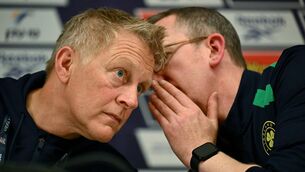
Donegal probably had their partying done before McGuinness and Rory Gallagher came on the scene but it might be the intensity and fervour they bring to their game that proves their eventual undoing. Certainly, their style of play can’t have a long shelf-life and even last week against Mayo, there were signs of a team reaching a plateau.
Either way, the championship just concluded gave grounds for sober hope to many teams setting out from the foothills once again this winter.
Whether that hope came in the form of mini triumphs such as Peter Creedon’s restoration of respectability to Tipperary football or in Mayo’s tantalising glimpse of the summit, it can be expected to sustain all pretenders and challengers over the coming months.
The weeks and months ahead are also a time for assessing what we thought we knew, what we learned and what we think might happen in the game of football. In retrospect Dublin’s failings early this year should have forewarned us that their grip on Sam was never likely to hold.
In truth, their defence of the title so hard won, looked fragile throughout the league. The indiscipline that bedevilled their early season was damaging and once Footballer of the Year Alan Brogan hobbled off in the first half of an unconvincing Leinster final win, Dublin were on life support. Despite all the negative indicators going into their semi-final against Mayo earlier this month, it still came as a major surprise when Dublin’s pulse eventually flatlined.
Mayo’s win may have given James Horan’s team the recognition their transformation over the past two seasons deserved but on these pages during the week, their sport psychologist, Kieran Shannon, points to their league semi-final against Kerry as the day they became a “proper championship team”.
The form of Colm Boyle, Ger Cafferkey, Kevin McLoughlin and Keith Higgins that April day indicated that they were on the right path, but the fundamental issue of having forwards who struggle to win 50-50 ball was a problem that didn’t go away.
Andy Moran’s loss in this regard was incalculable and Mayo will be moving heaven and earth to ensure he recovers from his latest injury in the same way he came back from the broken leg with the international squad this time last year.
Cork, of all the main challengers in 2012, will probably have more cause for regret than most. After winning the league convincingly, a handy two-game stroll through Munster did them no favours. The paucity of the second half challenge from Kildare in the quarter-finals lulled us all into thinking that Aidan Walsh’s inspirational form and their apparent strength on the bench would be enough to get Cork over their next challenge but Donegal taught them lessons they will do well to take on board. For Cork to prosper in 2013 they will need some rejuvenation at the back, Alan O’ Connor will have to find his form and great forwards like Ciarán Sheehan and Daniel Goulding will require uninterrupted runs of form for club and county.
Kerry’s challenge is just as stark. The defeat of Tyrone in Killarney provided an obvious if overblown highlight but in their quarter-final defeat by Donegal the lack of pace and sustained intensity in their game was exposed unforgivingly. The tight finish in that game was brought about by great old warriors playing on memory and some dependable foot-soldiers going about their business quietly.
Kerry face various challenges including a fractured county championship, a dearth of underage talent, an ageing core and the inevitable drift towards the comfort zone that comes with success. For their new manager, Eamonn Fitzmaurice, facing up to all these problems at once could be daunting and harrowing. Last Sunday’s final will have given him an idea of where the bar is set and Kerry’s traditional capacity to learn and adapt will ensure that he hits the ground running. There was a sense even three years ago after their last title that Kerry needed an injection of youthful energy. In order to keep the game’s biggest show on the road, that need is now even greater.
I have to pinch myself to believe that the once mighty Tyrone now form part of the chasing pack but there are signs that they can rejoin the leading group. Mickey Harte is at least 12 months into the business of renewal and regeneration and in defeat to Donegal they restricted the champions to their lowest score all year. Division 1 football should make 2013 more than just a year spent jostling for relevance.
After years spent as a relevant championship force, it was startling so see Kildare exit so tamely in 2012 but, like Tyrone, they will embrace Division 1 football when it arrives in spring and perhaps Kieran McGeeney’s managerial career will, like his playing career, enjoy a late flourish. Based on this year’s evidence, however, that day is as far away as ever.
There were few heart-warming David and Goliath moments in this year’s championship. The freakishly high turnover rate in management (14 departed at last count) and the decreasing age profile of players suggests that the sport at inter-county level is becoming more attritional on and off the field.
The Football Review Committee continues to look for ways to make the game better but if you’ve been in Donegal this week you’d probably think it is perfect the way it is.
Now, is there such a thing as ‘more perfect’?