Ashton is chauffeur-driven to his book launch... compare that with Donncha

LITTLE did I know when addressing the issue of Martin Johnson’s resignation as England manager last Wednesday the calamitous fallout that was about to unfold as English rugby hit a new low.

Ashton is chauffeur-driven to his book launch... compare that with Donncha

This is about as serious as its gets, especially when the leaking of three separate reports surrounding England’s ill-fated World Cup campaign emanated from within the RFU itself. The confidential documents, compiled and written independently by the Rugby Players’ Association, the RFU and Premiership Rugby — the governing body of the participating clubs that make up the Aviva Premiership — were in the sole possession of the RFU.

The players’ union and Premiership rugby did not have access the reports compiled by the other two bodies which highlights the fact that vested interests within the RFU were acting for personal gain over the interests of the game itself. It is a sad reflection on just how bad things have got in Twickenham.


Contrast that with the fallout of Ireland’s failure to perform to anything near their capability at the 2007 World Cup, with a Genesis report commissioned by the IRFU. Not unlike what happened in the report drawn up by the England players’ union, all the members of the Irish squad were asked for their opinions which were submitted anonymously and formed part of the final report. The IRFU dealt with the fallout from the campaign, took the findings of the report on board and dealt with them accordingly. No dirty linen was ever washed in public but some valuable lessons were learned and acted upon.

Things are obviously so bad with English rugby at present that there is a groundswell of opinion that is happy the reports were leaked as it has highlighted just how far standards have fallen. The problem with offering a platform for players to comment anonymously on the performance of their management team is that it affords those being commented on no right to defend themselves. In any group of players there are certain to be a number of disgruntled elements, most likely those who fail to secure a regular starting position.

Any questionnaire to be completed by English players after the World Cup should have started with a personal assessment: ‘What do you feel you contributed to the team and the group as a whole’, before casting aspersions on the shortcomings of others.

Irish team reviews both at provincial and national level are conducted behind closed doors and are brutally honest and leave no hiding place. That way issues are addressed before they fester and become major problems. The surprising thing for me about England’s off-field behaviour is that all international sides now have a code of conduct that players and management buy into. You then rely on the senior players to lead the way. It is also imperative that the younger players have a voice and that they are not intimidated or bullied by their peers. This appears to have been a problem within the England set-up with the younger ones castigated for doing extra training or seeking specialist one-on-one input from the coaches. That is totally unacceptable.

I witnessed this in action when New Zealand toured here in 1989 when Ireland played the All Blacks on successive Saturdays. It was clear from watching the dynamic of the group at the post-match receptions that the senior players were making lackeys out of the younger ones. It was no coincidence that they were a dysfunctional unit, by their high standards, at the 1991 World Cup.

Contrast that with the performance of Wales at this season’s tournament when the younger players, led by 22-year-old captain Sam Warburton, set the ground rules for behaviour and forced the older ones to buy into it. Full marks to Warren Gatland and his management team for encouraging this type of scenario.

Irish rugby has been blessed in recent times that the example, encouragement and standards set for our young players come from the senior group of Brian O’Driscoll, Paul O’Connell, Ronan O’Gara, Donncha O’Callaghan, Gordon D’Arcy and Rory Best. They set the bar and it is up to the rest to follow.

FOR whatever reason, English rugby seems to have developed a disturbing culture with their players elevated to the status of ‘superstars’ before they actually achieve anything. Danny Cipriani was a classic case in point. When you read about Chris Ashton being chauffeur-driven to the launch of his new autobiography — quite why he warrants one after less than two full seasons of international rugby is another story — you really begin to wonder. With the Lions itinerary for Australia in 2013 released on Monday, it offered a timely reminder that a line should be drawn through a handful of those English players who could potentially be a cancer within a Lions squad.

Last week, I attended the launch of Donncha O’Callaghan’s life story in Cork — I am sure he managed to drive himself — and was surprised by the amount of Munster players both past and present who had travelled long distances on a horrible night to be there. Then again, I shouldn’t have been. It all boils down to respect.

In Munster’s opening two wins in the Heineken Cup the ground rules were laid down by senior pros O’Connell, O’Gara and Doug Howlett with the younger brigade only too willing to get in behind them. Of even greater significance was the leading role played by Mick O’Driscoll, Marcus Horan, Tomás O’Leary and O’Callaghan in Munster’s highly impressive win over Edinburgh last weekend.

Contrast that with the alleged misbehaviour of some of the senior English players and you begin to understand why things fell apart so badly on and off the field.

Last weekend was a very encouraging one for Irish rugby with a whole host of up-and-comers thrust into Pro 12 action when the IRFU’s player management programme took precedence.

Munster were offered a glimpse of the future and Leinster also fielded an all-Irish front row, with tight head prop Jamie Hagan impressing along with another batch for the future in Rhys Ruddock, Devin Toner, Ian Madigan, Eoin O’Malley and Jack McGrath. Fionn Carr was also superb.

In what has been a shocking week for English rugby, it was great to see that the next generation Munster and Leinster are more than capable of taking the lead from their peers. What’s more, you are happy for them to do so.

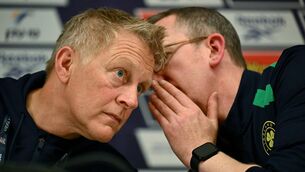
Picture: The example set by Mike Tindall did nothing to help England’s younger players make an impact at the Rugby World Cup.

x

More in this section

Sport

Newsletter

Latest news from the world of sport, along with the best in opinion from our outstanding team of sports writers. and reporters

Cookie Policy Privacy Policy Brand Safety FAQ Help Contact Us Terms and Conditions

© Examiner Echo Group Limited