Fogarty Forum: Integration needs realistic goals, not point-scoring
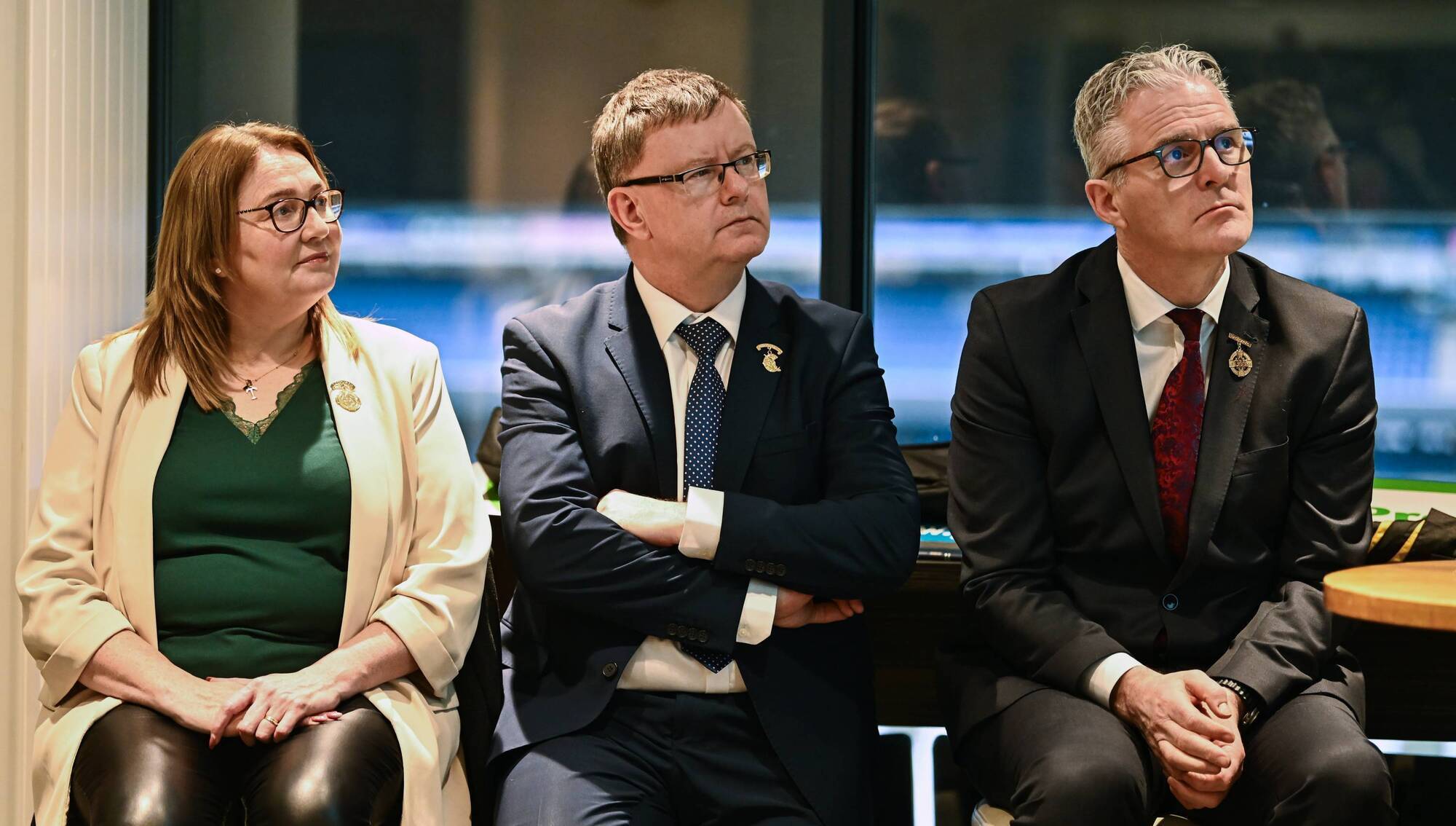
One wonders just how united the GAA, LGFA and the Camogie Association are on integration. Pictured are LGFA president Trina Murray, Camogie Association president Brian Molloy, and GAA president Jarlath Burns. Pic: Piaras Ó Mídheach/Sportsfile

Fresh from their occasionally over-zealous grilling of the FAI last week, the joint Oireachtas committee on Arts, Media, Communications and Sport question the GAA, Ladies Gaelic Football Association (LGFA) and the Camogie Association on Wednesday.
The one item on the agenda is integration and plenty of explaining will have to be done. As much as Mary McAleese was told by the highest authoritative body in the GAA 10 months before she resigned as steering committee on integration chairperson that the 2027 amalgamation goal was unrealistic, the joint Oireachtas committee received conflicting messages from the Gaelic sports bodies in June.
The leaders of all three were sitting beside McAleese three times when she addressed the doubt about 2027: “It is our target date for integration, for one organisation representing all codes to be in place in 2027,” she reiterated.
In February, GAA director general Tom Ryan iterated something similar in the wake of management committee’s preference for a phased implementation to be taken to completing integration.
Read More
Either the GAA didn’t spell that out properly to McAleese, she didn’t want to hear what she was told, or both. Regardless, there may have to be an acknowledgement there was a breakdown in communication and there will certainly have to be an outline of how integration is put back on the rails. That started with Monday’s meeting of the steering committee on integration. The process to find McAleese’s replacement remains ongoing.
One wonders just how united the GAA, LGFA and the Camogie Association are on integration. Last month, camogie chief Brian Molloy released a statement in which he called for January 2028 to be the new deadline for integration.
“We believe that the outstanding issues, which the GAA have indicated revolve around structures and finances, can be resolved over the next 12 months and as such we would advocate for January 2028 as the new delivery date for the GAA to become the single NGB (national governing body) for all Gaelic Games.”
We would hazard a guess and say, if for the sake of a month integration was delayed, McAleese wouldn’t have resigned. January 2028 is merely a notional, token date, similar to the previous timelines Molloy admitted The Camogie Association played their part in getting wrong.
This column understands it was because of that solo run by the Camogie Association that a planned statement by the steering committee on integration was abandoned. Molloy was taking liberties claiming the concerns of another organisation could be addressed in the said timeframe.
The thoughts of the GAA and LGFA on that camogie statement would be interesting to hear. In the wake of McAleese’s departure, their public utterances seemed at odds with those of the Camogie Association. While the GAA and LGFA were surprised by McAleese’s resignation in the wake of what was deemed a positive steering committee meeting, Molloy said: “Like Mary, I too was disappointed with the decision to step back from the agreed goal of one Association by 2027.”
The difference between equity and equality will undoubtedly be raised on Wednesday. Equity, or perhaps proportionality is another word, is what GAA president Jarlath Burns has recently been promoting and may just be what Congress delegates had it mind for integration when they backed it in principle.
Nevertheless, the motion they passed in Mayo four years ago spoke of prioritising integration with the LGFA and the Camogie Association “in order to jointly ensure equal investment, recognition and opportunity for all genders to play all sports in the Gaelic Games family.”
The inquisitors have to be careful too. Joint-Oireachtas committee vice-chairperson and Senator Evanne Ní Chuilinn’s frustration at McAleese’s decision to resign was obvious. She has been a strong advocate for integration and seemed to be almost calling for a strike last month.
“No GAA club in the country will function on Saturday morning if the women stand down. There will be no academies. There will be no tuck shop, no kit shop, there’ll be no lifts to training. There’ll be no jerseys washed. There will be no mentors on the sideline. There will be no coaches, no referees. I think members need to have a bit of a say here.
“Where we go in terms of the Oireachtas, I’m not really sure. They’ll be invited into the committee once again. I’m not sure if they will be willing to be here, I really don’t know.”
Yet they are. As Ni Chuilinn has said, integration is an emotional topic. Perhaps on mature reflection McAleese would revise her remarks that some people within the GAA, obviously men, are “not entirely happy about the idea of including women in decision-making at the top level of Gaelic sports”.
The time for point-scoring has to stop. Undoubtedly, there will be umpteen attempts at them on Wednesday when goals – realistic goals – are needed most.
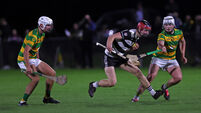
Patrick Horgan was on RTÉ Radio 1 co-commentary for the Waterford-Tipperary game in Azzurri Walsh Park this year. Watching the Cork-Limerick game on a laptop with him beforehand was an education. His observations were on point.
Cork led by two points in the 64th minute when Darragh O’Donovan won a close-range free. It was this column’s belief that 14-man Limerick would send over the free to make it a one-point game. Not Horgan’s. “They have to go for it,” he argued. “They mightn’t get another goal chance.”
Sure enough, Diarmaid Byrnes stepped up over three minutes later to dispatch the ball past five Cork men.
More of Horgan’s insight is provided in his autobiography, , written with his fellow Glen Rovers man and colleague Michael Moynihan. Fittingly enough, it is launched in the club this Thursday as they count down to a county senior hurling final.
Horgan’s utter devotion to the game spills from the pages. What is just as fascinating is how he and physio Declan O’Sullivan worked to ensure his longevity in the inter-county game. Playing smarter, being cuter.
In a game that had become more defined by speed, Horgan worked tirelessly on developing separation from defenders required to pick off shots. Making the defender commit to something that wasn’t going to happen. “Our thinking was, ‘No matter how fast the marker is, if you can stop before him, then you’re going away one way while he’s still going the other way,” he writes.
Displaying his obsession with the game as well as the necessary confidence and crankiness needed to remain as relevant as he did for so long, his book is a fascinating reflection of one of hurling’s true stars.
Friday training sessions became a thing in Mayo largely because so many of the players were living outside the county and it was the most opportune time to assemble.
For Galway, they have happened before and likely will again under new manager Éamonn Fitzmaurice. He is a man who doesn’t like to cause fuss but may need the accommodation to suit his work schedule as principal of Dingle’s Pobalscoil Chorca Dhuibhne, a three-and-a-half-hour commute to Galway’s training base in Loughgeorge - on a good day.
“The commute will be fine,” Fitzmaurice insisted at a briefing Saturday. “I used to do a lot of driving with my media work anyway and when I was in the FRC (Football Review Committee) I did an awful lot of driving, especially the first year in ‘24.
“So that won't bother me really, to be honest. There is a bit of organisation in it, obviously. We have a half day on Fridays in the school. The school is closed a half day on Fridays, so that will make it a bit easier.”
Fitzmaurice knows the commitments to the FRC won’t be a patch on what will be expected of him in Galway. Under him, they will be genuine All-Ireland contenders. He has too sharp a football brain and is too strong a communicator for too solid a squad not to be.
But it’s difficult not to believe this role, for different reasons, will be as demanding of him as his last couple of years in charge of Kerry.