Colin Sheridan: Celebrate Irish medals - but the work that went in by our athletes too
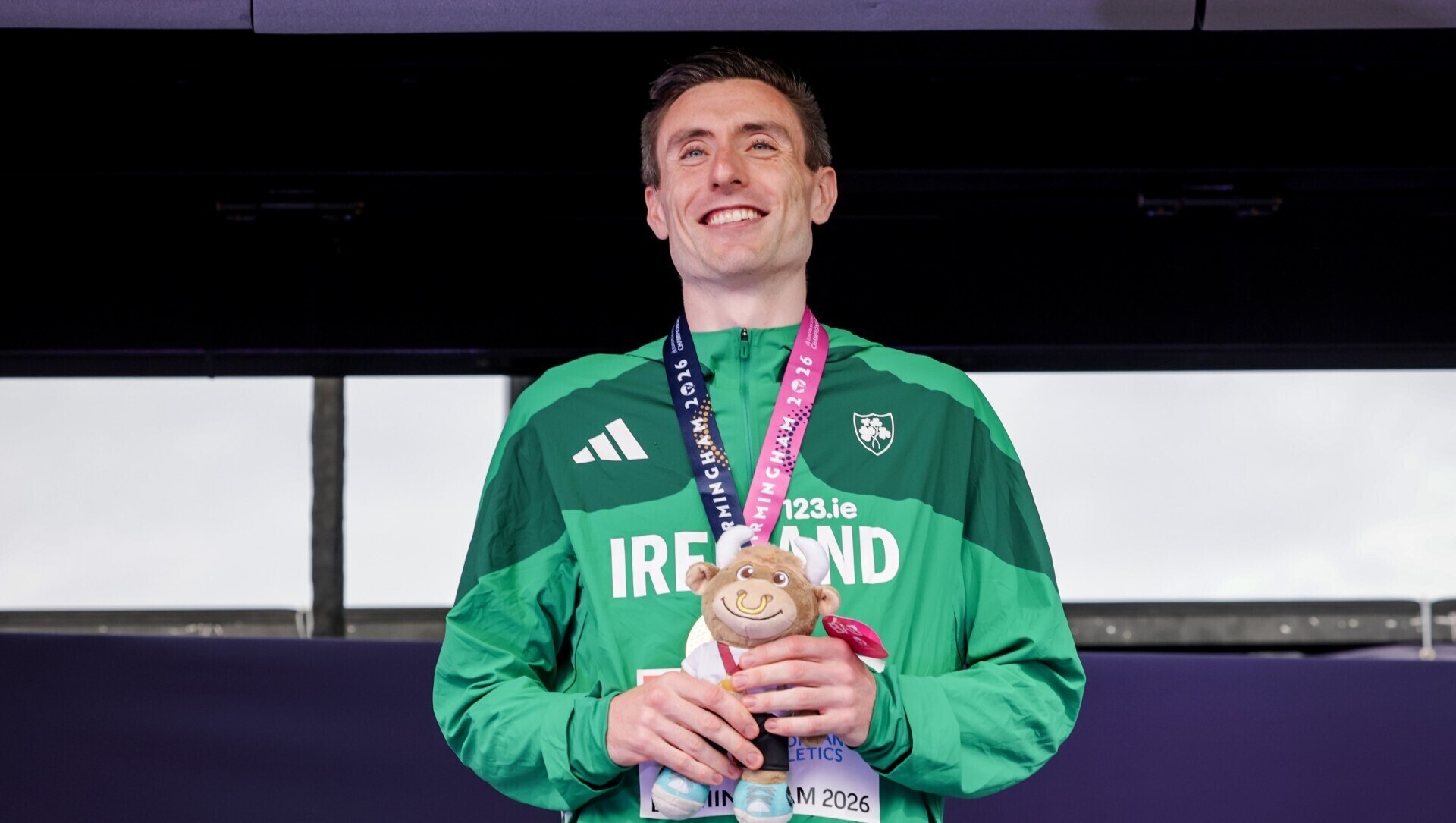
Mark English's progression - bronze, bronze, silver, gold - looks beautifully linear written on a page. Sporting careers are anything but. Pic: ©INPHO/Morgan Treacy
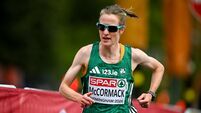
There are sports which permit forgiveness. A golfer can make double bogey on Thursday morning and still slip on the Green Jacket on Sunday evening. A footballer can smash a penalty kick against the bar and score the winner 10 minutes later. A tennis player can lose a set. Even a marathon runner, within reason, has more than two hours in which to solve problems as they arise.
Track athletics is different. For Rhasidat Adeleke, years of work eventually came down to 21-point-something seconds in Birmingham on Thursday night. That was it.
All the training. All the strength work. All the recovery. All the nutrition and physio and sleep. All the injuries avoided or managed. All the flights and camps and lonely sessions. All the sports psychology and visualisation and microscopic adjustments to technique. All the doubt. All the sacrifices made by an athlete still only 23 years old.
Twenty-odd seconds. And then we decide whether it was enough.
Read More
Perhaps that is worth remembering after an extraordinary week for Irish athletics at the European Championships in Birmingham.
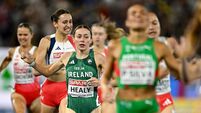
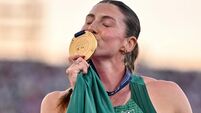
Mark English is a European champion at last. Adeleke is a European silver medallist over 200 metres. Kate O'Connor is European heptathlon champion. Andrew Coscoran produced one of the most gloriously improbable finishes of the championships to take bronze in the 1500m.
We are becoming spoiled. That is wonderful, of course. It is what successful sporting generations do to us. They recalibrate expectation. Things once regarded as extraordinary slowly become expected.
But there is a danger in that too. English's gold might have looked almost inevitable by the time he entered the home straight in Birmingham, but nothing about the journey towards it was inevitable.
Here is an athlete who was a prodigious junior, who became a doctor while simultaneously becoming one of Europe's finest middle-distance runners, and who has spent more than a decade returning to championship starting lines.
He won European bronze in 2014. Another bronze came eight years later. Silver followed in Rome in 2024.
And now, finally, gold.
That progression - bronze, bronze, silver, gold - looks beautifully linear written on a page. Sporting careers are anything but.
Then there is Adeleke. Perhaps because she became so good so young, we have forgotten how young she still is. Perhaps because her talent is so obvious, some people have begun treating victory as an obligation rather than an extraordinary possibility.
And perhaps there is something else involved too. She is a young Black Irish woman with an extroverted personality who wears emotion openly, and there appears to be a constituency — particularly in the darker corners of social media - for whom whatever Rhasidat Adeleke does will somehow never quite be enough.
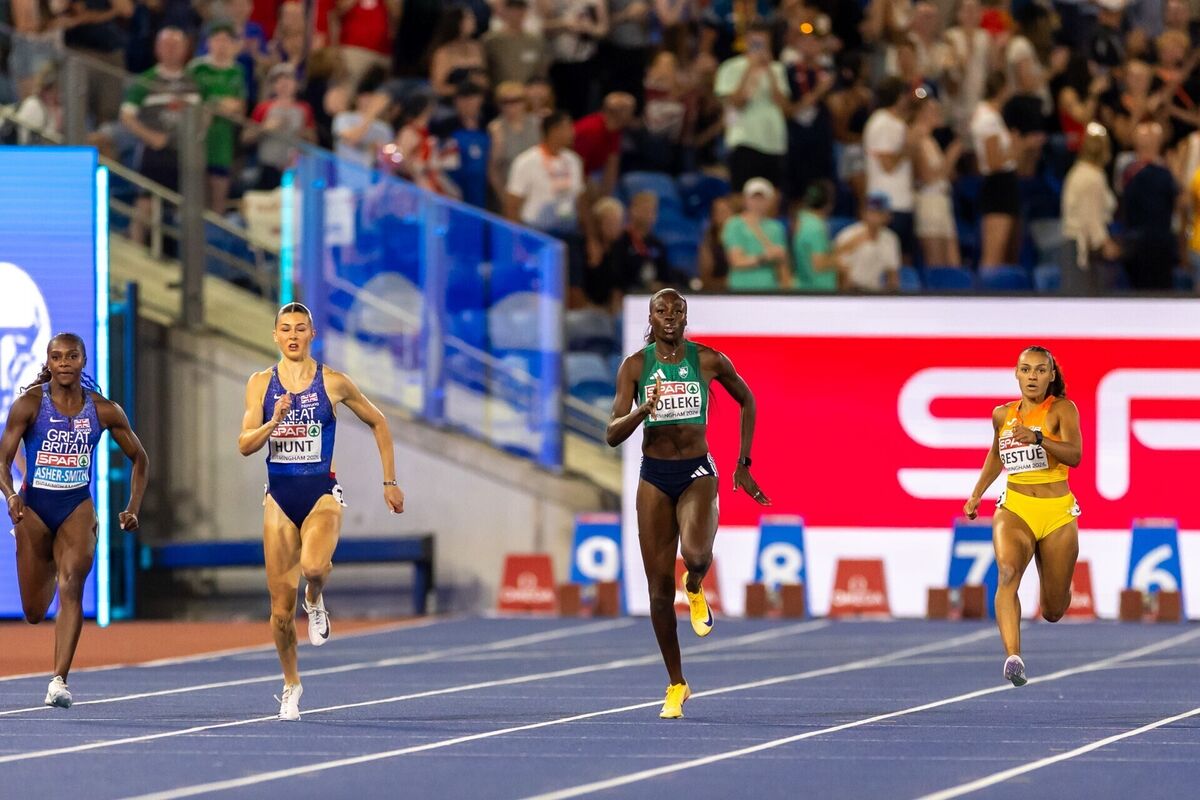
Even silver. That is not legitimate sporting scrutiny. It is cruelty dressed up as analysis. Adeleke does not owe us gold medals. She doesn't even owe us the role-model status we have understandably conferred upon her, although she continues to carry that burden with remarkable grace.
She is one of the finest athletes Ireland has ever produced, operating in an unforgiving sport where you can prepare impeccably for months and still discover that somebody else has prepared impeccably too.
Ask Keely Hodgkinson. Not long ago, the British Olympic champion was contemplating the outer reaches of what is humanly possible over 800 metres. In Birmingham, she ran 1:55.01 in a European final. It wasn't enough. Audrey Werro ran a championship record 1:54.81. Silver. That is athletics.
Which brings us to Andrew Coscoran. Watch his 1500m final again and freeze it with 100 metres remaining. Then try convincing yourself that the Irishman is about to win a medal.
He came from seventh with 200m remaining. Even RTÉ's excellent Greg Allen, having a championship almost as good as some of the athletes themselves, initially struggled to spot what was materialising. Then Coscoran appeared. Through traffic, around bodies, finding fractions of space while travelling at extraordinary speed after almost four laps of racing. Bronze.
There was something almost clandestine about it. And maybe that is what has made Birmingham such compelling television. Athletics exposes the absurdly fine margins between triumph and everything else. A championship appears on the calendar. You know exactly when it is coming. You build towards it for months, sometimes years. You try to arrive healthy. You try to arrive fit. You try to sleep properly the night before. You try to control nerves. You try to execute a race exactly as imagined.
And standing beside you are seven or 11 or 20 other people who have organised their lives around doing precisely the same thing.
Then the gun fires.
There are no mulligans. No back nine tomorrow. No second leg next week. Just the moment. Perhaps that is also why athletics retains such a peculiar ability to inspire children. They watch Adeleke or English or Coscoran or O'Connor and the distance between spectator and participant seems wonderfully short.
You don't need a golf course or a tennis court or 21 other people.
You need shoes, and somewhere to run.
Ireland should celebrate the medals won in Birmingham this week, whatever Sunday's final tally ultimately becomes. But we should celebrate something else too. The staggering amount of work required simply to reach the starting line with a chance. The medals are precious precisely because the margins are so cruel.
José Mourinho is back at Real Madrid just as Netflix invites us to spend three episodes remembering why football once seemed incapable of looking away from him. And perhaps still can't.
There is plenty to admire in Mourinho. The trophies make any argument about his place among the great managers rather redundant. Porto. Chelsea. Inter. Real Madrid. Two Champions Leagues. League titles in four countries. But the documentary also reminds us of Mourinho's greatest gift, beyond coaching football teams. Manipulation.
At his peak, nobody did it better. Mourinho manipulated the media, understanding that journalists who believed they were interrogating him were frequently being used to deliver whatever message he wanted carried into the world. He manipulated opposition managers. Opposition players. Referees. His own players most brilliantly of all, creating enemies outside the gates and convincing those inside that it was them against everybody. Sometimes it was magnificent theatre. Sometimes it was considerably uglier.
The documentary's revisiting of Dr Eva Carneiro is worth remembering in that context. In 2015, Chelsea's first-team doctor went onto the pitch, alongside physio Jon Fearn, to treat Eden Hazard after being summoned by the referee. Mourinho was furious, publicly criticised his medical staff and Carneiro's first-team responsibilities were subsequently downgraded. She left Chelsea weeks later. Mourinho still presents his version of that story. Of course he does. That is almost the point.
Even now, watching a documentary made about José Mourinho, you can occasionally feel José Mourinho attempting to manage how you watch José Mourinho. Which is why his return to Madrid should be welcomed, at least by those of us in the headline business.
Football is more entertaining with him around. Just don't mistake entertainment for innocence. The Special One was many things. Perhaps the most special was his ability to convince us that his version of events was the one we should remember.
There was something wonderfully of-an-era about Pádraig Horan. A giant of Offaly hurling, in every sense.
Horan captained the county to its first All-Ireland title in 1981 and belonged to that great generation of hurlers who played without helmets, whose faces consequently became as familiar as their deeds. And what a face Horan had: formidable, weathered, unmistakable.
He won another All-Ireland in 1985, an All-Star, 10 Offaly titles with St Rynagh's and later managed his county. At his graveside in Banagher this week, old comrade Joachim Kelly sang The Offaly Rover. It was difficult to imagine a more fitting farewell.
If Mayo taught us anything this summer, perhaps it is that sporting curses are only curses until somebody finally ignores them. Which brings us to Buffalo. The Bills have never won a Super Bowl, famously losing four consecutively between 1991 and 1994. Since then, generations of supporters have inherited the mythology, heartbreak and fatalism. Sound familiar?
Yet the 2026 season arrives with Josh Allen, now 30, still around the peak of his extraordinary powers and Buffalo once again among the contenders. Mayo didn't need to become invincible to end 75 years of hurt. They just needed, finally, to be good enough. Buffalo, take note.