Kieran Shannon: Cork need to trust bench and don blinkers
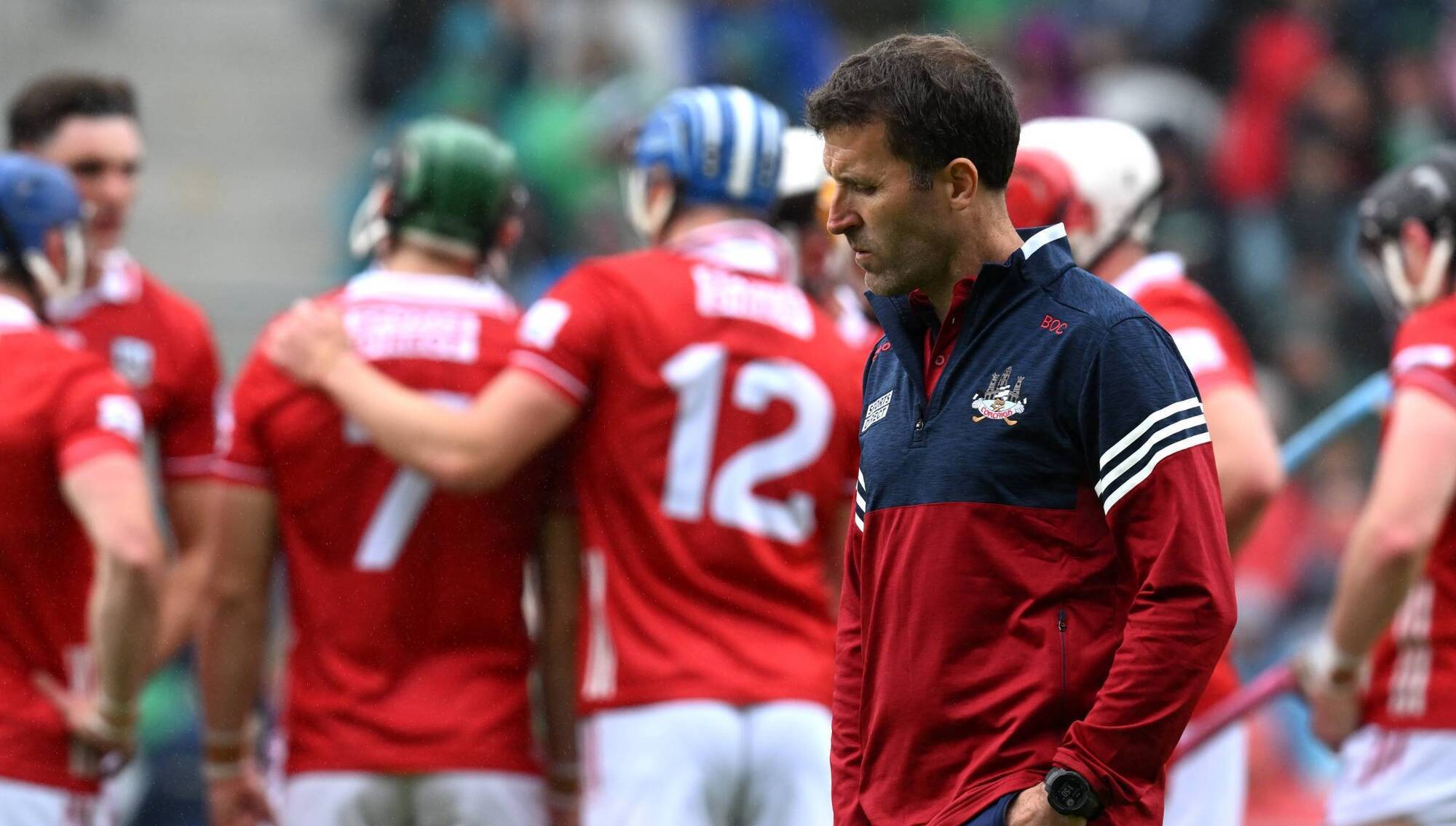
7 June 2026; Cork manager Ben O'Connor before the Munster GAA Senior Hurling Championship final match between Cork and Limerick at SuperValu Páirc Uí Chaoimh in Cork. Photo by Daire Brennan/Sportsfile
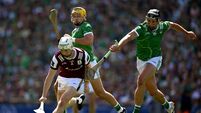
Although it was Cork they beat on Sunday to complete the full set of Munster counties they’ve now defeated in the province’s showcase during the Kiely era, this latest triumph of Limerick’s had echoes of their three consecutive final wins over Clare.
Similar to 2022, they grittily eked out a win in conditions hardly in keeping with those we normally and romantically associate with Munster finals.
Just like in 2023, the game finished with the opposing team having lost by a point surrounding the referee over a questionable late call.
And tellingly, just like in 2024, the management of the opposing team showed little faith in their bench by being too slow to use it.
Read More
On that occasion Brian Lohan waited until the 62nd minute to summon someone from the dugout, though his team had been trailing by at least three points over the previous 20 minutes.
On Sunday, Ben O’Connor showed greater urgency than that, taking Seán O’Donoghue off just seven minutes into the second half; although the Inniscarra man had brilliantly held Aaron Gillane scoreless, he’d harshly sustained a yellow card and informed by the ghost of last year’s All-Ireland final, O’Connor understandably decided Cork couldn’t risk any inside defender picking up a second.
Critically though, he’d wait until the 66th minute before making his second substitution, and the first change to his forwards even though, by then, Cork had scored only four points over the previous 28 minutes, none from play.
Limerick in contrast got three points from Tom Morrissey upon him coming on for the injured Cathal O’Neill just before half-time, and a spate of assists from Adam English upon Kiely in the 50th minute making a big call not dissimilar to that his old mentor John Allen made 20 years ago in Croke Park; for a misfiring talisman Brian Corcoran back then, read Gillane on Sunday.
It’s hardly an act of scoreboard analysis or journalism to conclude that Limerick ultimately won on Sunday because they won the battle of the benches, and that battle was determined by them winning the in-game sideline battle.
That’s fine though, not fatal, for Cork, just as it wasn’t for Clare two years ago. In their All-Ireland semi-final against Kilkenny, Clare and Lohan were much quicker to unleash their cavalry, beginning with Ryan Taylor on 49 minutes, helping Clare surge from behind and ultimately overpower Kilkenny in the closing minutes. In the final then against Cork he used up to eight subs over the 90 minutes.
The losing – and lesson – of the Munster final was the winning of the All-Ireland.
It can be that way too with Cork. The game will have brought O’Connor and his sideline brains trust on even more so than his players. For all his hurling smarts, for all his experience and fine record at club and underage inter-county level, and for all the wins he’s accumulated this season between league and championship, the red heat of a Munster senior final was a crucible he hadn’t been in before.
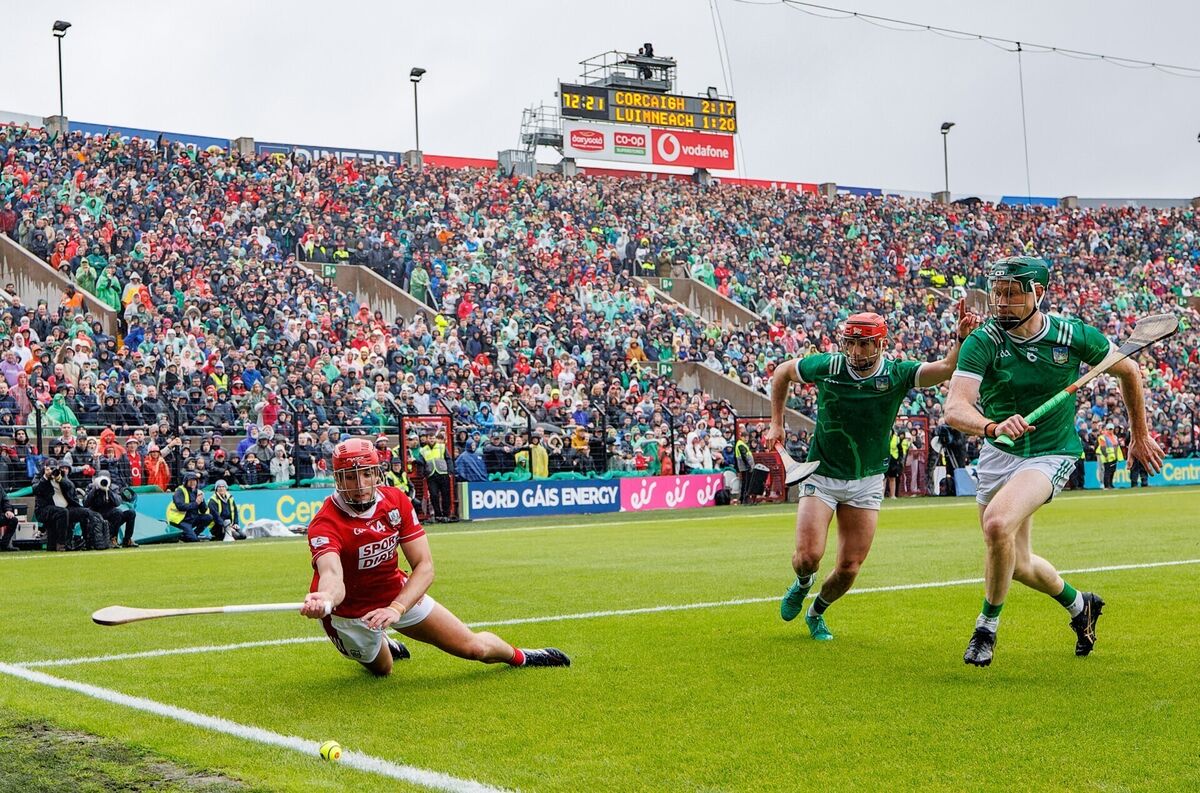
One of the learnings though might be to spend less time being preoccupied and aggrieved with refereeing calls and focus more on controllables like the deployment of his bench and even own coping mechanisms.
Last week in a fascinating conversation he had with Off the Ball’s John Duggan, Jim Gavin gave an insight into how and why he won six All-Ireland finals, four of which were won by a point or required a replay.
“If I was a supporter, I’d have been nervous, shouting and roaring, but your job as a manager, which I learned from my military days, is you’re not on that battlefield. You’re removed from it and your job is to make the best decisions on behalf of the team. So I would have always worked on my breathing, and taking a sip of water, to prevent my amygdala kicking in and being hijacked.”
He went on to explain that your best decisions are made when you’re operating from your prefrontal cortex, you’re more cerebral rather than animalistic or animated part of the brain. There he found he could “stay in the moment, see who’s playing well, how can I make a tactical decision here to take John off and bring Jim in or move a player around. Some managers want to be up and down the sideline and kick every ball or puck every sliotar and that’s okay, but I know it wouldn’t work for me.”
O’Connor has brought a lot of qualities and strengths to the Cork setup since assuming the position. For one he possesses little baggage, and with it has freed up the team more so than if the management team of 2023-25 had remained on this year. He is also admirably authentic for his frank and spiky manner, part of which is to be up and down the sideline, pucking almost every sliotar, and not being afraid to tell the media and thus public what he makes of certain refereeing calls and styles.
But there’s a balance. While the Cork footballers, who last brought a senior All-Ireland title back to Leeside, were similarly sensitive to the influence another set of perennial champions from across the county bounds could have on referees, the regular sense of victimhood can be distracting. Cork had more reason to feel aggrieved about the concluding moments of the 2024 All-Ireland final than they had last Sunday’s Munster final. But on that occasion Pat Ryan sportingly, as well as sensibly, made no issue of it; as well as Cork played, there were things under their control they could have controlled better and nothing should take away from their opponents.
It’ll do Cork good to play non-Munster opposition for a while, just as it did no harm for Clare in 2024. O’Connor will ensure there’s no complacency; in 2000 he was part of a Cork team that underestimated Offaly in an All-Ireland semi-final while his last championship game – and Ronan Curran’s too – was a trouncing to Galway.
By then he should also have Darragh Fitzgibbon back. But even then he’ll have to go deeper with his bench and trust and empower them more. That’s more of a controllable than referees. And as history has shown - Cork especially - the winning of the game’s biggest games and prizes.