‘Why investing in smart manufacturing is invaluable for the Irish Economy’
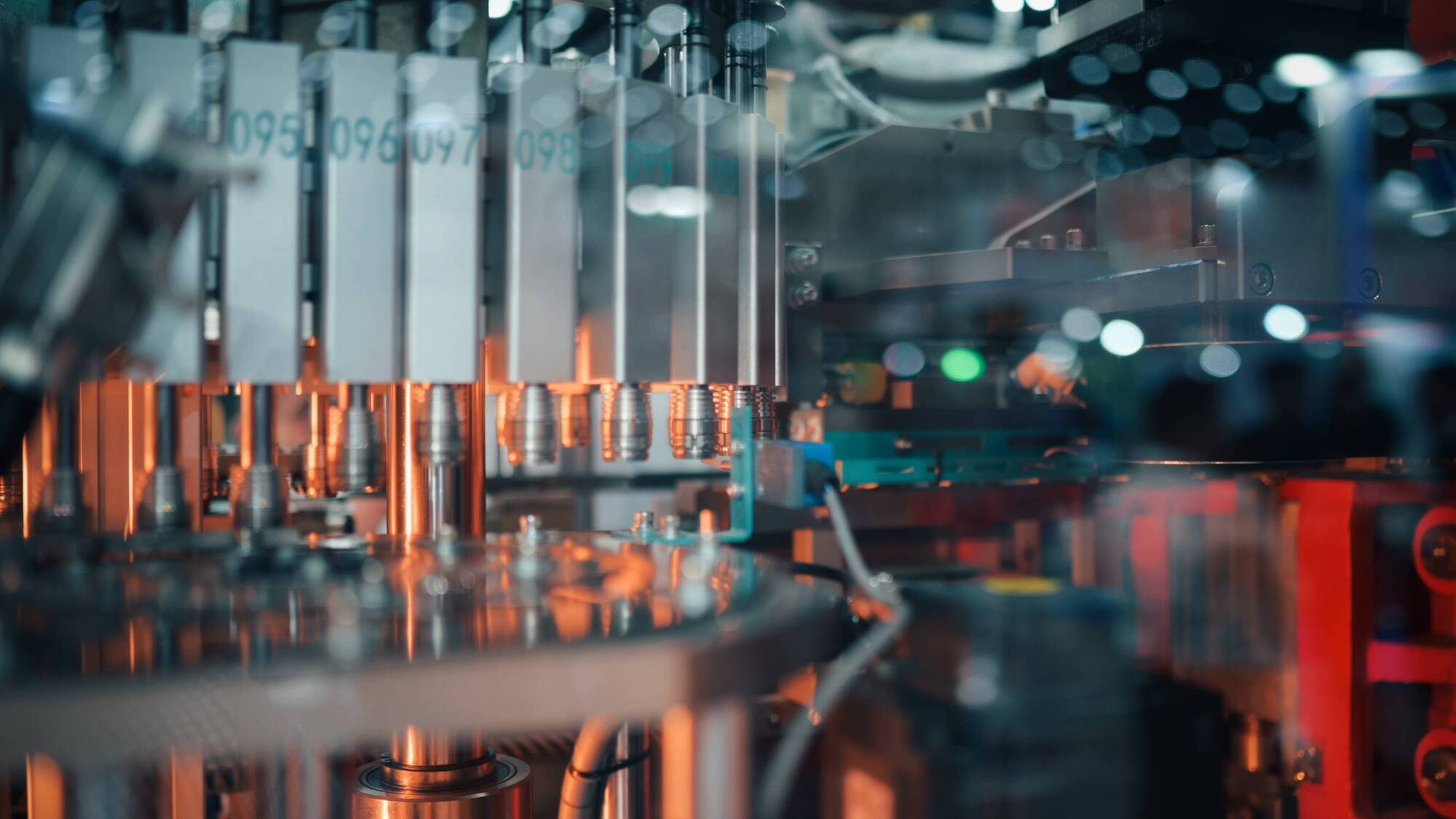
Smart manufacturing is giving Ireland’s pharma and medtech sector, where disruption affects not just cost but continuity of supply to patients, a competitive edge. Picture: iStock
Manufacturing has always been a key part of Ireland’s economic story but with the introduction of Industry 4.0, the industry is transforming. This shift is central to how manufacturers improve productivity, build resilience and remain competitive in a more complex operating environment and is being felt across Cork and the wider Munster region.
Ronan Murray, EY Cork Office managing partner, sees the strength of this regional ecosystem first-hand. “Cork has real depth across life sciences, technology, engineering and food which are underpinned by evolving advanced manufacturing processes, supported by more than 200 international companies employing over 43,000 people across the region. That mix of talent, investment and sector expertise gives Cork a strong platform to support the next phase of smart manufacturing growth.

“At EY Cork, we see this momentum through the businesses we work with and through our own continued growth in the region. Our Cork office now has more than 420 people, including 23 partners, and our focus is on supporting clients as they invest in technology, data, AI, cyber and transformation in a way that is practical, commercially focused and built around real business challenges',” he says.
Brian Moroney, EY’s supply chain and operations consulting services lead, works with manufacturers right across the island of Ireland and beyond to turn complexity into competitive advantage, building resilient operations, accelerating performance and unlocking sustainable growth.
“By combining technology, operational expertise and innovation, our EY teams build more efficient, future-ready operations, powered by digital manufacturing and AI, connected assets, smart operations, AI-enabled planning and intelligent procurement,” says Moroney. [BD1.1]“We combine global expertise with local insight. Our international teams help shape and deliver large-scale digital manufacturing programmes, while our Cork-based professionals provide the on-the-ground support needed to drive adoption, manage change and realise value. It’s a model that enables global transformation with local impact.
According to IBEC’s 2025 Manufacturing in Ireland report, 97% of Irish manufacturers said they plan to adopt AI to improve efficiency and productivity. The sector has backed that intent with action, recording 18 consecutive months of expansion despite ongoing geopolitical uncertainty.
“With wage, energy and shipping costs all rising, productivity is no longer a discretionary agenda; it’s how you defend your competitiveness. At EY, we have seen that the manufacturers growing through this uncertainty are the ones using digital tools to control the controllables. Smart manufacturing is simply the most powerful productivity lever available to your business; if you’re treating it as optional, you’re already conceding ground to competitors who aren’t,” says Moroney.
Technology-led projects can often fail when dashboards or solutions are introduced into plants without being embedded into how teams work. For EY, its approach is to centre people at the heart of digital transformation. EY embraces digital transformation with its people and for their benefit and does not impose it upon them.

“In every successful transformation we’ve delivered, we run “hopes and fears” sessions with manufacturing staff early on, because unaddressed fears kill adoption faster than any technical fault. Leadership matters just as much; you need visible sponsors and champions, and a culture where your operators own the improvements rather than having them imposed. Technology succeeds or fails in culture; we have never seen an exception,” says Moroney.
The returns are real when the foundations are right. Moroney says: “We recently helped an Irish pharmaceutical manufacturer achieve a 27% increase in manufacturing-site productivity within six to twelve months, improve overall equipment effectiveness (OEE) by 10 percentage points, and generate €30 million in additional sales within nine months. This was achieved by implementing strong Operational Excellence standards and sustained through digital transformation.
“The pattern we see across clients is consistent: returns come from digital performance management, real-time OEE tracking, and predictive maintenance. The critical discipline is engaging your finance team early to agree on baselines and how value will be measured. If you can’t sign off the benefit with your CFO, it doesn’t happen,” he adds.
The practical applications are already on Irish factory floors: multivariate “golden batch” models comparing live production against your best-ever performance, AI vision systems doing quality checks at end of line, camera-based verification of product changeovers, and predictive maintenance driven by pattern recognition.
“None of these require heavy budgets, and many are digital solutions that don’t need major transformation. The real prize is AI connecting decisions across your value chain, giving planning, procurement, manufacturing and logistics a shared view of demand and supply. AI works when it has strong data underneath it; without that, it’s expensive guesswork,” added Christopher Ryan, EY Ireland business consulting director.

This year has shown just how volatile the Geopolitical environment has become: Irish manufacturing exports swung sharply in early 2026 as pharmaceutical shipments to the US corrected from last year’s tariff-driven surge, while shipping costs more than doubled driven in large part by the conflict in the Middle East Moroney points out that the biggest resilience gap often isn’t within functions, it’s between them. Supplier issues are identified, but production plans remain unchanged; demand shifts are detected, but the insight reaches other teams too late for them to act.
“Digitalisation reduces risk by connecting those decisions; shared, real-time data across planning, procurement, manufacturing and logistics means your business anticipates issues rather than discovering them after the fact. For Ireland’s pharma and medtech sector, where disruption affects not just cost but continuity of supply to patients, that connected visibility is becoming non-negotiable,” he says.
From EY’s perspective, many manufacturers are data-rich but insight-poor. Critical information remains fragmented across disconnected systems, spreadsheets and reports, meaning insight often arrives after decisions have been made. Leading organisations treat data as a strategic asset, with clear ownership, robust governance and consistent quality standards creating a trusted single source of truth. Building that confidence before embarking on Lean or digital transformation is essential. When teams have access to one shared, real-time view, they can move beyond reacting to problems and begin anticipating and preventing them.
Ryan says the issue is about upskilling, not replacing, and the market agrees: Irish manufacturing recorded its strongest jobs growth in over four years this summer, even as AI adoption accelerates.
“The emerging ‘connected worker’ model gives your operators, technicians and supervisors role-based digital workspaces where quality, compliance and guidance are embedded in daily work. New hires learn inside the job itself rather than in a classroom. In Ireland we’re fortunate to have a deep pool of talent. The firms investing in digital and Lean capabilities, including Lean belt training, leadership coaching and problem-solving skills, see compounding returns. The factories of the future will need more capable people, not fewer,” confirms Ryan.
Sustainability and productivity are the same conversation: waste is waste, whether it’s energy, material or time. With energy and input costs still climbing this year, energy optimisation, increasingly AI-enabled, has moved from the ESG report to the P&L. The proof it can be done: Irish manufacturing emissions fell by almost 4% in 2025 even as cost and carbon, and real-time data makes energy consumption visible and manageable at line level. The manufacturers winning here treat efficiency, energy and emissions as one integrated performance agenda. Increasingly, green credentials are a competitive advantage, not a compliance cost.
Manufacturing employs well over a quarter of a million people in Ireland and according to IBEC, contributes €10bn in corporation tax and €14.8bn in wages.
“We host one of the world’s greatest concentrations of pharma and medtech manufacturing. Our advantage isn’t cost; it’s talent, track record, regulatory sophistication and an ecosystem where global manufacturers, universities and service providers genuinely collaborate. That resilience is evident right now: even amid US tariff turbulence, Ireland’s effective exposure has remained among the lowest globally, and the sector has kept expanding while adding jobs,” Brian Moroney.
Budget 2026’s increase in the R&D tax credit to 35% strengthens the innovation case further. The Irish sites that keep winning mandates from their global networks are the ones that lead on digital maturity and operational excellence.
Moroney addresses the issue of companies accelerating adoption. His honest answer: it’s rarely the technology.
“The biggest barriers we see are fragmented pilots that never scale, poor data quality, functions pulling in different directions with different success measures, and underestimating change management. Geopolitical uncertainty is still making some boards hesitate on investment. This is understandable, but high risk, because the sector’s continued expansion shows the competitors who keep investing will emerge stronger.
“Our advice: simplify and standardise before you digitise, layering technology onto broken processes just gives you faster, more expensive problems,” he says.
In the next five years, Moroney predicts the divide between digital leaders and laggards to widen sharply; the leaders will compound their advantage through data. Connected execution will go mainstream: unified digital layers orchestrating work across your production, quality and maintenance systems in real time, with AI moving from pilots into the daily operating rhythm of the plant.
The boundary between the factory and the wider supply chain will blur as decisions become connected end to end. And the differentiator throughout will remain human: the plants that thrive will be those whose people are most capable, most engaged and most trusted with the technology.
His advice to CEOs is to start with an honest maturity assessment of where the business sits today across Lean and digital.
“You can’t chart a course without knowing your starting point. Then eliminate, simplify and standardise before you digitise. Get your data trusted and governed; and go where you’ll be successful first to build momentum, rather than trying to do everything. Agree with your finance team up-front how value will be measured and bring your people with you from day one. Above all, don’t treat this as an IT project; it’s a business transformation, led by Lean and sustained by digital,” he concludes.