"We must all be active drivers of gender equality"

Fernando Vicario, CEO Bank of America Europe DAC and country executive for Ireland.
At the start of 2020, no one could have imagined the pandemic or envisaged its far-reaching impact. Three years on and the global economy is still in recovery, society continues to rebuild and recalibrate. Yet one significant issue remains to be truly tackled: gender inequality.
According to insight from the United Nations 2022, the pandemic significantly impacted opportunities and financial security for women and at the current rate, noting it will take 257 years to close the global gender pay gap. Analysis from the World Economic Forum’s Global Gender Gap Report 2022, adds to this, confirming that if left unaddressed, the gender gap will not close for 132 years — up decades from the 99.5 years that had been outlined in its pre-pandemic 2020 report.
A report from Rethink Ireland, a non-profit organisation supporting social innovation, recognised this. CEO of Rethink Ireland Deirdre Mortell, said: “The pandemic has revealed and compounded the economic and social inequalities faced by women — particularly for women from minority groups and economically disadvantaged communities. Rising unemployment during the pandemic has disproportionately affected women, the burden of home care and home schooling was carried disproportionately by women.”
Left unmanaged, figures from a recent McKinsey report estimate COVID-19’s impact on women could shrink the global economy by a trillion dollars by 2030. Conversely, they note that taking steps to confront the issue could add $13 trillion to global GDP by 2030. The evidence is undeniable, diverse and inclusive workforce is good for society and good for business.
Now is the time for action and for all of us to take accountability for making and embedding change to tackle the disparity. The business community has not only a significant opportunity, but a real responsibility to address these social inequalities, to develop and harness meaningful solutions. It is imperative that everyone has access to participate in training, education and employment.
In a study from the Harvard Business Review, based on an analysis of 150 companies, their findings show that after a woman joins the management team, firms become increasingly open to change and less open to risk, and they tend to shift from an M&A-focused strategy to more investment into internal R&D. Meaning when women join the C-suite, they don’t just bring new perspectives — they shift how the C-suite thinks, ultimately enabling these firms to consider a wider variety of strategies and opportunities for creating and unlocking value.
I see first-hand through all we do here in Ireland and across our teams globally that having a diverse workforce benefits business. The value that we deliver is strengthened when broad perspectives — in thought, style, orientation, gender identity and expression, culture, race, ethnicity, ability and age — are brought together to meet the varying, and often complex and nuanced, needs of our customers, clients and community. In a deeply competitive market, having proven credentials in diversity and inclusion sets employers apart.

Businesses have always prioritised their growth, and will continue to do so. But the business community must now ensure that the growth it works towards is responsible. Organisations — especially large ones — can not, and must not, deny the responsibility they have to the communities in which they operate, and the ability they possess to be agents of real, sustainable change.
As business leaders, we must not only ensure that our operations do not impact negatively on society; but we need to go further. We must be truly accountable and go beyond this to ensure that our business operations have a positive, progressive impact. The restoration and advancement of women’s participation in employment is instrumental to this.
There are a number of ways in which businesses can support and empower women to access and remain in employment. Including, fostering progressive policies, an open environment, flexible working, elder and child care support, offering benefits packages that employees can tailor to their own needs, establishing peer-to-peer support programmes, carving out clear time to facilitate learning and development and investing in early- to mid-career professionals — the leaders of tomorrow. Crucially, any such initiatives must be underpinned by embedding diversity into the organisation’s core values, goal-setting and regularly reviewing data, seeking feedback and openly adapting the approach where necessary, tracking progress, and leading by example from the top.
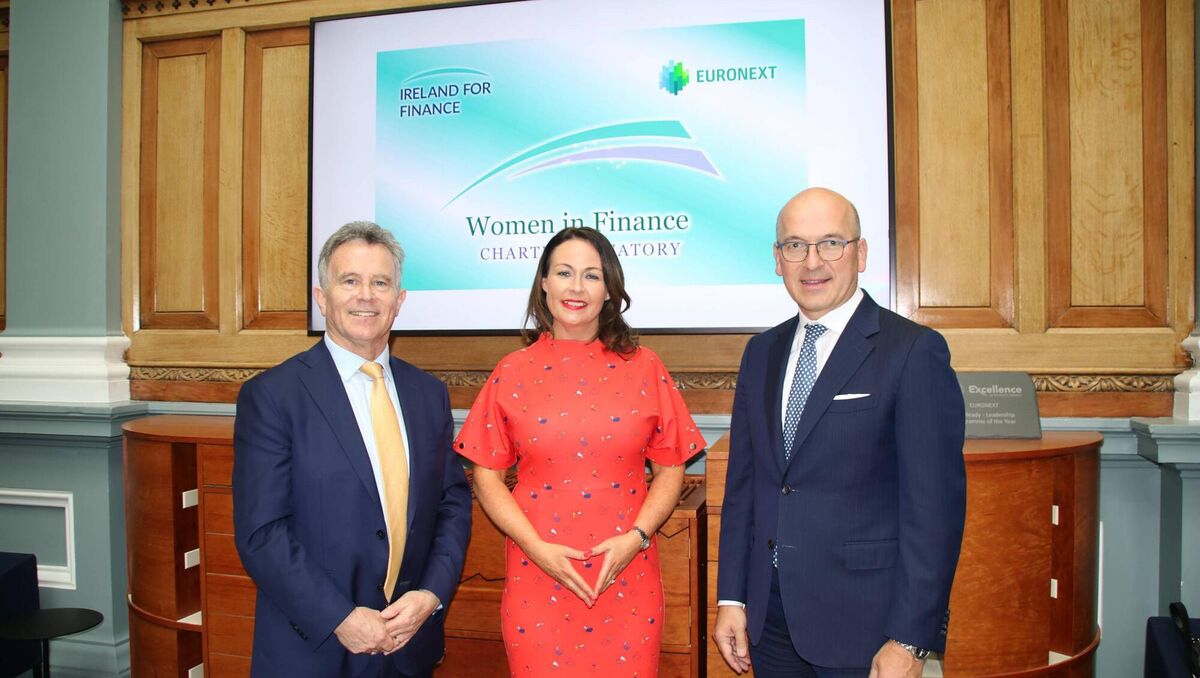
In April 2022, the Irish Government in partnership with Financial Services Ireland, part of Ibec, launched Irelands inaugural Women in Finance Charter, a pledge for gender balance and inclusivity at all levels across the financial services sector in Ireland.
A positive step that truly drives accountability, supported by the Government of Ireland, the Charter underpins the industry’s ambition to see increased participation of women at all levels, including junior, middle and senior management, leadership and board roles within financial services organisations based in Ireland. Bank of America was one of the first firms to sign up to the charter and continues to play an active partnership role with FSI and Ibec, measuring and communicating progress, accountability and tangible action.
On an internal basis, I am honoured to be a member of our Global Diversity and Inclusion Council, promoting goal setting, driving initiatives both locally and across the region and embedding diversity, equality and inclusion in our performance management process. Every employee has a clearly defined diversity and inclusion goal in their annual performance review as we believe that all employees play a significant role in our diversity and inclusion strategy, whether it’s our leaders in driving diversity representation progress or our employee networks who play a significant role in our inclusive environment. We have 6 employee networks in Dublin, with over 1,500 memberships.
The organisational benefits of women being properly represented in the workforce are clear. Businesses seeking to thrive, and truly leave a lasting legacy, will recognise that facilitating this is also a moral imperative. Collaboration, a focused strategy and real accountability will be key to making the ambition a reality.
Find out more at www.bankofamerica.com