Make this calving season less stressful for both farmer and cow
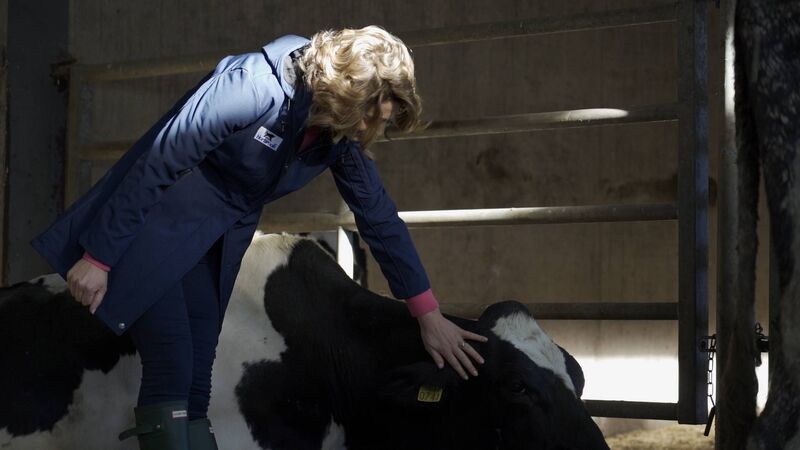
Norbrook Vet Adviser Maura Langan warns that milk fever cases are all too common during calving season.
All freshly calved cows are challenged to maintain normal calcium levels within the first 72 hours of calving. The production of colostrum and the onset of lactation creates a significant demand for calcium at the time of calving. When the transition cow can’t mobilise sufficient reserves quickly enough, she develops milk fever.
“As calving season gets underway, we inevitably start to see cases of milk fever,” explains Maura Langan, Norbrook Vet Adviser.
Studies suggest that 5-10% of cows are likely to suffer clinical milk fever, but for every downer cow there are many more within the herd that are affected subclinically. Although obvious signs are absent in subclinical milk fever, significant numbers within the herd can be affected and, if left untreated, these cows have an increased risk of other clinical disease around the calving period. This might include a difficult calving, retained placenta, left displaced abomasum, mastitis, ketosis or reduced reproductive performance.
“The long-term impact of milk fever on herd health cannot be underestimated,” warns Maura. “Calving is a stressful enough time for farmers, there’s no need to add the complication of milk fever when there are so many options available for prevention as well as treatment.”
In those clinical cases of hypocalcaemia when a cow actually goes down, prompt veterinary treatment with intravenous Calciject40 can be lifesaving, delivering calcium very quickly to get a downer cow back on her feet. “But it’s essential that treatment is followed up with a slower release oral calcium supplement if she is to fully recover. And if farmers are experiencing high levels of clinical milk fever, they should also be looking at ways to reduce the risk of milk fever and prevent those cows from going down in the first place,” cautions Maura.
In many Irish dairy herds, an oral calcium supplement like Calcitrace D3 bolus or Calcitrace P liquid may be given at calving to every cow at risk of milk fever. This provides high levels of both fast and slow-release calcium. Providing both forms of calcium ensures that blood calcium levels start to improve shortly after administration as well as helping to provide a sustained increase in calcium levels. This complements the cows’ natural processes and bridges the gap until she can mobilise her own calcium reserves.
“Calcitrace P liquid is a particularly useful product,” adds Maura. “It is easy to give; either directly from the bottle as a drench, added to ration or water, or even mixed with a fresh cow drink. As well as 59g of calcium, it also contains phosphorus an important mineral often lacking in cows with milk fever.”
Some cows struggle to adapt to the increased need for calcium more than others. Cows particularly at risk of milk fever include those that are over-conditioned (BCS 3.5 or more), under-conditioned (BCS 2.5 or less), older cows (third lactation plus), those with a history of milk fever, high-producing dairy cows and breeds such as Jersey.
“For these ‘at risk’ cows the initial Calcitrace bolus or drench should be followed up with a second dose after around 12 hours. It’s important to remember that milk fever is a metabolic disorder, so cows will need to be supported throughout the first three days post-calving according to their need. Farmers should discuss the timing of milk fever treatments as it really is crucial to successful outcomes,” concludes Maura.
Please click here for more information or visit www.norbrook.com.