Farming futures: Why it's crucial to handle emotions when handing down your family farm
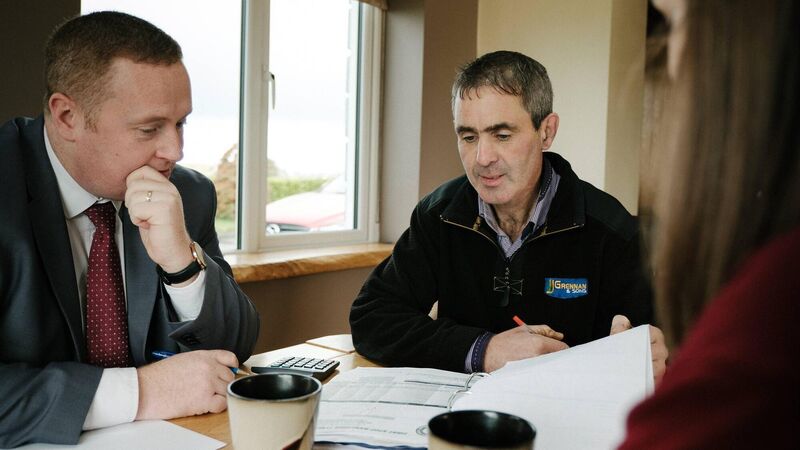
A chaired family meeting where all points of view are heard can be the best way to kickstart your succession planning.
Given the rising age profile of Irish farmers, it is worrying that so few have a formal succession plan. This not only puts farmers’ own financial security at risk, but it also potentially lines up problems for their families and successors.
As with all business decisions, the starting point for succession planning is clarifying your objectives. Do you want to continue to be involved in the farm? Have you a successor in mind? Have you clarified your family’s wishes? Asking your accountant or agri-advisor to chair a family meeting can be a good way to tease matters out and ensure that the decisions you make are not overly influenced by emotional factors.
There’s a lot to consider and it can seem overwhelming at first. But if you think of succession planning as a process instead of an action, it makes it much less daunting.
You know what your own concerns are, but how about everybody else? Let’s look through some of the possible points of view — it can be helpful to get an understanding of how others might be feeling, before you all get around the table at the family meeting.
Having worked on the farm all your life, you’ll need to prioritise your own financial security before transferring assets. You’ll need to think about the following:
• Your timeframe to exit the business?
• What level, if any, you wish to continue to be involved on the farm?
• Will you need or want to continue to draw income from the business?
• What will happen to the farm dwelling house?
• Will you need to avail of the Fair Deal Nursing Home Scheme?
• What are your wishes for your other children?
If you’re the incoming generation, you’ll need to think fully about your own situation and your life goals and aspirations. If you have a partner or spouse, their views are really important also. You’ll need to consider the following:
• Can the farm afford to support your desired lifestyle (and possibly the outgoing generation’s)?
• What’s your expectation on working hours, holidays, time off etc.?
• There may be additional benefits to your wages that should be examined from a reward point of view e.g. use of jeep/car, fuel, electricity, health cover etc.
• Can the farm meet your parents’ wishes to support siblings if applicable?
If there’s no willing successor in the immediate family, there are other options that you may wish to consider:
• Partnership
• Share Farming
• Transfer to niece/nephew
• Leasing
• Possible sale (part or full disposal)
Some of the above solutions may be an option where the landowner wants to take a step back from the day-to-day management of the business or in situations where an interim solution is needed until a successor becomes old enough to take over the farm.
A key decision will be whether the transfer of your business will take place during your lifetime or after your death. Your accountant will explain your options and help you choose which is best for your business.
If you decide on a lifetime transfer, you will need to protect your personal financial security and ensure that you will have adequate retirement income for you and your spouse/partner.
You can then decide what provision to make for your children. Remember a site can be given by a parent to a child tax-free provided the site is less than an acre and valued at less than €500,000.
The Income Tax impact of your plan on both you and your successor will need to be reviewed. Factors that can affect this include off-farm earnings, whether you intend to continue to draw an income from the farm, and so on.
You then need to look at the impact of capital taxes:
- Capital Acquisitions Tax (33%) is charged to the transferee however subject to satisfying certain conditions, Agricultural Relief can eliminate this liability.
- Capital Gains Tax (33%) is charged to the transferor. If you are aged under 66 and passing the farm to a family member, CGT relief is unlimited provided you satisfy the relevant conditions. If you are over 66, the relief is restricted to €3m. The rules are more complicated for transfers outside the family.
- There is a cumulative lifetime cap of €70,000 on the amount of tax relief that a young trained farmer can claim for stamp duty relief, stock relief and the succession farm partnerships tax credit.
For transfers after death, only Capital Acquisition Tax is payable. The rate is 33% on amounts received above a certain threshold. For parent to child transfers, the threshold is €335,000.
Regardless of how and when you intend to transfer the farm, once you know your objectives, you can document a sensible succession plan that will protect you, your family and your business. You will then need to update your Will to reflect the decisions you have made.
Contact ifac’s team of succession specialists today for an initial chat to get the ball rolling — you can also see ifac’s full Farm Succession Guide at www.ifac.ie.