Bring it back — how you can give your e-waste a new lease of life
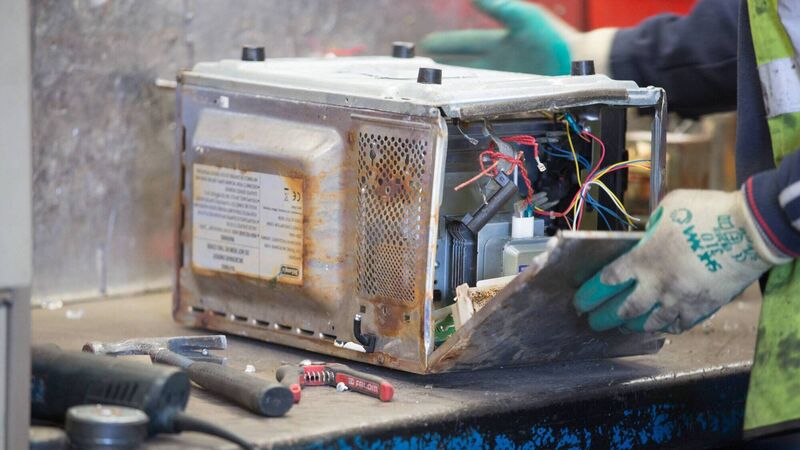
The Dream of Change campaign urges us to imagine a future where landfill and hoarding does not imprison our electrical waste forever.
The circle of life is not something that merely applies to us humans – it also has a deep and meaningful impact on our used electronic waste.
Imagine the tens of thousands of electrical products placed on the Irish market each year – and the staggering volume of technology, energy, raw materials and human labour involved in their manufacture.
In an ideal world, every gaming console, hairdryer, mobile phone, e-scooter and tablet would be used again at end-of-life, resurrected through our recycling system and reincarnated as new goods.
The stark reality is that many still end up hoarded away in our homes, out of sight and mind and their precious materials lost – or worse still, discarded in landfill.
It is critical, however, that in making this journey through the recycling system, that they travel through the authorised e-waste recycling network. This ensures components in electricals, batteries and lighting are properly recovered for reuse in manufacturing and any hazardous material arising is responsibly managed.
WEEE (Waste Electrical and Electronic Equipment) Ireland is now urging all of us to Dream of Change – to imagine a future where landfill and hoarding does not imprison our electrical waste forever.
And while recycling rates are on the way up, so too are our targets as the amount of new electrical goods being placed on the Irish market reaches unprecedented levels.
There is much room for improvement to confront the estimated 1.4kg of e-waste per person which is still ending up in our general rubbish bins in Europe.
From this point, there are only two outcomes – neither of them positive – as this vast collection of valuable materials are then either incinerated or sent to landfill.
Dream of Change envisages a world where neither happens – and implores people to follow one of four steps to ensure e-waste is properly managed: (a) find out where your nearest free local e-waste drop off point is (b) dispose of your e-waste at electrical retailers (c) use the dedicated blue battery boxes in supermarkets and (d) avail of free public e-waste recycling events as they take place.
One of the key things consumers are encouraged to embrace is to stop hoarding electronic goods estimated at 4-5kg of e-waste per person across the EU.
That habit can be broken simply by regular decluttering, repairing, donating, selling or taking items we rarely or never use, to a free e-waste collection point.
It is now more important than ever to rescue such waste after consumption of new electrical devices such as mobile phones, computers, small kitchen appliances and white goods soared during the pandemic.
The list of e-waste is long - and our consumption is only going in one direction. In 2021, an average of 12 household electrical products were sold for every person in Ireland.
In the same year, the equivalent of 231,179 tonnes of CO2 emissions were avoided by recycling e-waste through the WEEE Ireland Scheme as opposed to disposal in landfill – equal to the annual carbon consumption of 4,624 hectares of trees.
WEEE Ireland ensures that such waste is handled in a safe, secure and environmentally sound manner using its network of Irish collection and recycling partnerships and specialised downstream European facilities.
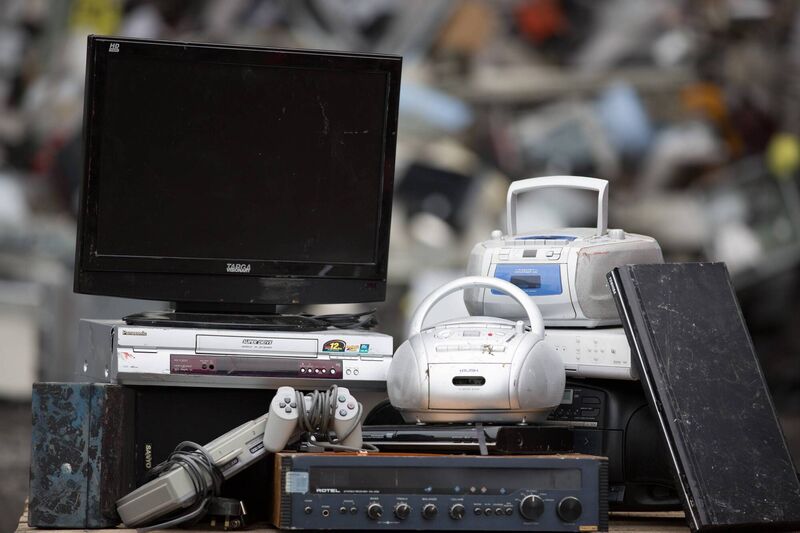
Its systems divert over 18million appliances and devices away from landfill each year.
But what motivates our decision to recycle electrical waste?
Much of it revolves around the knowledge or the thought that recycling is something extremely positive.
It is also determined by convenient collection points, social norms, care for the environment and benefit to charities.
Many of us, however, may not be familiar with the journey our end-of-life items take before they return as new products, completing the remarkable cycle of the circular economy.
This is how it works: e-waste is dropped off at WEEE Ireland authorised collection sites, including Local Authority Recycling centres, participating electrical retailers and special collection events across the country.
The products are then sent to audited and approved specialised recyclers for processing.
Modern technologies are used to break down end of life appliances and harvest the raw materials that went into them - including glass, plastic and precious metals such as gold and copper.
Substances of concern like mercury and lead from are also handled responsibly to protect both the environment and the health and safety of the workers handling them.
The recovered materials can then be put back into manufacturing and used to make new products.
When you bring your electrical waste, batteries or lighting to WEEE Ireland authorized collection points, you are directly helping to divert it from landfill, preventing it from being illegally dumped, exported, or handled by unauthorised operators.
Since 2005, WEEE Ireland has worked on behalf of its industry members to develop a successful national recycling system, accessible to all.
But it has only been made possible through the great efforts of the Irish public and collaboration with key stakeholders.
Complacency is the enemy of progress, however, and the e-waste challenge continues.
WEEE Ireland is urging people to tackle the e-waste challenge by de-cluttering their homes of end-of-life electricals, batteries and bulbs and bringing them for free recycling to their nearest Local Authority recycling centre or participating electrical retailer.
A list of hundreds of drop-off points around the country can be found HERE.