Diagnostics can help transform the Irish healthcare system
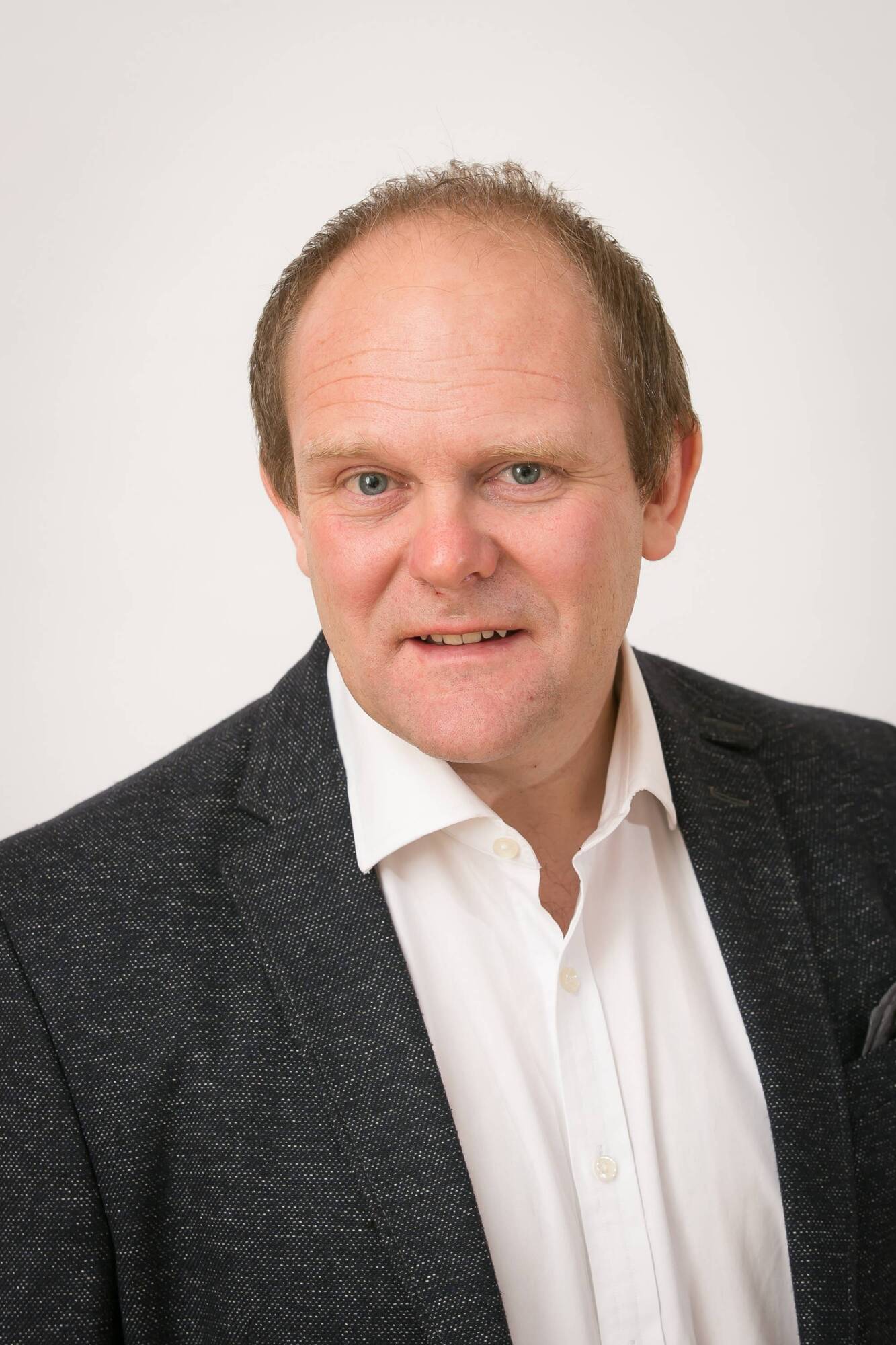
Leonard Marshall, head of healthcare development at Roche Diagnostics
There’s synergy between Roche and CUH Charity, and in discussing the commonalities between the two, Leonard Marshall, head of healthcare development at Roche Diagnostics told the Irish Examiner: “Our Roche values of ‘doing now, what patients need next’ are reflected in the ambitions of the CUH Charity to enhance and modernise paediatric services at CUH; services that will benefit the patients, their families and the medical teams who work there.”
Explaining the value of diagnostics and how, by playing a greater role in primary and community care services, it can help transform the Irish healthcare system, Marshall says. “when we consider how far we have come over the last 20 months, we can start to really appreciate the value of having diagnostic tests to detect and track SARS-CoV-2.
“The impact of the 8.4 million PCR Tests performed to date in Ireland has directly supported the public health strategy and decision making around citizen protection and the safe reopening of our society and economy. However, this is a diagnostic test for just one virus.
“Every day in Ireland, hundreds of thousands of diagnostics tests are performed within our screening services. These tests are used in the diagnosis and management of infectious and chronic diseases. They support clinicians to guide patients towards the appropriate novel treatments including immunotherapy in managing cancer.
“They’re also used in genomic sequencing to support the diagnosis of developmental disorders and rare diseases, so as to better understand complex cancer biology.” Stressing then that the importance of diagnostic testing cannot be downplayed, Marshall says: “An estimated 70 per cent of clinical decisions are supported by at least one such test.” On the topic of how the Irish public can access diagnostics and what’s available in primary care, he says: “We have started to see positive changes in how healthcare services are being delivered, through service integration between secondary & primary care.
“The system is evolving towards a universal health care that is focused on primary and community care, and built on three healthcare drivers: delivering for the public, innovating for the future and developing people and organisations.” Confirming then, that there is a role of direct access to certain diagnostic tests within primary care, one that complements laboratory-based diagnostics, Marshall explains: “These are referred to as ‘point of care tests.’ We are starting to see them in the management of chronic diseases such as diabetes, where HbA1c and lipid profile tests are being performed in pharmacies.
“Patients who are on warfarin can have the coagulation status of their blood measured in a primary care setting, to support the adjustment of their warfarin dose. C-reactive protein point-of-care testing can inform antibiotic prescribing for patients presenting with symptoms of acute respiratory tract infections in primary care, and of course, some pharmacies offer a rapid SARS-CoV-2 antigen test.” The talk then turns to the main barriers to accessing diagnostics in Ireland and Marshall says: “Across Ireland, there’s quite an extensive laboratory network operated by expert medical scientists and consultant teams.
“Early this year, Health Minister Donnelly announced a reimbursement model that gives GPs greater access to imaging diagnostics, and to NT-proBNP, a blood test that can rule out heart failure. This investment will support the earlier diagnosis of diseases, and the potential for better patient outcomes.” Acknowledging then, that access to point-of-care diagnostics is currently limited, he lists some of the challenges as reimbursement, a requirement for a laboratory-led governance structure, connected primary and secondary care patient information systems, and GP and pharmacy incentivisation.
Besides partnering with CUH Charity, Roche Diagnostics is also supporting a remote monitoring heart failure management clinical study, ‘Heart Care at Home,’ in partnership with the primary care organisation, Centric Health.
“In this study,” says Marshall, “patients diagnosed with heart failure use an app to provide body weight, blood pressure and heart rate measurements to a cardiac care team; data which may lead to medical interventions such as medication titrations being made in consultation with their GP. Over 100 patients have enrolled in the study and we are seeing very positive outcomes, with a number of hospital readmissions already being avoided.
“With Centric Health, Roche has brought this study into a Living Lab programme run by HSE Digital Transformation, allowing us to share study outcomes with the HSE and identify where there’s value for the healthcare system in scaling this model nationally.” Roche was one of the first companies to develop a PCR test for coronavirus SARS CoV-2, then scale production in response to global demands. “As the pandemic evolved,” says Marshall, “we responded with different ‘types’ of tests for Covid-19, including laboratory-based antigen and antibody tests, as well as point-of-care antigen and antibody tests. We also increased production of essential diagnostic tests such as inflammation markers to support the management of patients hospitalised with Covid-19.
“In Ireland,” concludes Marshall, “we worked in partnership with the HSE and the National Clinical Pathology Programme, to build testing capacity and capability within the laboratory network. Today, a PCR can simultaneously test for both coronavirus SARS CoV-2 and the influenza A and B viruses. Meanwhile, demand for rapid Covid-19 antigen self-tests is increasing, particularly across the pharmacy network, where healthcare professionals are providing customers with correct use advice.”