Insulating your home for cost and energy savings
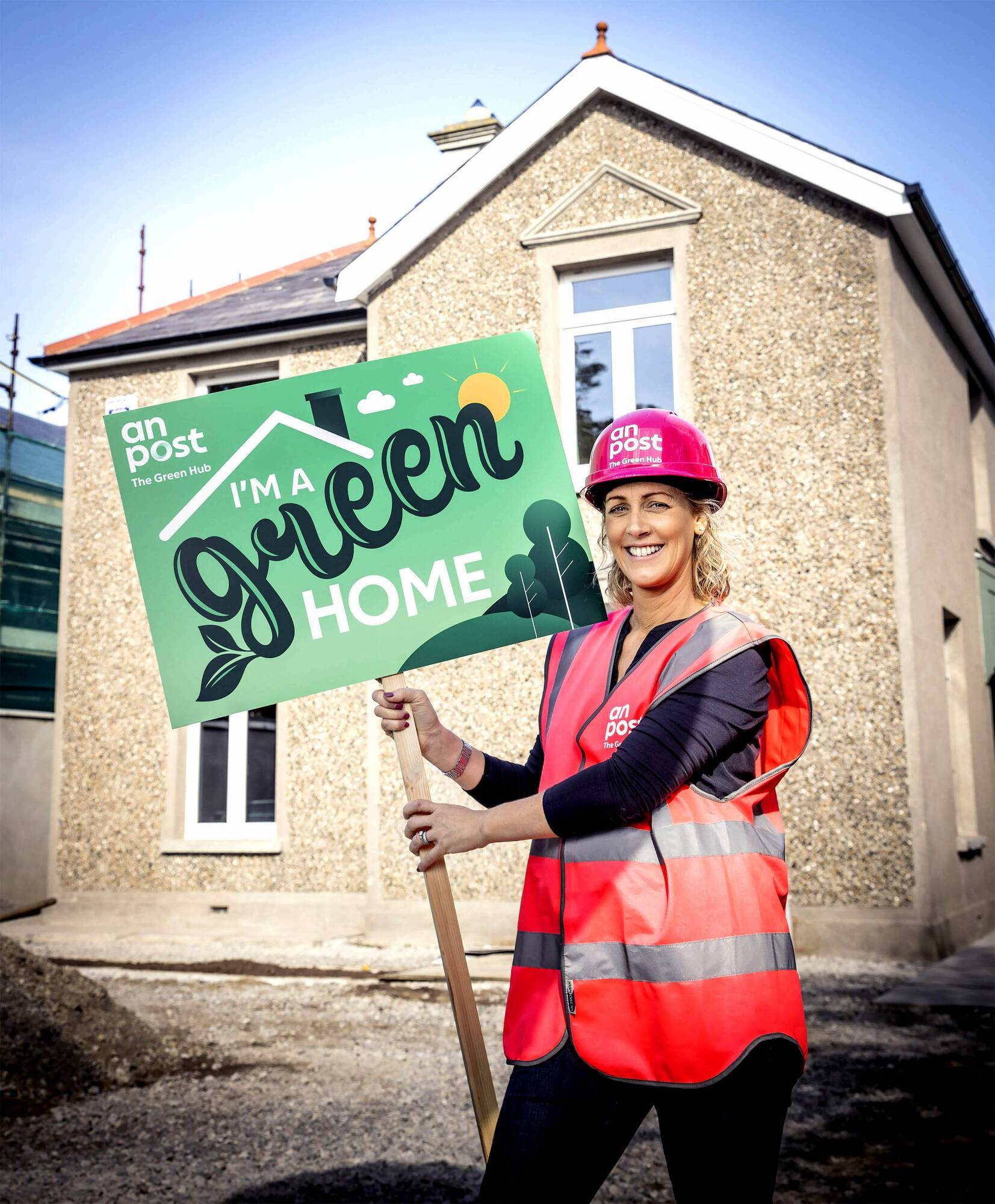
Pictured at the launch of An Post’s Green Hub is Quantity Surveyor Patricia Power. The Green Hub is a resource offering homeowners need-to-know information and access to expertise, high-quality service providers, and low-cost loans to help simplify their journey to having a more energy-efficient, comfortable, and sustainable home. Pic: Marc O'Sullivan

Creating More Sustainable Homes
Improving the thermal efficiency of your home has the power to reduce heating bills, prevent heat loss and transform your house for sustainable living.
Achieving this can be done in many ways. Changes can be made piece by piece, or all at once if your budget allows.
Although it can be difficult to find sound advice for sustainable living, the Green Hub from An Post connects homeowners with free assessments of their home which allow them to consider all of the changes they can put in place to make a difference, including upgrades to prevent heat loss and creating a greener home.
At the very early stages of a project, I love to view a property in its existing state and chat with the owners to get a feel for the issues and problems that they have within their home. Common complaints are drafts and coldness in the house. Most of these houses are fine when the heat is on, but as soon as it’s turned off, they become cold almost immediately. Sound familiar?
Making a few changes to your home’s windows and insulation can help retain heat for as long as possible, keeping you warm and cosy and reducing your heating bill.
Windows should always be the first consideration. Changes can be made easier with a specialist window replacement company.
I always recommend upgrading windows to triple glazing. The additional cost versus double glazing is minimal, but the results are windows with a better acoustic value and a feeling of a more secure home. This also benefits the u-value, which measures the insulating characteristics of the class, including the heat flow or loss that can occur due to different indoor and outdoor temperatures.
Upgrading windows gives homeowners the opportunity to give their house a facelift, by changing the window break-up. Homeowners could choose to add more opening sections, or less if preferred. If this is the sole change homeowners choose to make, they may also have to re-paint window boards, window heads, reveals, and maybe even entire rooms.
When upgrading your windows, ask your specialist to use thermal foam and airtightness tape. This will prevent drafts caused by the junction of the window and the wall because of poor fittings and sealing standards of the past.
Homes without good insulation cost more to heat up and warm up. Insulating your roof or attic can reduce heat loss by up to 30%. This is usually the most cost-efficient home energy upgrade. The Green Hub from An Post can help homeowners identify the cause of heat loss in their homes and secure the right grant to cover the costs involved in home insulation.
Once your windows are replaced, consider your insulation options. First, insulate the attic. If accessible, check what insulation lies between the ceiling joists.
In older homes, this is usually non-existent or the minimum of 100mm depth, which is quite poor. Unless the existing insulation is in a poor condition, leave it in place and aim to install a thermal mineral wool insulation with an overall depth of 400mm, usually 200mm in one direction and 200mm in the other, to get full coverage. You may need to increase the ceiling joints locally and add a timber walk-on platform to access water tanks in the attic to avoid compressing the insulation. Insulating the attic is like putting on a hat. Heat rises, so you will see an immediate benefit from this work.
Next, tackle external walls. External walls are another high source of heat loss. It’s best to do this after or at the same time as your window replacement. There are two main external insulation options that could meet the needs of your home: external wall insulation or dry lining.
External wall insulation can add 100-150 mm of rigid insulation to the exterior walls of your house, giving complete coverage and avoiding any cold bridges. When adding external insulation to your home, consider your windowsills, which will need to be made deeper and an adequate depth of fascias and soffits to take the thickness off the insulation. Downpipes will also need to be adjusted. A professional external wall insulation company will guide you through this process.
External insulation also allows for a coloured render system, thinner than a more traditional sand cement render, but maintenance-free and available in a range of colours. This is more expensive, but if you are not moving out of your home or planning to redecorate, it saves in the long run.
Another option is internal insulation, known as dry lining. This involves using insulated plasterboard varying in thickness, ranging from 82mm to 112mm, to suit your home.
The plasterboard is applied to the inner face of the external walls of the home. This means the existing skirting boards and sometimes floor finishes will need to be removed for application.
Sockets, switches, and radiators on these walls will also need to be adjusted and moved out in line with the new board. This plasterboard gets a new skim finish, which needs to be painted, and new skirting boards and window boards must be fitted internally.
This approach is more invasive. It is difficult to live in a house while this is happening. If you are dry lining, you’ll also have to consider the time it will take to make electrical and plumbing changes, and whether re-plumbing or re-wiring is required.
In some homes, it may be feasible to insulate the ground floor. This is highly recommended for homes with suspended timber floors, floorboards on wooden joists, or low-level block walls. To determine whether your home has a suspended timber floor, look outside your house.
Wall vents at low levels supply air to the timber, keeping them dry and preventing rot. Unfortunately, these also add to the chill factor in your house. The recommendation is to take up the existing floorboards, insulate between joists and reinstate floorboards or new plywood.
Another option, although more expensive, is to remove floorboards, joists, and vents, and fill the ground with hardcore, radon barrier insulation, and a new solid concrete floor. This means that you will also need new floor finishes, skirting boards, and possible redecoration.
This guide is a starting point for your journey towards sustainable living. While most of these changes can’t and won’t be seen by the eye, they will transform the entire thermal comfort, u-value, and BER of your home.
With these options in mind, The Green Hub from An Post is a one-stop shop for your sustainable home energy upgrades. Starting with a free home assessment, conducted in partnership with SSE Airtricity, use the BER energy efficiency tool that shows you the energy upgrade recommendations for your home, as well as end-to-end project and grant management, and low rate Green Loans. Helping you transform your home, so it’s cosier and cheaper to run.
To learn more about the Green Hub from An Post—visit www.anpost.com/Green-Hub