MTU lifelong learning ladder of opportunity scales new heights
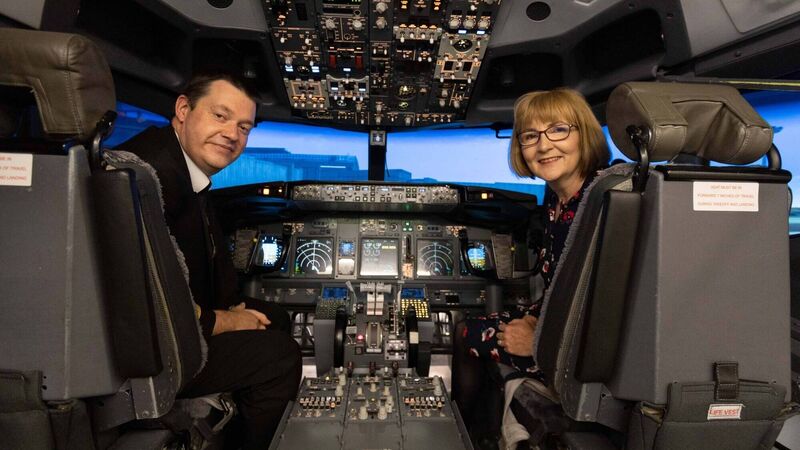
Captain Kyle Johnston, AFTA, with Prof Maggie Cusack, president of MTU, in a flight simulator at the launch of the BSc in Global Business and Pilot Studies degree and flight training programme. Picture: Darragh Kane
Lifelong learning is at the core of Munster Technological University (MTU), the courses it offers and how they are delivered, according to the University’s President.
MTU offers the full range of higher education qualifications, including Apprenticeships, Bachelor Degrees, Honours Bachelor Degrees, Masters and PhD degrees, as well as government-funded courses under the Springboard+ and HCI initiatives, with both part-time and full-time options available.
Speaking to the Irish Examiner, MTU president Professor Maggie Cusack highlighted the importance of offering flexible courses at all levels that are designed in conjunction with industry leaders to ensure a positive impact on Irish society and the economy.
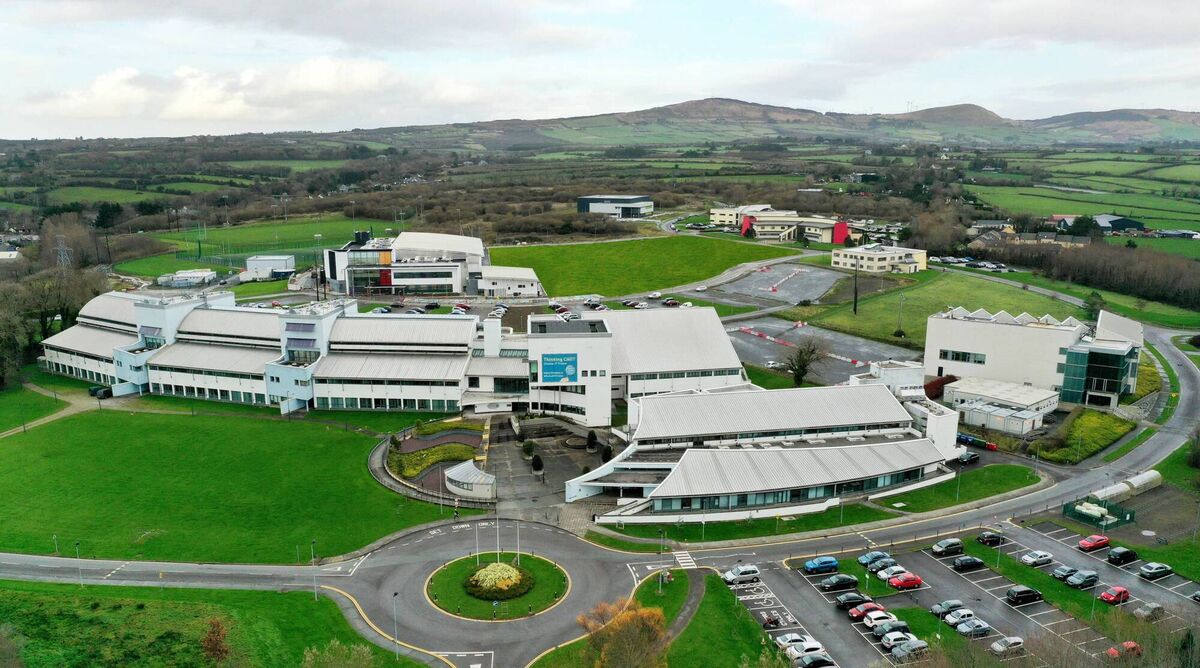
Professor Cusack also emphasised that people approach learning in different ways and that MTU accommodates these different approaches by providing part-time and full-time courses, from apprenticeships to PhDs, delivered in class and online.
“The breadth of topics that are offered at MTU and the different approaches provided in terms of delivery really make us stand out,” said Professor Cusack. “Lifelong learning is integral to our mission and it runs through everything that we offer.”
Professor Cusack explained that MTU’s courses offer flexibility to everyone from Leaving Cert students to early school leavers looking to get back on the education ladder.
“This is a real strength of MTU. We recognise that people approach their learning in different ways so that flexibility which we offer is really, really important.”
Professor Cusack also highlighted the importance of allowing people from all backgrounds and abilities to pursue the level of qualification they desire and giving them the option to return for further learning.
“Someone may want to come and do an apprenticeship or an undergraduate course, and then go into the workplace, and I’ve spoken to graduates who have taken this approach.
“Some have then upskilled to a Masters when in the workplace and others have gone on to do a PhD. That flexibility is there for students and as well as benefiting early school leavers, it also benefits people who may be working in an area for some time and are now looking to reskill or upskill,” she added.
MTU offers a wide range of part-time undergraduate and postgraduate courses. In fact, it is one of the largest providers of part-time and evening education in Ireland’s higher education sector.
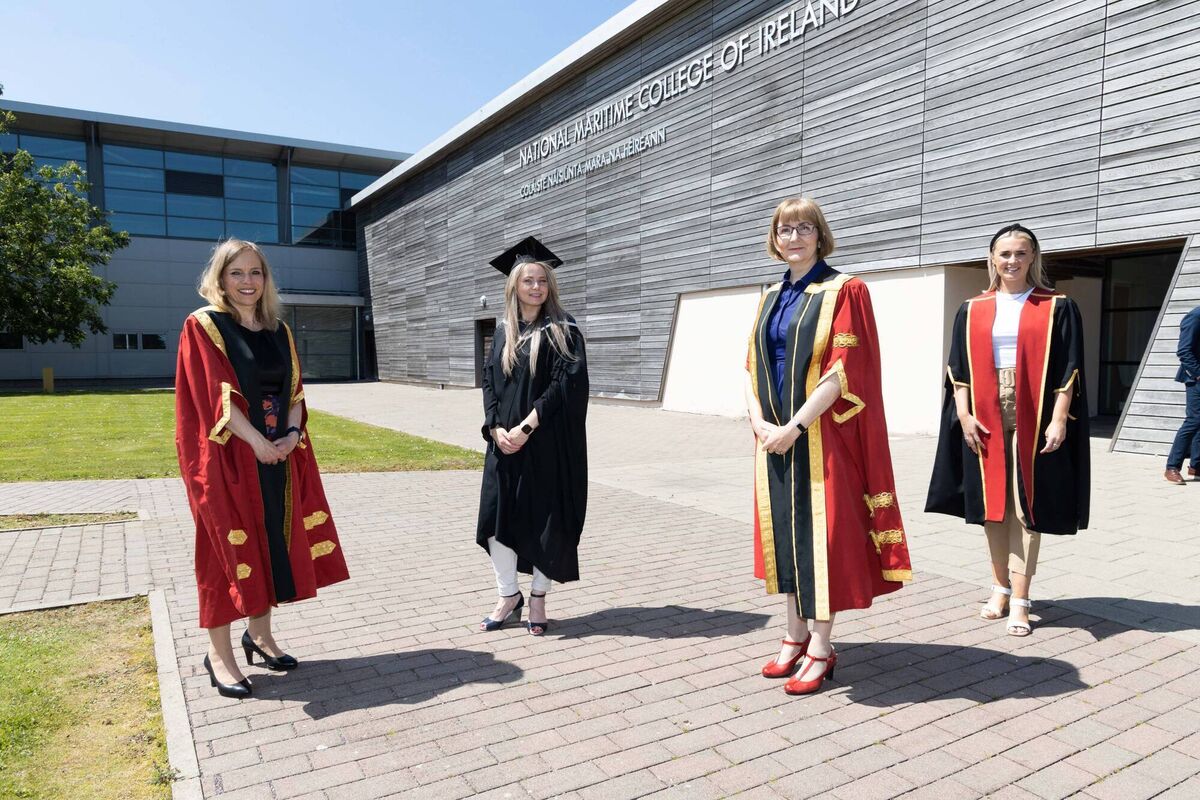
Professor Cusack highlighted the “ladder of opportunity” at MTU which allows students to progress from one degree to the next, or take their qualifications to the workplace before eventually returning for upskilling if desired.
Professor Cusack explained that the part-time courses offer greater flexibility for those with other commitments outside of education.
“Not everyone has the same circumstances when it comes to learning and everyone has a different life, work or family commitments,” she said. “So offering that wide-ranging portfolio of courses and delivery modes is a huge strength of MTU and one that supports different approaches to learning.”
Professor Cusack also highlighted the important role that technology-enhanced learning has played over the past 18 months, and the role it can continue to play alongside in-person learning to ensure that learning is flexible for those seeking to access it.
“I think that there is a lot to learn from technology-enhanced and online learning,” she said.
“Many of our students report benefits to this type of learning with aspects that they really enjoy.
“It’s about achieving the optimal balance between online and in-person learning, and at MTU we can provide that flexibility for learners whether that be in part-time or full-time courses,” she added.
The fact that MTU’s courses are designed and delivered with the help of industry partners with a focus on workplace needs is another advantage of the Technological University, according to Professor Cusack.
“Our courses are developed in conjunction with industry partners and businesses so we know exactly what their workplace needs are,” she explained.
“This level of collaboration ensures that our students are workplace-ready when they leave MTU and that what we’re delivering here on campus is up-to-date and relevant to that sector.
“It’s so important in fact that we have set up an Extended Campus unit to actively link with companies to ensure our delivery is relevant and that our students are learning what is required,” she added.
“The benefits are also there for the part-time learners through partnerships with companies.” Professor Cusack explained that, with the arrival of the Covid-19 pandemic, the idea of the traditional workplace has changed and evolved.
She said that institutes of learning have a responsibility to adapt to this change as well to ensure that they are offering students up-to-date, relevant learning that can be taken into the workplace.

Professor Cusack stated that MTU’s partnerships with businesses and industry leaders ensure that the University is in a strong position to do exactly that.
“So much has changed in the workforce over the past 18 months and things will continue to change — education providers need to be able to adapt and that’s a strength of MTU. We work with industry experts not just to respond to current needs but to predict future directions and anticipate future needs. We continuously refine our courses to take account of the skills required immediately and in the years to come.
For further information on MTU part-time and professional courses, please visit www.mtu.ie/part-time
The airline industry has always been a significant part of the Irish industry. With major players such as Ryanair and Aer Lingus firmly rooted here, it was no surprise that MTU would ultimately engage with this sector and help to meet its continuing professional development needs.

Through an engagement with the Atlantic Flight Training Academy (AFTA), Munster Technological University now offers a custom-designed course specifically tailored for those with careers as airline pilots.
The Bachelor of Arts (Hons) in International Business with Aviation Studies is an online course that recognises the initial training of pilots through Recognition of Prior Learning (RPL).
In the creation of the course with the support of AFTA, MTU deemed the pilot’s initial training as being equivalent to the first two years of a degree. This recognition allows pilots to achieve an honours degree award in just two additional years which focus heavily on business topics.
For various reasons, including the high initial cost of pilot training, many pilots forego the opportunity to undertake a degree upon leaving school and, given the challenging nature of the pilot’s working environment, on-campus study is often logistically impossible.
Working with MTU’s Technology Enhanced Learning Department, the University now has enrolled over 200 pilots on the programme since 2018. Dr Pio Fenton, Head of Dept of Marketing & International Business, states that the collaboration with AFTA was key to being able to develop this programme.
According to Fenton, “AFTA’s insight into an industry with specialist needs combined with MTU’s responsiveness and strong reputation led to an exceptional collaboration that now has significant recognition and support in the airline industry.” More details on the programme may be found at www.cit.ie/businesswithaviation.