Cork, a cut above when it comes to saving the environment
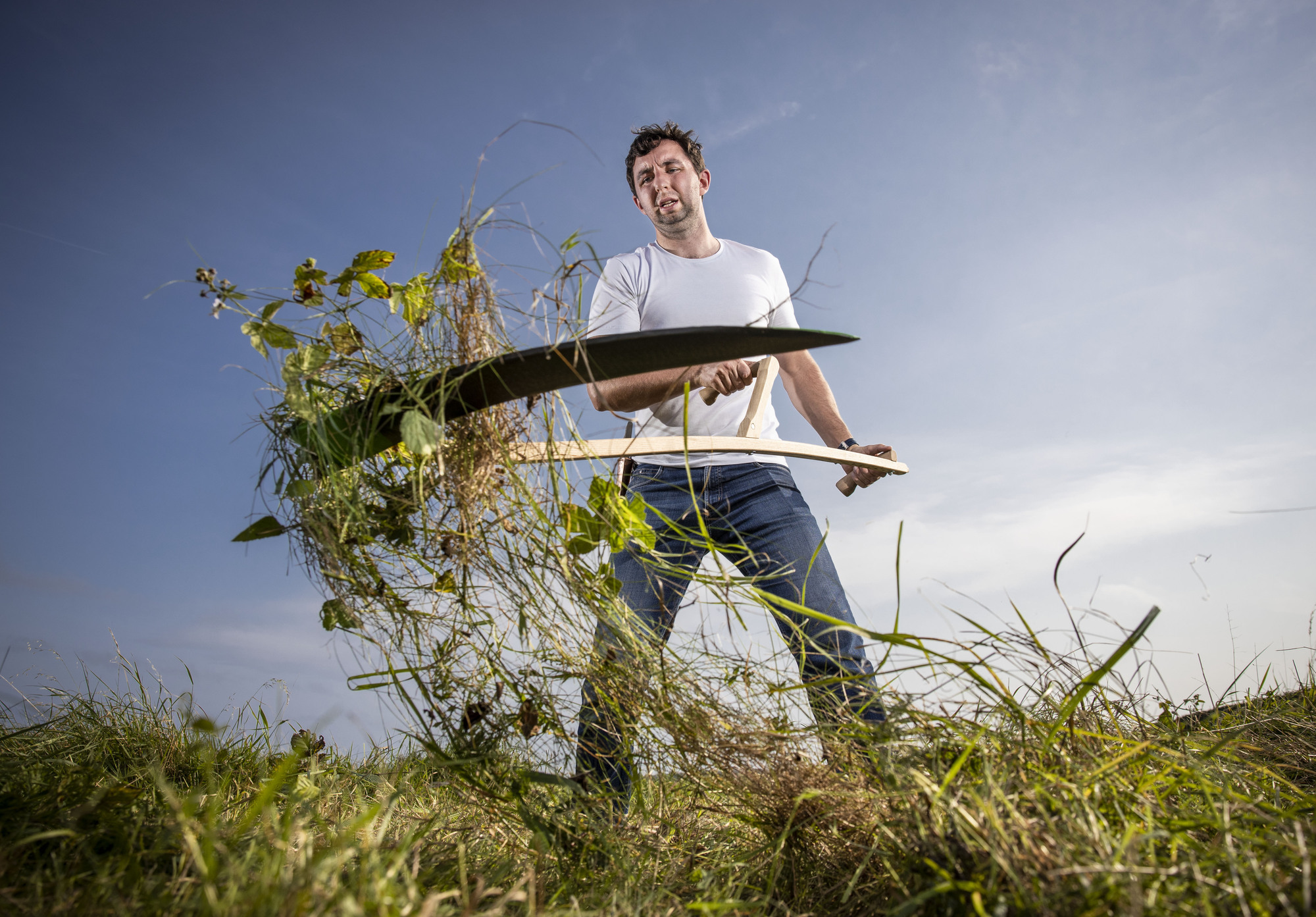
'Scything by the sea', Archie Laffan, Midleton, of An Faobhar Scythe group scything at Ardnahinch, Co Cork as part of the East Cork Biodiversity Networking Programme, creating ideal environments for bees, butterflies and other pollinating insects. Scything is less disruptive to wildlife than machinery. Photo: Cathal Noonan
With a range of projects in the mix as Cork County Council rises to the challenge setting the course for a sustainable future — there’s something for everyone to enjoy.
From pedestrian and cycle route networks to a five-acre wildflower meadow- you can create memories whilst enjoying the amenities that will give the next generation a more sustainable future.
So get your coat on and take your pick from the menu of Cork’s new green attractions below.
Cork County Council is the lead Local Authority for the Atlantic Seaboard South Climate Action Regional Offices (CARO), which supports and coordinates climate action for the five Local Authorities of Clare, Limerick, Kerry, Cork City, and Cork County. CARO coordinates and supports local government to lead transformative change and measurable climate action.
Cork County Council’s Climate Adaptation Strategy guides how it will meet challenges and develop innovative and sustainable solutions to build resilience in a changing climate. The Council has a pivotal role for County Cork’s adaptation to Climate Change and in building a new low carbon resilient economy, while continuing to deliver on creating opportunities for everyone.
A range of sustainable travel projects, from pedestrian and cycles route networks to bus corridors, are being progressed by the Council with an emphasis on active travel and connectivity within the county. The overarching objective is to connect people to places and to make our county towns and villages more sustainable.

This year Cork County Council secured a total of €15.8 million from the National Transport Authority for sustainable travel projects, €7.5 million of that for ongoing projects within the Cork County Metropolitan Area, with an additional €8.3 million for investment in walking and cycling infrastructure across county towns and villages.
This 6.5 km pedestrian and cycleway runs from Ballinacurra to Midleton Train Station and from Bailick Road to Gaelscoil Mhainistir Na Corann passing through many townlands en route. The plans incorporate a one-way system for traffic from the south of the Bailick Road to Charlestown Wharf, a traffic light shuttle system at the N25 underbridge on the Bailick Road, and an underbridge under the existing railway line.
The route features segregated cycle facilities, shared use pedestrian options, cycle paths, and greenway. Sustainable transport is about balancing current and future needs and accordingly this project offers enhanced connectivity for retail and employment while promoting sustainable transport choices. The detailed design is currently out to tender.

Cork County Council’s sustainable travel plans play an important role in promoting sustainable economic development, especially in Metropolitan Cork and the Council is progressing sustainable travel interventions in the strategic employment centres of Little Island and Carrigtwohill.
Carrigaline Transportation and Public Realm Enhancement Plan (TPREP) is being prepared for public consultation this summer while the design for Carrigaline to Glenbrook and Ringaskiddy Pedestrian & Cycle Route is ongoing. A Pedestrian & Cycle Bridge over Owenabue River in Carrigaline is being prepared for planning application. Phase 1 Construction of Dunkettle to Carrigtwohill Pedestrian will be completed in Q2 with Phase 2 starting soon after.
Little Island Active Travel and Public Transport Interventions designs are being finalised while the Outline Design of Phase 1 Carrigtwohill to Midleton Inter-Urban Cycle Route is ongoing. The Pontoon-Dwyers Road Cycle Route in Midleton is nearing completion.
One-third of our bee species are threatened with extinction because we have drastically reduced the amount of food (flowers) and safe nesting sites in our landscapes. Councils can play a leading role in making their land more pollinator-friendly. To help our struggling pollinators we need to ensure they have food, shelter, and safety from chemicals such as pesticides.
A pollinator-friendly focused change in land management undertaken by Cork County Council in Midleton has proved remarkably successful. The Midleton Pollinator Plan, adopted by members of East Cork Municipal District in February last year, aims to manage habitats for pollinators and raise awareness about pollinators. It outlines various location-specific actions to protect and enhance natural and semi-natural habitats and to enhance other areas for pollinator species.
A wildflower meadow developed at Midleton Lodge Park in 2019 surpassed all expectations. Natural regeneration from the existing seed bank flourished with a significant increase in pollinators. The five-acre flagship meadow provides sanctuary to our beleaguered bees and plays host to a wonderful variety of native wildflowers. The rare Bee Orchid made an exciting surprise appearance in the first year. The meadow is a model for sustainable land management methods that are easy, cost-effective, and good for the environment.
Public parks and open spaces in the Council’s care play an important role in increasing connectivity between pollinator-friendly sites in the wider countryside. Flower beds are planted with pollinator-friendly perennials and the spraying of pesticides has been reduced with road verges in Midleton and Ballinacurra allowed to bloom into long flowering meadows producing a spectacle of over 300 rare Bee Orchids in 2020.
The work carried out so far has transformed some sites such as the Midleton Lodge Park and Midleton Northern Relief Road. Progress on the implementation of the Midleton Pollinator Plan is carefully tracked through ecological monitoring. Success is not measured in having the Plan, but by knowing that it is working.
Pollinator plans are currently being rolled out in the towns of Carrigaline, Kinsale, Bantry, Macroom, Kanturk, and Fermoy where Cork County Council looks forward to working with local communities to replicate and extend the success of the Midleton project across the county.