Calf rearing: Guide to getting the basics right
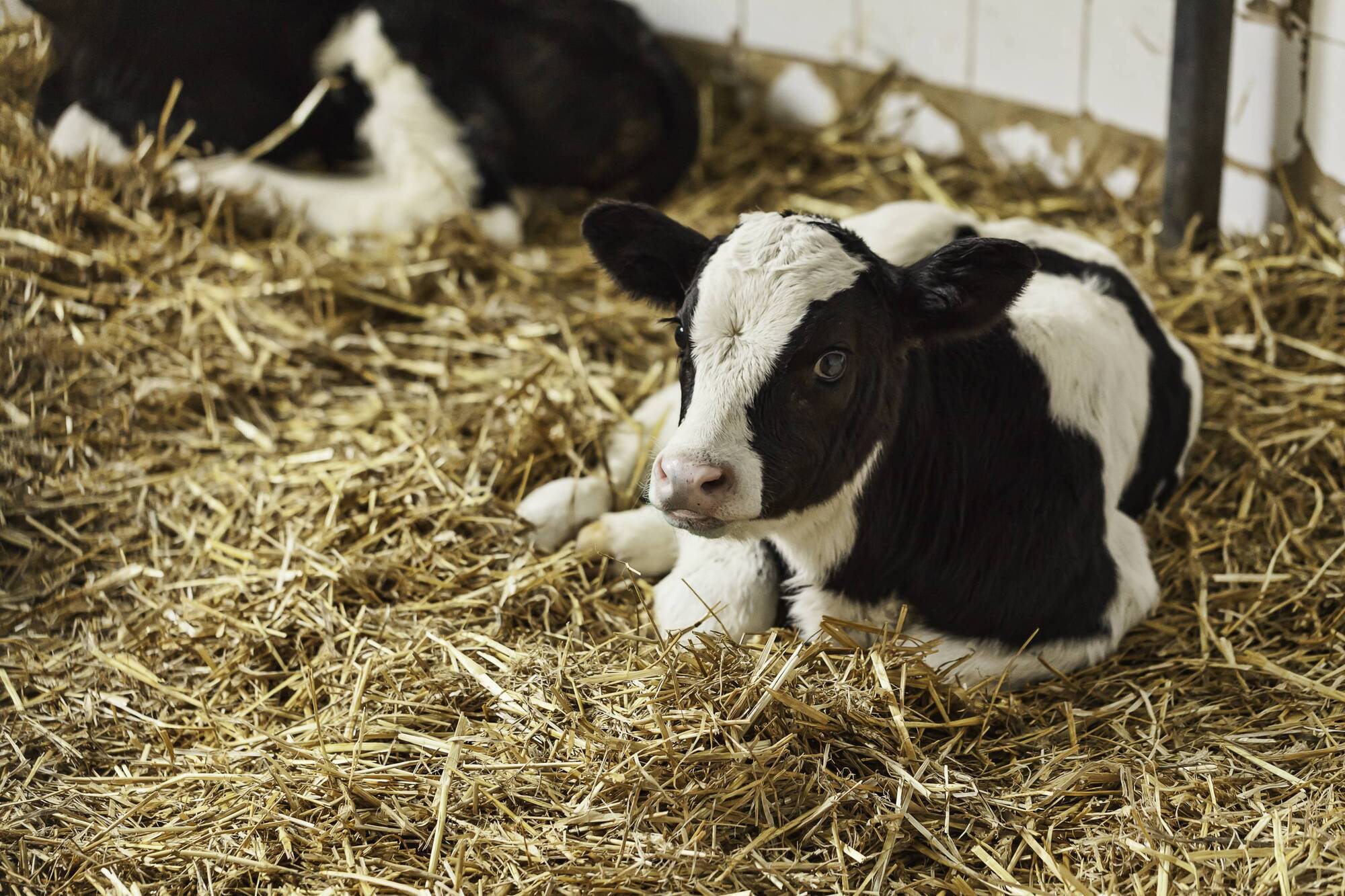
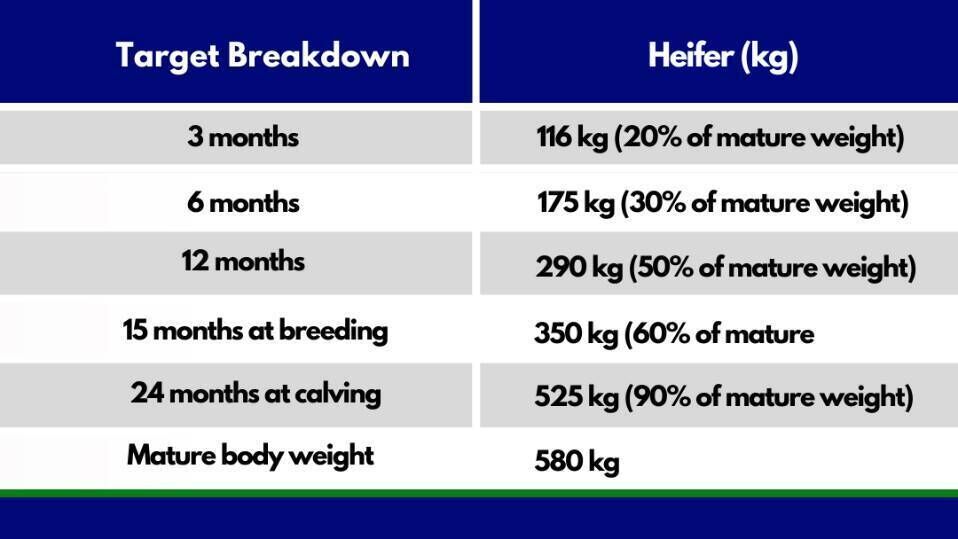
To reach their growth targets, replacement heifers need to achieve a steady gain of approximately 0.75 kg/day from birth.

The ultimate goal of calf rearing is to set up a heifer to achieve target weights over her lifetime in order to maximise profitability. These targets will include doubling her birthweight at the point of weaning, achieving 60% of her mature weight at breeding, and calving down at 24 months at 90% of her mature body weight.
To reach such targets, replacement heifers need to achieve a steady gain of approximately 0.75 kg/day from birth. Therefore, adopting best practice calf rearing advice and protocols are of key importance over the next few vital weeks.
When feeding colostrum, it is essential that the 3-2-1 rule is adhered to. This includes providing the calf with a minimum of 3 litres (or 5-6% of a calf’s birth weight), within 2 hours of birth, using colostrum from the cow's first milking. This process should then be repeated 8 hours later; however, it is important to note that by the second milking, the dam’s immunoglobulin content will have halved.
Cleanliness of colostrum is a huge dictating factor as the amount of dirt particles or contamination to the colostrum before entering the calf will limit the amount of immunity absorption available. With this in mind, it is essential to ensure that all utensils are sterile and that milking protocols and good colostrum harvesting hygiene are applied.
Facilities ideally should be clean, dry, draught-free, with good ventilation/airflow. A new-born calf will spend over 80% of their time lying down, therefore it is imperative to provide a deep, warm, dry bed always.
Calves should spend minimal time periods in the calving pen to avoid picking up infection or disease. To avoid carrying disease into the calf shed over the peak calving months, set-up a disinfection point at the entrance to the calf shed. Early detection of sick calves and isolation to avoid spreading bacterial infections is also of high importance.
Starter concentrates and ad lib fresh water should be available to the calf from three days of age. A clean source of long roughage/fibre (ideally straw) should also be available at all times to promote dry matter intakes. This forage should be offered above ground level in racks/mangers.
Weaning should only ever be considered once calves are consuming 1.5 kg of concentrates/day. Weaning calves on a weight basis, compared to an age basis, will result in having a more uniform batch of calves.
When it comes to milk replacer, the three main benefits include:
- Cost-effectiveness
- Reduced risk of disease transfer within the herd
- Consistency in the calf’s diet
Milk replacer should be dairy derived and contain a high dairy content. Dairy proteins are more easily digestible and available to the calf compared to plant-based proteins.
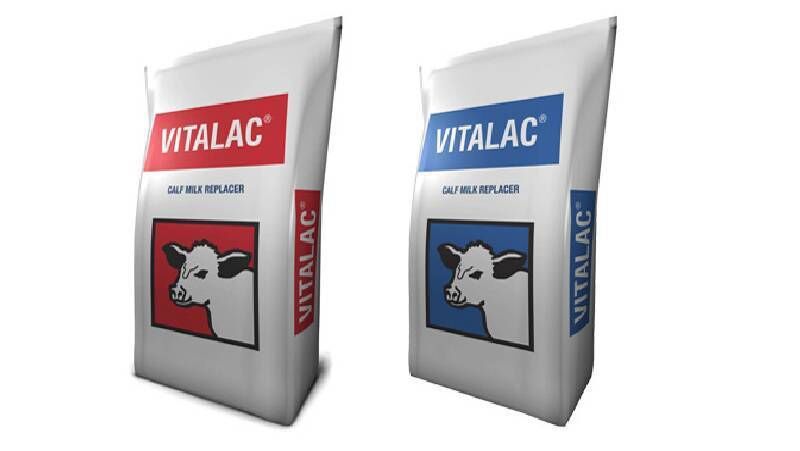
Agritech’s Vitalac Calf Milk Replacers from Nukamel offers a well-balanced level of highly digestible fat and protein via carefully selected, high quality ingredients. These quality ingredients are further enhanced through the use of advanced techniques such as Low Heat Spray Cooling Technology, meaning the ingredients do not suffer any denaturing during the manufacturing process.
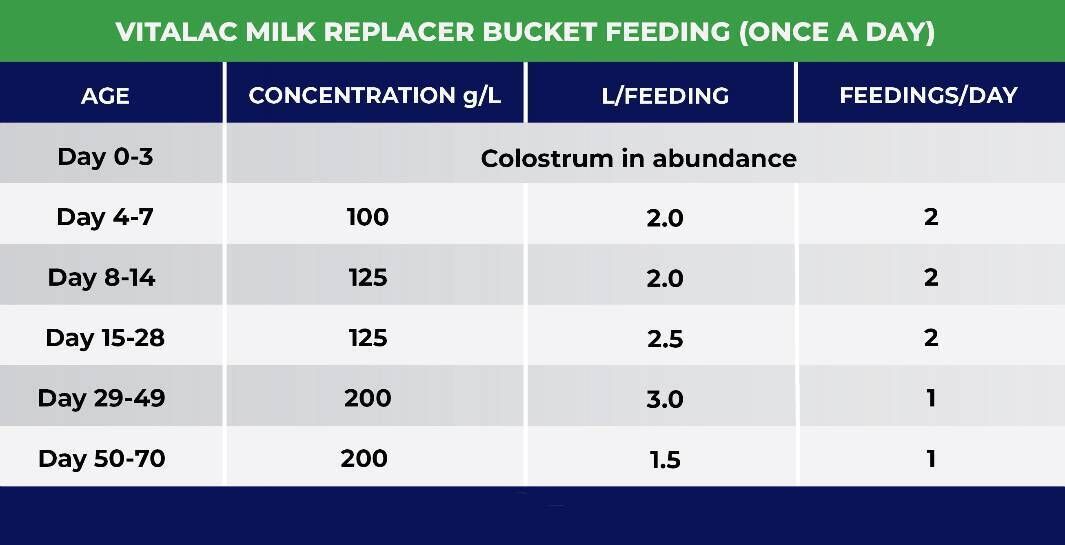
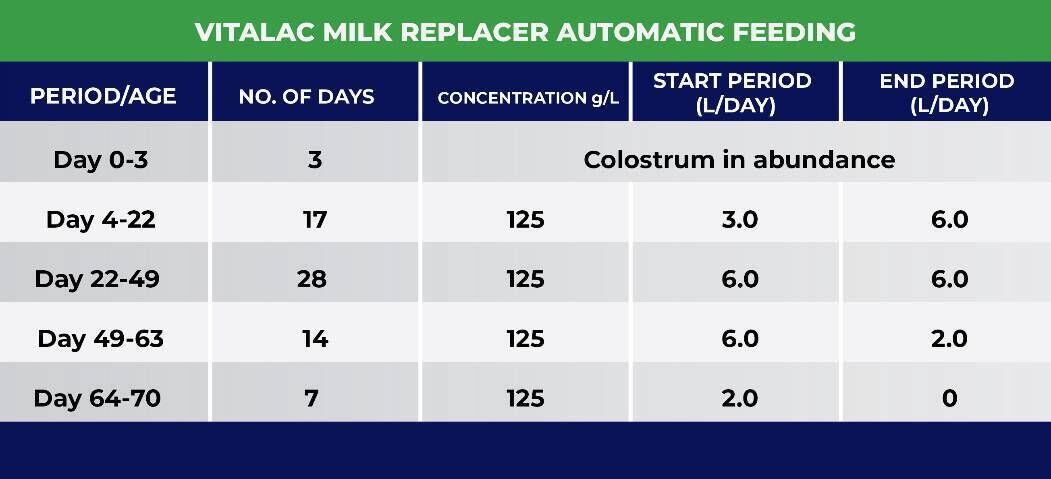
Milk replacer should replicate the role of good quality whole milk, typically offered at 12.5% milk solids (E.g. 125 g powder, into 875ml clean water to make 1 litre of milk). Feeding a calf twice-a-day at 6 litres/day would result in offering the calf 750 g of powder/day.
When mixing, adhere to the milk replacer guidelines outlined below using fresh clean, warm water and sterile mixing and feeding utensils. The optimal drinking temperature of the calf milk replacer is 39°C. To prepare the milk, dissolve the powder in two-thirds of the amount of water at 55-60°C and add the remaining water at room temperature until the optimum drinking temperature is reached.

For further calf rearing advice or to find out more about our Vitalac Calf Milk Replacers, contact your local Agritech sales advisor or click here.