Farm to Fork: Strategy ensures resilience at every link in food production chain
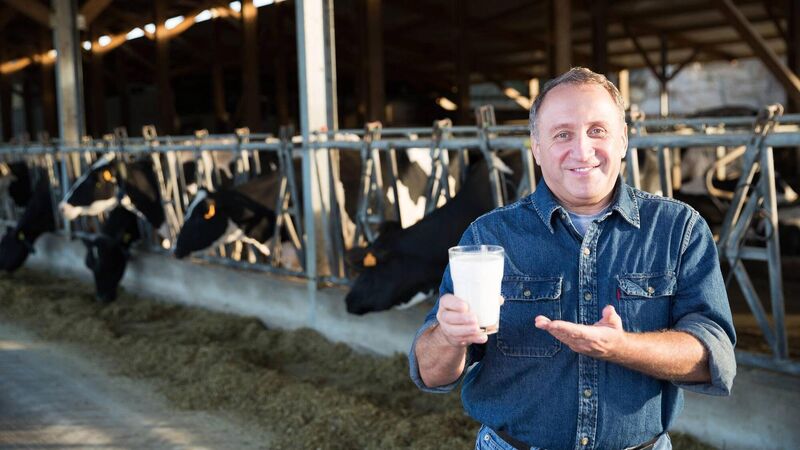
The Farm to Fork Strategy will transform the food system right across the supply chain. It covers production and processing, transport and distribution, sales and marketing through to retail and consumption.
In December 2019, the European Commission published a strategy to make Europe’s economy more sustainable.
The objective of the “European Green Deal” is to make Europe the first climate-neutral continent by 2050.
A significant element of getting Europe on this pathway includes a more ambitious emissions reduction plan.
The current EU target of lowering emissions by 40% by 2030, compared to 1990 levels, will be increased to 55%, This EU Green Deal brings together several strategies, all aimed at reducing emissions from all sectors of the economy.
These include transport, energy, agriculture, buildings, and industries such as steel, cement, ICT, textiles and chemicals.
As part of the Green Deal, the Farm to Fork Strategy, published in May 2020, sets a vision for the future evolution of the European food system. The EU Biodiversity Strategy, published alongside Farm to Fork, includes an ambitious action plan to halt biodiversity loss in Europe.
The Farm to Fork Strategy proposes a transformation of the food system right across the supply chain. It covers production and processing, transport and distribution, sales and marketing through to retail and consumption.
There is a particularly strong focus on human health and diet, and on empowering consumers to make healthy, sustainable and nutritious food choices. Reducing food loss and waste is also a key focus.
The Strategy is hugely important and very ambitious. If the global pandemic and indeed the weather events of recent times have taught us anything, it is the importance of having a resilient food system. While the pandemic has impacted our lives in many ways, the one aspect that society has in common is the need for food.
We have a food production system here in Ireland that we can be proud of. It has proved its resilience during recent turbulent times.
We also saw how the innovative people in our food and drinks industry responded to a changing market, with adjustments to business approaches that allowed them to survive and even prosper, in this incredibly difficult market conditions.
This vision outlined in Farm to Fork, aligns well with the general direction of travel of Irish agricultural policy.
This has recognised for some time that a good story on the environment is an essential part of positioning Irish produce in the premium category on international markets. Ireland is already in a leadership position as a producer of safe, sustainable and nutritious food, supported by a globally recognised brand in Origin Green, led by Bord Bia.
The actions proposed in Farm to Fork are a significant further step on the road Ireland has already been travelling for some time.
Nevertheless, some of the Farm to Fork headline targets are extraordinarily ambitious.
- A reduction by 50% in the use and risk of chemical pesticides by 2030.
- A reduction of at least 50% in nutrient losses, while ensuring no deterioration on soil fertility.
- A reduction of at least 20% in fertiliser use by 2030.
- A reduction by 50% in the sales of antimicrobials for farmed animals and in aquaculture by 2030 an objective to achieve 25% of total farmland under organic farming by 2030.
It is important to remember is that these are European Union level targets. Each member state, including Ireland, will be expected to play its part in achieving them.
What will be even more important is that everyone is asked to do their fair share. Being fair means considering things like different starting points and each country’s unique circumstances. For example, pesticides usage levels in Ireland are already among the lowest in the EU. Furthermore, this vision will ultimately be supported by a legislative framework that will be preceded by an impact assessment, so that all of the implications of this ambitious programme of activity are properly understood.
Farming has, and will continue to have, a very important role to play in addressing the challenge of climate change.
The world has a finite land resource, with many competing demands, and an expanding population that needs to be fed. Irish farmers can play a critical role in providing safe, high quality food, for this growing population.
They can also make a contribution to carbon sequestration, the development of biodiverse habitats and the protection of water courses, through afforestation and land management and other environmental measures. Public policy, including the Common Agricultural Policy, can contribute to making these activities economically sustainable and to protecting farm incomes and rural communities.
Green Deal The vision also provides potential new sources of future income for farmers. For example, on-farm energy generation and supply of biomass materials can potentially provide diverse income streams which in turn underpin the sustainable production system. Energy efficiency measures on farm can provide a win-win for the farmer and the environment, and the Department already supports investment in this area.
Carbon trading and carbon farming are also ideas that can be explored further. There are already a number of circular bioeconomy projects up and running, including, for example, the development of plastics substitutes from food constituents to replace fossil fuel-based products. Investments have also been made in a number of knowledge and innovation centres to facilitate new thinking in the agri-food sector.
The underlying success of the Farm to Fork Strategy will very much depend on the level of behavioural change right across the sector - from farm to fork. Partnership with farmers and fishermen will be very important. Consumers will play a part too, in terms of the nutritional choices they make.
The provision of nutritional and other labelling will be considered as a tool to provide consumers with information to make informed choices. Food processors and others will also be expected to step up, by examining the potential for reformulating food products, reducing environmental footprints at processing, production and transport levels, and working to avoid food price campaigns that undermine citizens’ perception of the value of food.
If carefully managed and properly supported, the Strategy has the potential to achieve the ambition of making the EU food system a global standard for sustainability.
The Common Agricultural and Fisheries Policies are key tools to support a just transition. The CAP regulations and the CAP Strategic Plans currently being prepared, provide a good basis for incorporating the objectives of Farm to Fork. However, it would be naive to think that one policy can deliver the entirety of what is needed to achieve what is a very ambitious Farm to Fork vision.
There will have to be demonstrable consistency between this Strategy and other European Union Policies, for example in relation to trade, research and development and innovation.
Achieving the ambition of Farm to Fork will require a broad approach, which will include new business models and partnerships with producers, industry and consumers all working together.
No one could argue with the direction of travel, or with the ambition to move towards a healthier and more environmentally sustainable food system.
Indeed, the Irish agri-food sector has already embraced the broad objective of investing in environmental sustainability in a way that adds value to our offering on international markets.
The challenge now is to build on this, and to engage constructively with the European Union and with other member states, to ensure that Ireland can make a substantial and proportionate contribution to developing a sustainable model of food production. Ultimately the outcome must make sense for farmers, for consumers and for the planet.