Kieran McCarthy: How much of a building contingency fund do we need?

Kieran McCarthy: When it comes to direct labour builds you are essentially both the client and the building contractor.
Hi Michael,
Thanks for this great question. Everyone is aware that during a build, with so many ‘moving parts’, things can go wrong.
And when they do go wrong it is usually the client who ends up footing the bill, whether for work and materials or for delays. So you are right to plan ahead and try to ease or offset any pain.
Let’s have a look at what issues arise and what you can do to prepare.
Firstly, your contingency amount depends on your risk exposure. Your risk depends on what way you have structured your building project.
- Direct labour — where you employ all the contractors yourself;
- Hiring a main contractor — where the contractor looks after most of the build, but you still have a separate engineer on site, monitoring the building construction and signing off on building regulations and planning permission;
- Design and build — where one company looks after all the building, but has also employed an engineer to sign off on the required elements above.
These all perform very differently, in terms of risk, and therefore contingency, so lets look at each of them in turn.
For direct-labour builds you are both the client and the building contractor.
You will have also appointed an engineer separately, so that no one in your project is taking any risk between all the various moving parts. You could argue here that you are saving money because you are using your time instead of employing a builder or project manager, but, equally, you are taking all this risk on your shoulders. Anything that goes wrong on site will fall back to you.
- If there are complex junctions that the engineer needs to further develop and detail on site, following discussion with you and contractors, in terms of practical buildability, you will foot the bill;
- If a product is not available and you need to source a similar, but more expensive, product to keep going, again this is your risk;
- If the plasterers are delayed in starting and the scaffolding needs to stay up for another three weeks, this, again, is your problem.
It is hard to know how much risk exists here as it depends on your ability to manage a complex project with little or no previous experience. It could certainly be 15%, maybe even higher if things go badly wrong.
Now let’s look at a more typical project set-up. Here, you will appoint a main building contractor and, separately, an engineer. Now, a good portion of the building works is being managed and paid for by the builder. In most cases, they will be responsible for executing the building works in line with the drawing and specifications they received from your engineer and which have been priced.
You do, however, still have the risk of errors and omissions on these drawings. Given that these drawings were commissioned by you (ie, your engineer), the builder will state that they priced what was on the drawings.
There may be debates on site as to what the builder should have foreseen that may not be on a drawing — but that is the risk gap you are managing. It will come down to the accuracy and experience of your engineer and the competency and bona fides of your builder. Here, banks typically look for 10% contingency.
Finally, you can opt for the holy grail in terms of customer experience and risk mitigation, which is design and build. This style of building, which I specialise in, isn’t as well known in Ireland, but has by far the lowest risk exposure.
Here, your design-and-build company takes on all the risk of the design and the build, except for the risk of what is underground.
Normal foundations assume a standard concrete footing arrangement and this will work fine in most situations where you have normal building ground.
In cases of rock, clay, or uneven conditions underfoot, you may need to opt for more elaborate foundations.
Your risk here is much lower again and if the ground conditions are normal, which is the case about 80% of the time, then the risk is minimal, though there have been some price increases of late to keep in mind.
In fact, your biggest risk in this style of construction may be getting too cosy in your risk-insulation blanket and overspending on your finishes!
Send your home build queries to property@examiner.ie
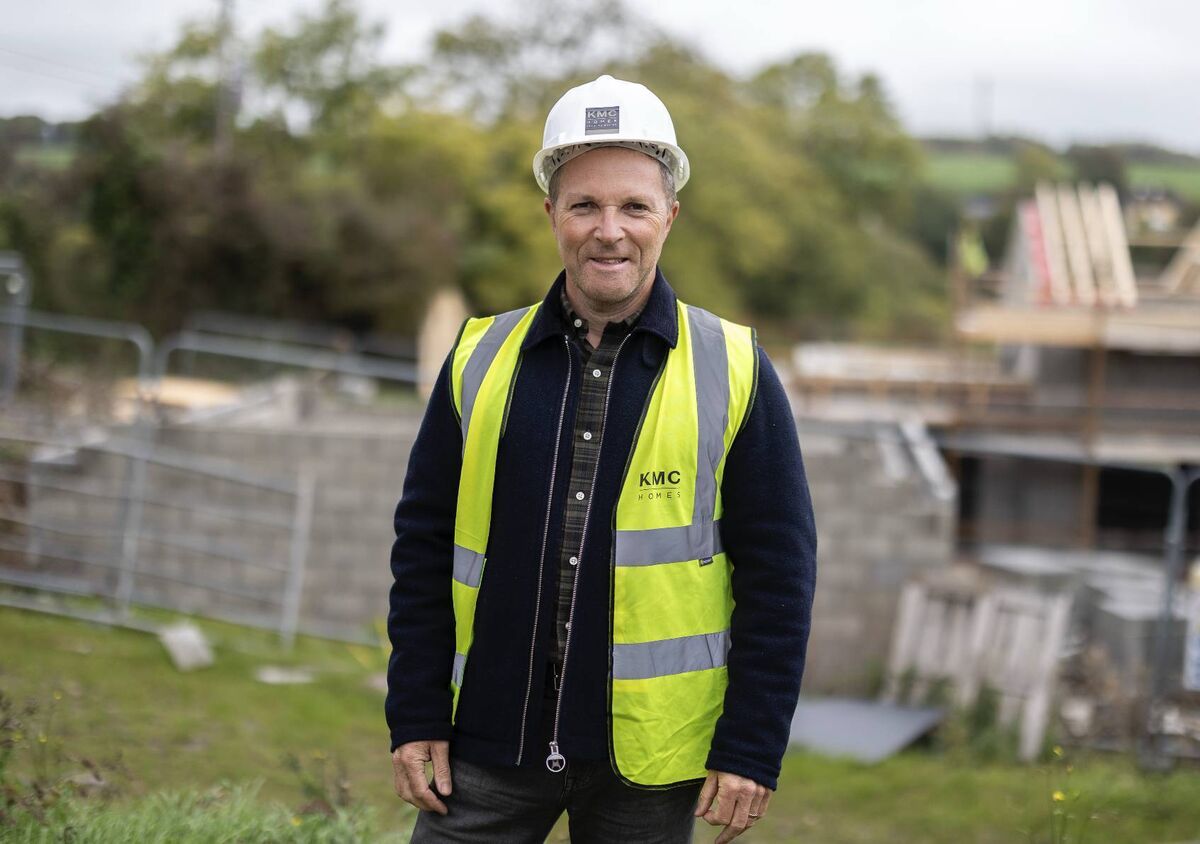
- Kieran McCarthy is a building engineer, and director of KMC Homes, who specialise in designing and building luxury homes in Cork. He also presents the RTÉ TV show ’, showcasing deep retrofits in Irish homes; kmchomes.ie
- @kierankmc has more home-building tips, information, and Q&A advice;
- Follow Kieran on the ‘Built Around You’ Youtube channel.


CONNECT WITH US TODAY



Be the first to know the latest news and updates