What are the choices when it comes to a home energy upgrade?
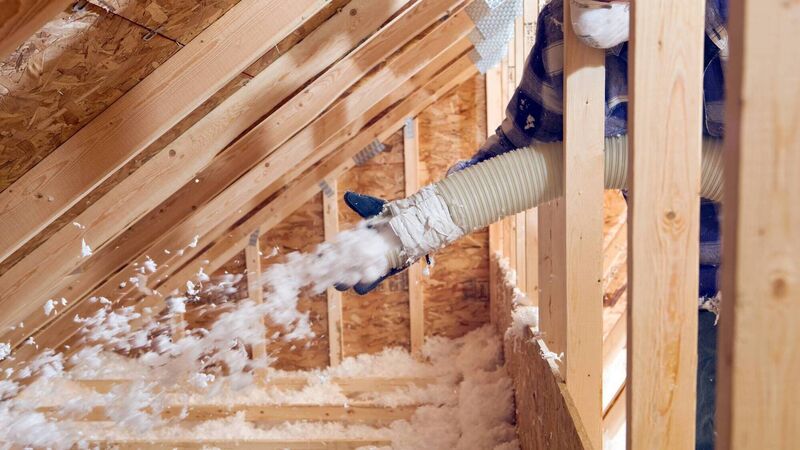
Improving your home's energy efficiency saves on the utility bills. Picture: istock
Hi Peter
Thanks for this excellent question. 2005 doesn’t seem like that long ago. Back then I had just started my building company, KMC Homes, and had got engaged. You would think that a house of this vintage wouldn’t need a massive energy overhaul but things have changed hugely since then. There has been a dramatic change in building regulations and we are moving away from fossil fuels which you are aware of. So, what is the best strategy for your house? Let’s look at the bones of what you have.
If your house was built in 2005 then you will likely have a standard cavity blockwork wall. By this I mean you will have a 100mm outlet leaf of blockwork, probably a 100mm cavity, and a 100mm inner leaf. Your airtightness will be poor as this wasn’t really a concern back then and indeed you likely have a non-condensing boiler, which I believe is the case. So, on a modest budget, what is the best energy upgrade strategy from here?
This is a difficult question as I don’t know your exact figures but what I would say is investing in your external envelope (the externals of your house) is a great first move. Given the age of your house, I would definitely improve your airtightness wherever you can. This means around your windows and doors but I would also look at all the pipework entering and leaving your house. The best examples of this would be to look under your kitchen sink, behind your washing machine and behind your toilets and bathroom sinks, both internally and externally. These are areas where you have the greatest concentration of plumbing and if the builder didn’t take care to seal around these pipes, you will leak heat here.
Next, I would look to pump the cavities of your house. Though these are likely half full of inoculation at the moment, pumping the remainder with insulation will make a significant difference to the thermal efficiency of your external walls. If it was the case that these walls were pumped originally, you can have this insulation extracted and fill the cavity afresh with new insulation.
In your attic I am assuming you have 200-300mm of quilt insulation. I would recommend bringing this up to 400mm of quilt now. This is a straightforward process and can be carried out by the same contractor as pumping your cavity wall insulation. Be careful here to lag your water pipes and any water storage tanks, if present, as these can freeze in the depths of winter, now that we have insulated your attic.
When it comes to floors, I don’t think it is economically feasible or indeed necessary to dig up your old floors given the age of your house. We have improved your wall and roof insulation and protected you from draughts which will make a huge difference to the heat retention of your house in winter. The addition of the airtightness seals around your windows and doors will complete this package. I am assuming, rightly or wrongly, that you are upgrading your windows so that you are sealing to new windows to get the most value from your new airtightness.
To answer your question, I am thinking that subject to a survey, you are a long way now towards having a house that is ready for air to water believe it or not. It is likely that with these measures that you have a sufficiently efficient home and that your airtightness is now low enough to actually warrant the need for a demand control ventilation system. This will help manage the air quality of your home at this lower airtightness level.
My strategy for your energy upgrade investment from here would be as follows. I would forgo the solar photovoltaic system for now as it is quite straightforward to add this later. I would contact an SEAI registered one stop shop and have a Home Energy Assessment done. It is likely that you would qualify for a deep retrofit grant for many of these measures and even though you have now potentially opted for an air to water system and indeed a demand control ventilation system, I am thinking that when you add it the potential SEAI grants and the monies from deferring your solar PV system, you may very well close the gap financially. A new air to water system will be dramatically more efficient at generating heat in your newly efficient home than even the most efficient condensing boiler.
Kieran McCarthy is a building engineer and director of KMC Homes bespoke A-rated new home builder, serving Cork and Limerick.

He is also a co-presenter of the RTÉ property show Cheap Irish Homes. Check out KMC Homes’ brand new website kmchomes.ie Follow Kieran on Instagram @kierankmc for more home building information, tips and Q&A advice.
You can also follow Kieran on the Built Around You Youtube channel and @kierankmc on TikTok

CONNECT WITH US TODAY



Be the first to know the latest news and updates