How to combat cold and damp in a 1970s bungalow
Outside of the cost, the biggest downside with drylining is the upheaval in your home
How to combat cold and damp in a 1970s bungalow

When it comes to insulating the outside walls of a building there are principally three options available to you: drylining, external insulation, and cavity wall insulation.

Dear Kieran,

We are big fans of your television  programmes and we have a query about cavity insulation.

Our house is a 1970s brick-built ‘nightmare’.

As this brick is very obviously damp, we did not consider getting a ‘wrap’ as we feel that may just be sealing in black mould.

We received a Building Energy Rating (BER) of ‘F’ a couple of years ago.

We are very keen to proceed with some energy upgrades to combat cold and dampness.

If we got the cavities insulated would it make sense to plaster over the brick?

We were quoted more than €100,000 for upgrades — which we feel is exorbitant, even with any SEAI grants.

Yours, (full name and address with the editor)

Thanks for your detailed email and very kind words!

I’m sorry to hear of the problems you are having with your house. There is certainly a lot going on here. It must be upsetting that the house you built in the 1970s and have lived in for so long, is now in need of some ‘invasive surgery’ — not quite open heart but certainly double hip replacement level.

So, what to do and how to do it?

First we need to look at the available solutions.

When it comes to insulating the outside walls of a building there are principally three options available to you: drylining, external insulation, and cavity wall insulation.

These all have their pros and cons so lets have a look at each in turn.

Drylining is the process by which you fit an internal thin stud wall system to existing walls so that insulated plasterboard can be fixed to this wall lining system. This is quite expensive but not the most expensive solution available.

The benefit of this application is that your rooms will heat up quickly because the insulation is literally wrapping your house from the inside so the heat goes straight into your room.

However, outside of the cost, the biggest downside here is the upheaval in your home. You basically have to strip and replaster the inner face of all your external walls. These walls often contain your radiators so these need to be removed and refitted once the drylining has been installed. In an older house such as yours you might have wallpaper or indeed cornicing and such on all walls so it may be difficult to match these — but maybe you are prepared for some internal finish upgrades.

The other big downside of course is that your rooms get a little smaller because the
drylining system itself takes up some space in each room.

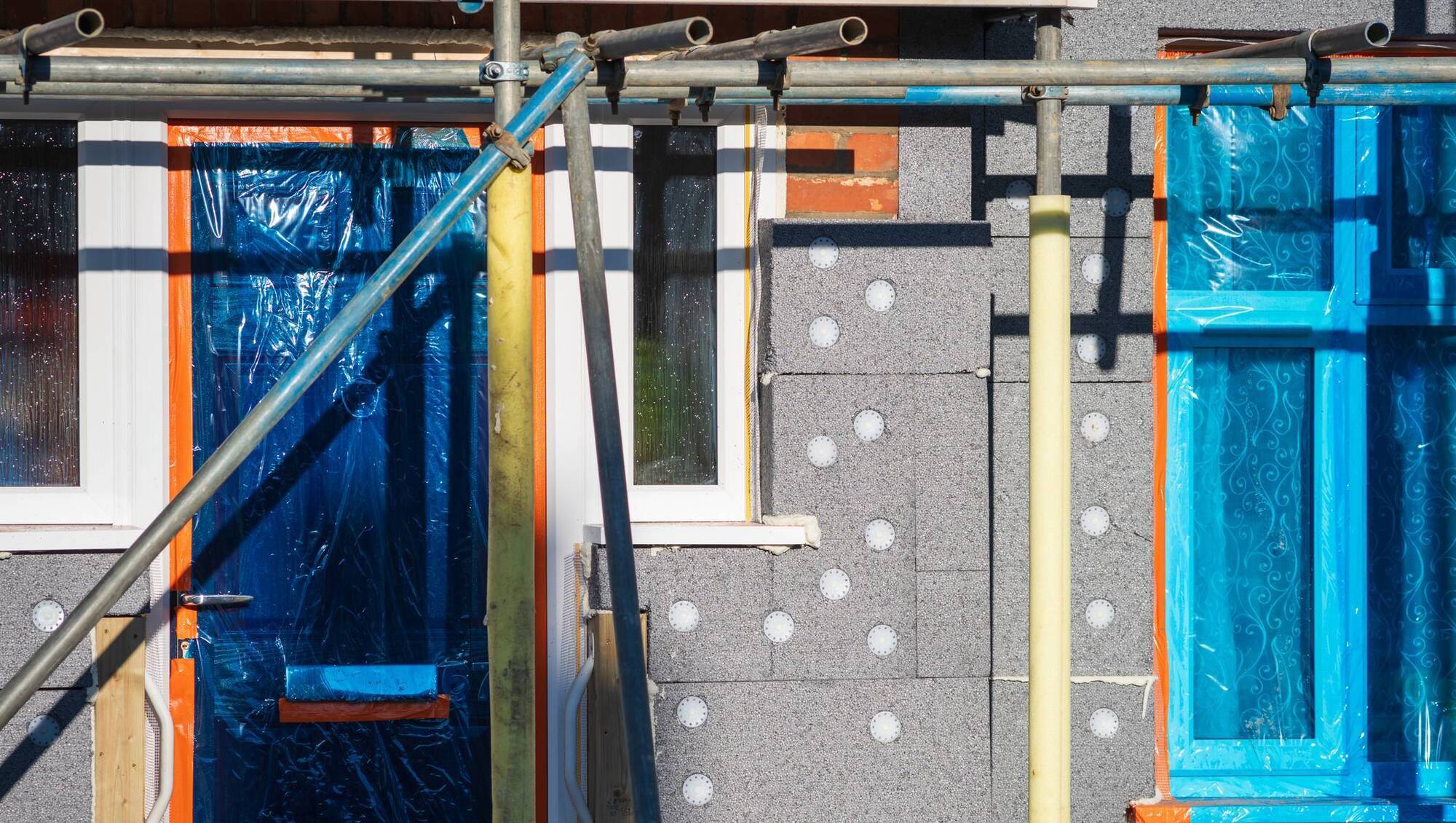
The next option is external insulation. This is a process by which you fix the insulation
directly to the external brick face of your house. There are various fixing options depending on the condition of the brick and this would need to be assessed locally.

Once fixed, the insulation can then be plastered with an acrylic coloured render. The upside here is that this is generally considered the best form of wall insulation because there is no condensation (dew point) trapped in your house as it will be on the outer face (now external) and can be blown off by the wind. This insulation also allows your masonry to become a heat store, like a storage heater. It will take longer to heat initially but will stay warm for longer once the heat is turned off.

The downside here is that it changes the external character of your house as your window reveals may get deeper and it will cover your brick and you may need to discuss this with your local planning authority. There are options of faux brick ‘slips’ that can be added which look remarkably real.

The other downside is the cost. It is by far the most expensive way to insulate your house and it contains a new external acrylic render and indeed scaffolding.

The last option is cavity wall insulation. As you learned, this really comes down to the soundness of your existing brickwork and indeed the depth of cavity available for pumping (ideally 100mm overall).

It does appear from your description that your brickwork is not in a good enough condition to facilitate this option, though it is quite cost effective and does allow for some level of heat store with the internal leaf of the masonry.

To answer your question, I feel that it may be an option to plaster your brick and pump your cavity but this would need to be done in late summer (assuming the summer is relatively dry!) to give the brick the best chance to dry out. The bricks would likely need to be meshed to ensure the plaster doesn’t crack afterwards.

My fear here is that once this is done you are fast approaching the cost of a full external insulation wrap. I do feel that the external insulation with the brick slips is therefore likely the best option — but it will be expensive for sure. Perhaps you could prioritise it as a single measure and still get the SEAI grants and then you could consider what other measures you might have budget remaining for... eg attic insulation to complete the overall insulation upgrade.

Appointing an engineer locally to help advise you before making any final decisions would also be well worthwhile.

Kieran McCarthy: "External insulation is generally considered the best form of wall insulation because there is no condensation (dew point) trapped in your house as it will be on the outer face (now external) and can be blown off by the wind."

  • Kieran McCarthy is a building engineer and director of KMC Homes who specialise in designing and building luxury new homes for busy people in Cork. He is also presenter of the RTÉ TV show Heat My Home showcasing deep retrofits in Irish homes.
  • website: kmchomes.ie
  • Follow Kieran on instagram @kierankmc for more home building information, tips and Q&A advice.
  • You can also follow Kieran on the Built Around You Youtube channel
    Send your home build queries to property@examiner.ie

x

More in this section

Revoiced

Newsletter

Sign up to the best reads of the week from irishexaminer.com selected just for you.

Cookie Policy Privacy Policy Brand Safety FAQ Help Contact Us Terms and Conditions

© Examiner Echo Group Limited