Peter Dowdall: Berberis offers both beauty and security 
Whether you're a gardening beginner or expert, Irish Examiner columnist Peter Dowdall has the answer to your questions
Peter Dowdall: Berberis offers both beauty and security 

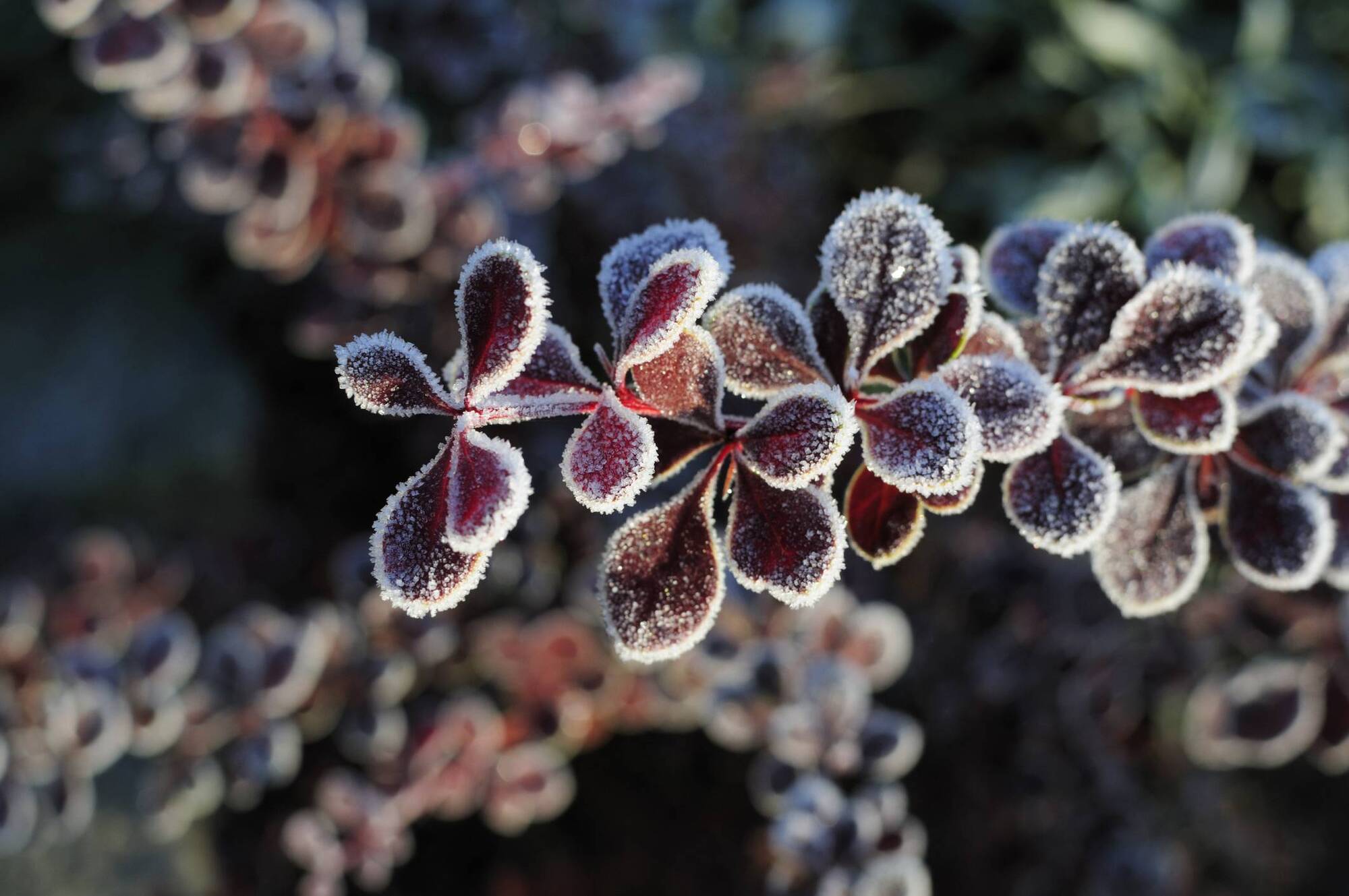
Admiring the frost on winter leaves, such as on this berberis, is one of the delights of the winter garden. Picture: iStock

DO YOU know the way that you kind of forget about a plant? Well, that’s what had happened to me and the berberis until recently on a beautiful, crisp and very cold morning, I was out in a garden, the entire landscape was covered in white, where Jack Frost had exhaled overnight.

Everything looked so fresh and beautiful. A heavy fog had nearly lifted and the ground was still frozen. To look out at it, it looked like everything was frozen in time. I wasn’t looking out at it though, I was out in it and I stopped to admire a Berberis. Its leaves were covered in this crystalised water and it looked so perfect. 

Growing through it was an ivy, its flowers, turned to unripe green berries, also frozen in time and the sight was truly beautiful.

It made me think once more about berberis and how attractive they are. There are so many species and varieties from which to choose and, though many of them are deciduous or, at best, semi-evergreen, they are no less beautiful at this time of the year than the evergreen forms, in fact, they are most definitely, more dramatic-looking on frozen mornings.

Irish Examiner gardening columnist Peter Dowdall. Picture: John Allen

What I was admiring that cold morning, was Berberis ottawensis Superba. This is a purple-leaved form which will easily reach about 1.5m or more in height with a similar spread. 

It grows in a slightly unruly, though the preferred term is “informal”, manner. The foliage is beautiful during the spring as the fresh growth emerges, along with small, pale yellow flowers, from dormant branches, first pale mahogany in colour and deepening to a rich purple. It makes a great foil to paler coloured plants if positioned behind them. 

White alliums, phlox or paeonies will look so much better with something dark in colour behind. Then, during autumn and winter, as I said, the foliage catches the frost so beautifully and the spring flowers have become orange-coloured berries, adored by many garden birds.

A word of warning before you plant one, is that it is extremely thorny. Not to be planted near a kids play area or trampoline or, for that matter, anywhere that you are likely to be walking past it regularly, such as near a car parking spot or the back door. 

No, position it somewhere, where it can be left to its own devices. The thorns are modifications, developed over centuries to protect the plant from predators. Not too many predators for the Berberis in a domestic garden but what these thorns now do, is offer safety from marauders for birds nesting inside.

If security from human predators is an issue in your garden, then believe me a hedge of berberis will act better than any security fence. Nobody’s going through an established berberis too easily. Also, a good plant to use somewhere to protect people from a safety hazard such as water or a steep fall or similar.

There is a more modern cultivar of berberis, named Golden Ring, on which, the purple foliage is circled by a lime green or gold rim. It’s a really quite stunning form of berberis.

Since admiring that specimen, I am now, of course, seeing berberis everywhere and falling in love with them once more. The dwarf forms are also extremely attractive, many of them remaining less than 40cm high.

Not all Berberis are purple in colour, evergreen forms such as B. darwinii and B. gagnepainii are green in colour, and whilst, perhaps less showy than the deciduous forms, are still attractive, particularly when in bloom and useful plants for wildlife and security in the garden.

Several of the dwarf forms have been used for many years in formal gardens as low growing hedges. They are often used to create knot gardens, the foliage contrasting dramatically if planted with Buxus sempervirens or box hedging.

Berberis thunbergii atropurpurea nana is the variety most often used as a low hedge but there are others you could use such as the more modern cultivars, Sunsation, which is quite rounded in habit, its beautiful lime green leaves have a fantastic autumn colour and Golden Torch which is a really vibrant and upright, though low growing form, again suited to using as a hedge.

If B. Golden Ring appeals to you but may get too large for where you want it, have a look at the very similar, Berberis Admiration. This has the same rich purple leaves with the brightly coloured rim or leaf margin but will only reach 50cm at most.

All berberis like full sun and will grow in most soils, providing they are free-draining, they can be a great choice if your soil is a bit alkaline or limey and also for growing in coastal conditions.

x

More in this section

Revoiced

Newsletter

Had a busy week? Sign up for some of the best reads from the week gone by. Selected just for you.

Cookie Policy Privacy Policy Brand Safety FAQ Help Contact Us Terms and Conditions

© Examiner Echo Group Limited