Made in Ireland: The must-have homegrown design for our living spaces
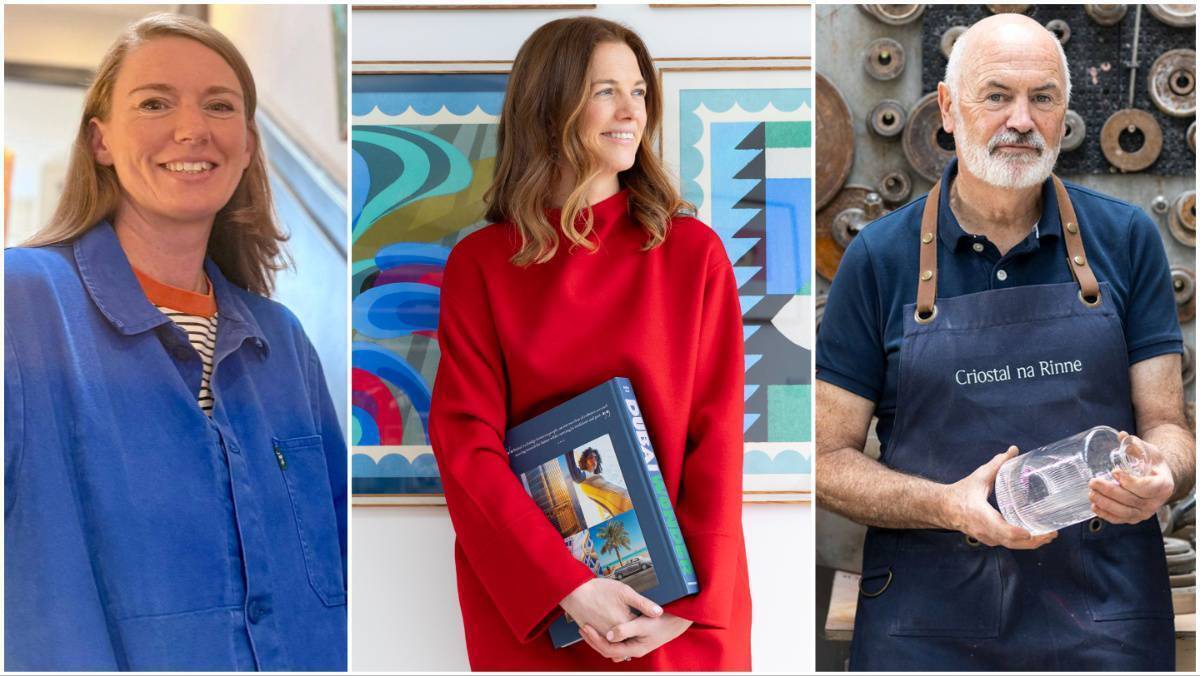
Art curator Rachel Earley, designer Julianne Kelly, and glass-cutter Eamonn Terry.
We have sensational talent in this country. You can hardly walk down the street without tripping over a brilliant artist, furniture maker, ceramicist, light-maker, designer, weaver, metalsmith, glassblower, or what have you. We’ve always punched far above our weight, particularly in the creative arts, so buying local is a real privilege here.
I take particular pleasure in knowing who made something in my home. Not that everything I own was hand-crafted by a local artisan — I have plenty of Ikea bits — but I do really love the items where you can see the hand behind them.
We can never have too many, but I will say the wealth of talent we have here has made it difficult to narrow my list of favourites to something I can fit into these pages.
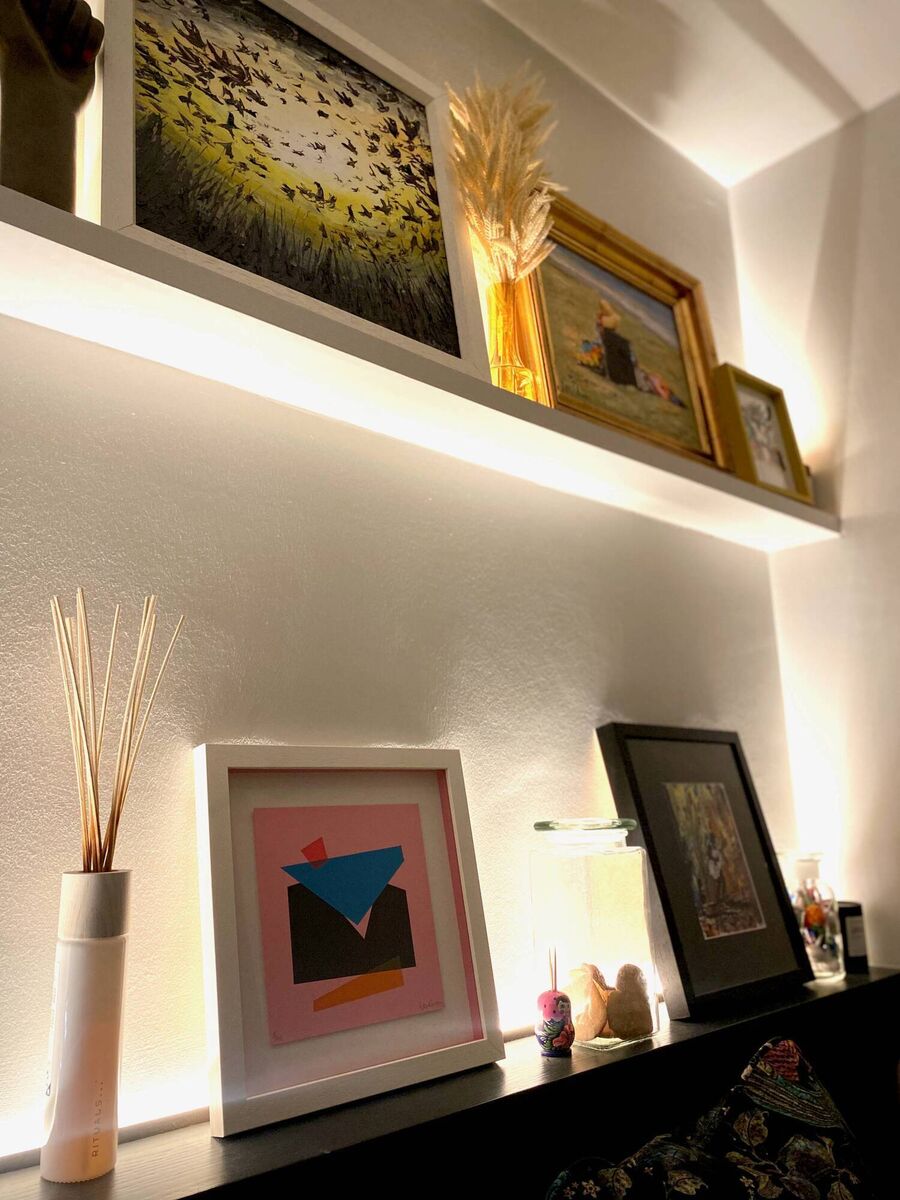
The Design and Crafts Council of Ireland’s (DCCI) Made Local network alone includes more than 1,500 makers. We’re spoiled for choice.
All my couches and bench cushions are made by Finline Furniture, and my future couches and armchairs will be coming from there too. All of its furniture is made in Emo, Co Laois. The sofas can be customised in size, fabric, and other finishing details.
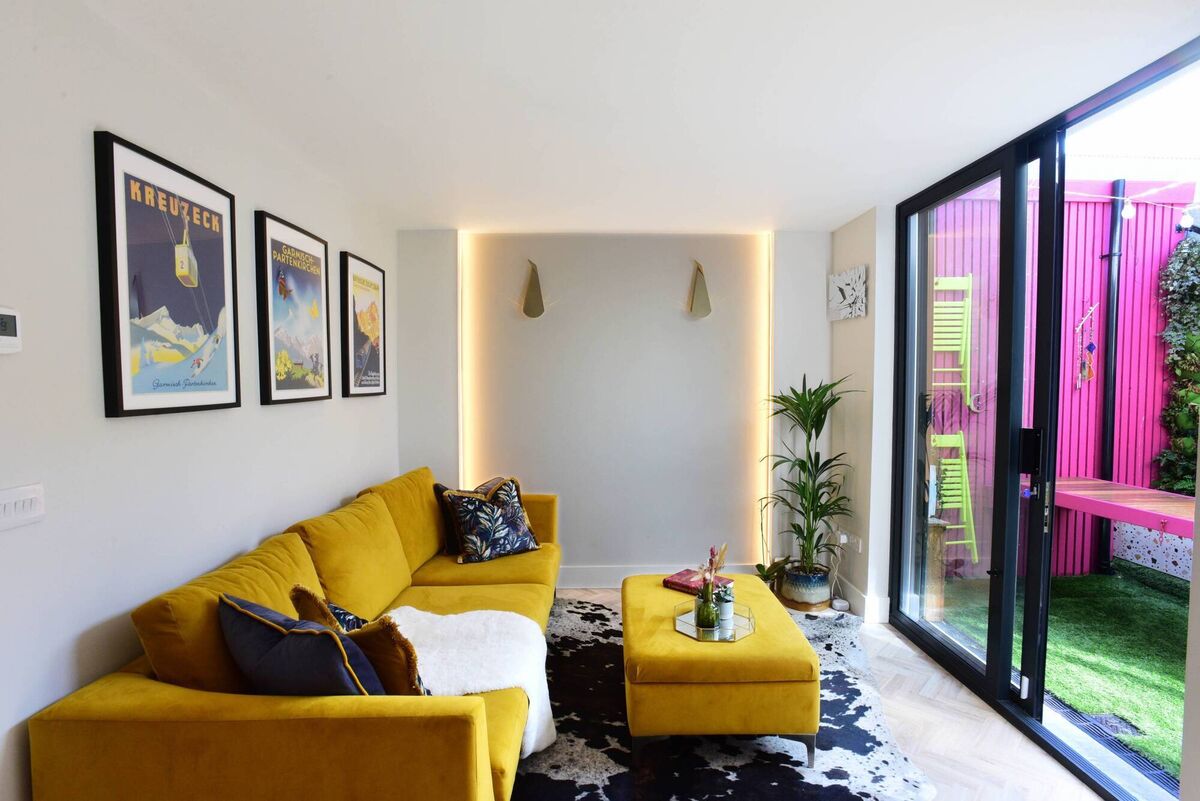
They are built to last, and Finline's reupholstery and repair service keeps them looking fresh. I am evangelical about investing in the pieces that you sit on and sleep on every day, and this is why.
Most of my cushions come from Navan-based Scatterbox, whose range of patterns and textures is second to none in my eyes. Scatterbox has been around since 1959, and since then has remained bold about its choices of colour, prints, fringes, and fabrics. A cushion is a great low-risk way to mix up your style if you’re feeling brave but not that brave.
On my living room floor, I have a rug from Irish Hide Designs, which works with natural Irish hides and sheepskins to make rugs, clothing, and homewares.
I always love natural materials in interiors because they are timeless. Wood, wool, linen, leather, and stone do a lot of heavy lifting when it comes to making homes look good.
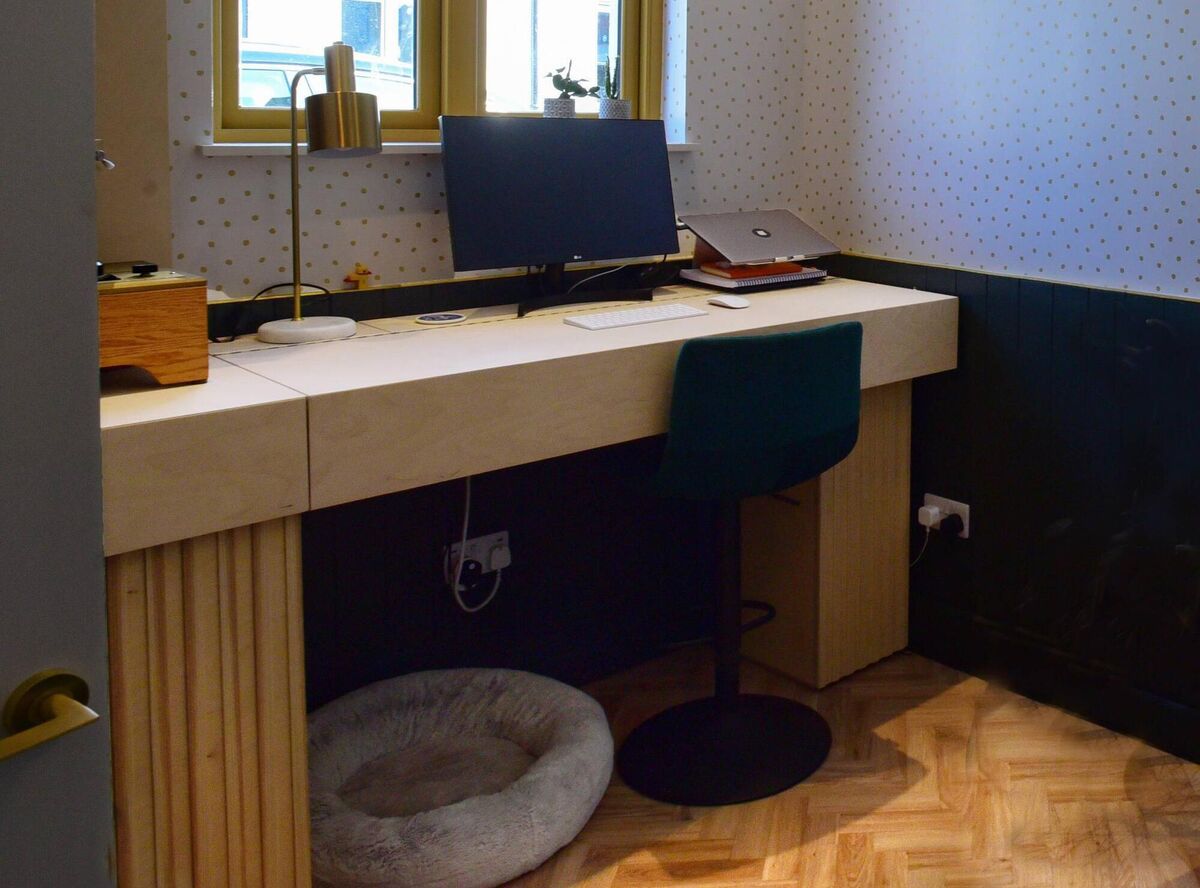
Borien Studio did the custom desk in my office. It specialises in bespoke furniture and interiors, usually using locally sourced timber and producing clean, space-sensitive designs.
The business is a husband-and-wife team comprising a furniture maker and a designer, and while bespoke furniture obviously costs more than mass-produced, the payoff is totally worth it to have something that works perfectly in your home.
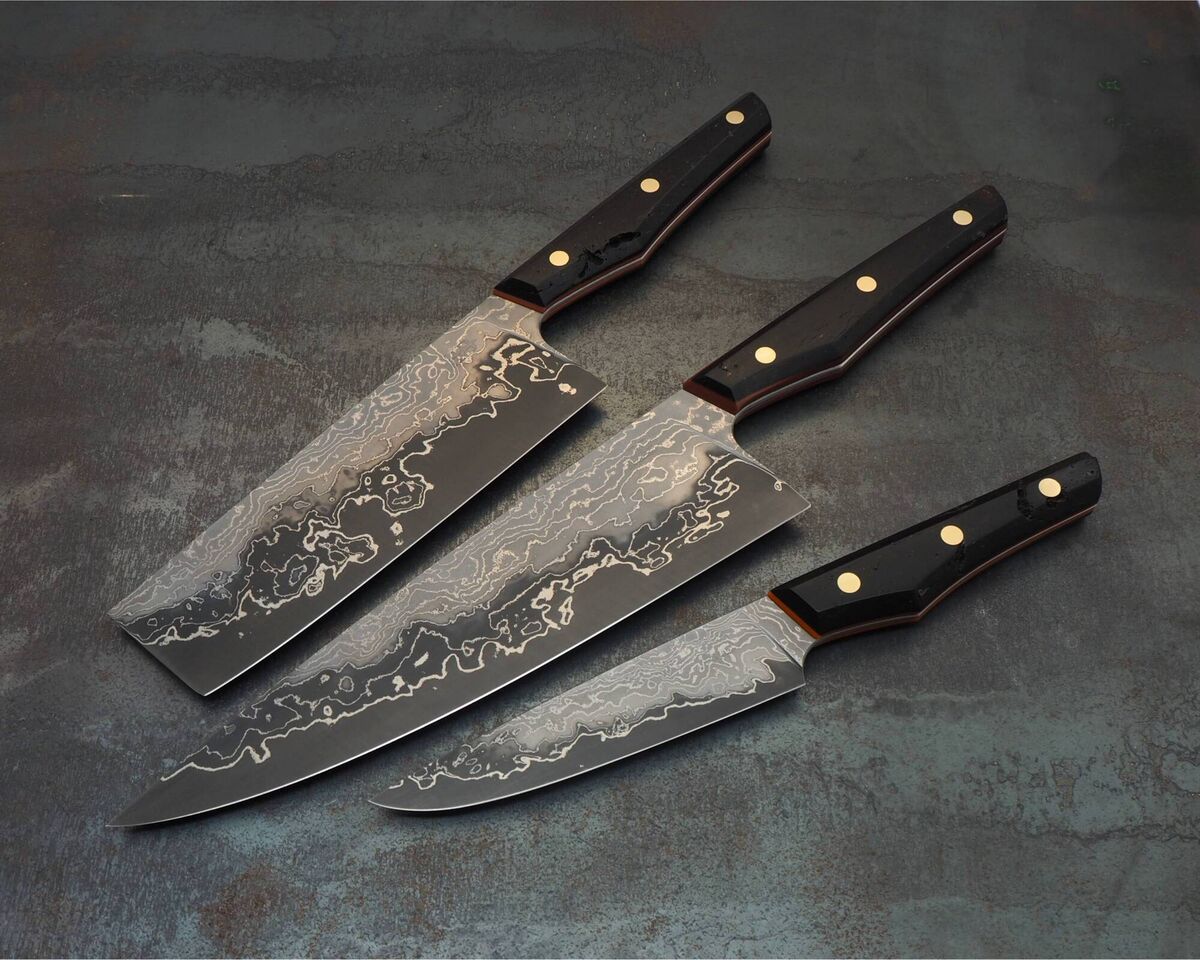
For fellow kitchen obsessives, I adore Hugo Byrne knives. Byrne makes his masterpieces in Limerick using traditional techniques and natural materials. This is an item that will last you a lifetime.
There are so many wonderful Irish artists, and here I'm sticking to those I have personally bought, gifted, or admired in a friend’s home: Luke Reidy, Lola Donoghue, Asha Murray, Gerard Byrne, Comhghall Casey, Tina Reid, Chloe Early, Emma O’Hara, and Michael Amera.
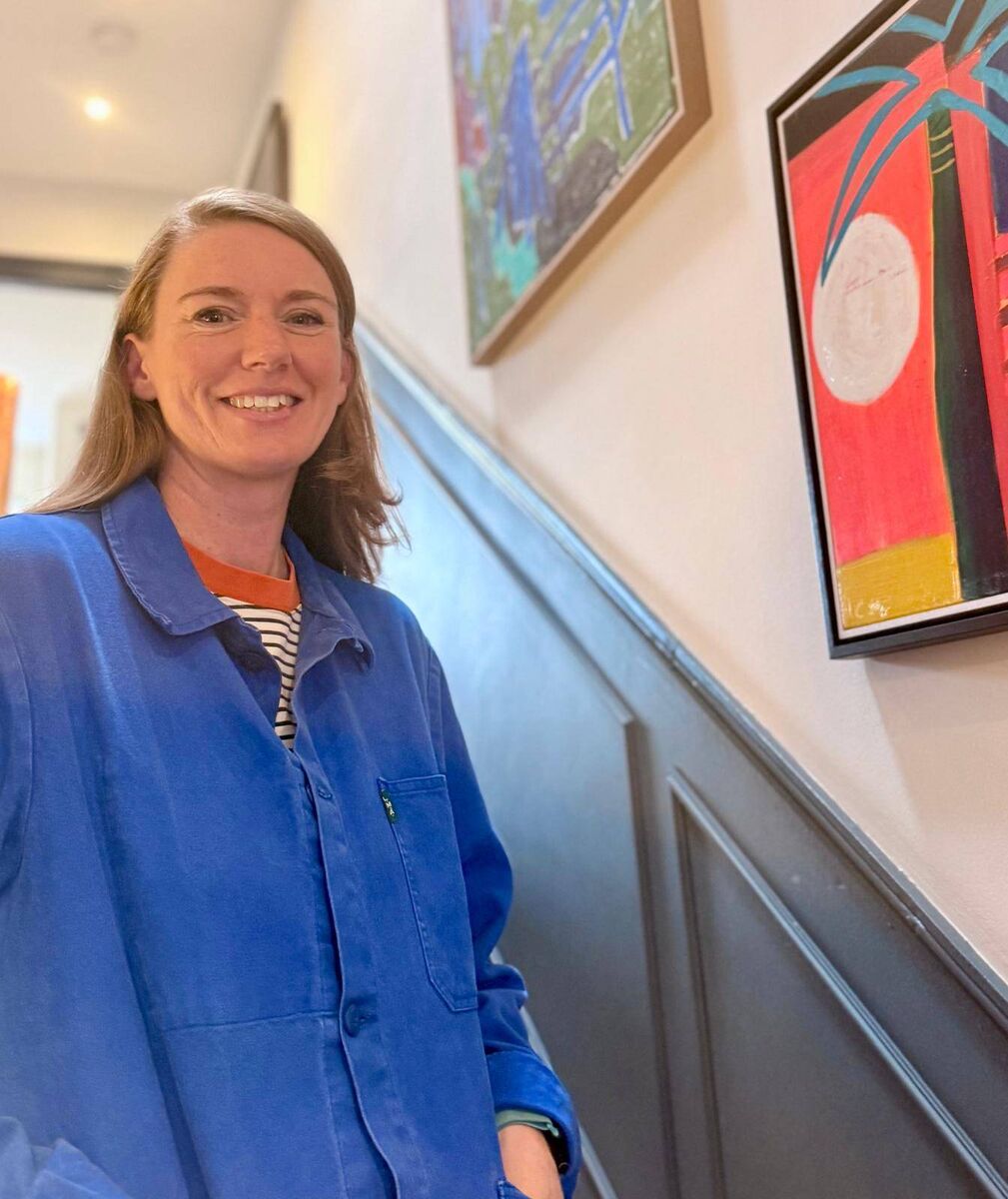
I will plug my friend Rachel Earley here, who provides art consultations for homeowners looking for guidance in buying or displaying art for their own homes — find her on Instagram @dadocurate.
Ailbhe Beatty, founder of Seol Studios in Bray, is doing stunning work with Irish wool. Trained in Donegal weaving, she works on a restored antique floor loom using traditional techniques.
Before moving into textiles, she spent a decade working in architecture, where concerns around construction waste and material use prompted her to think more carefully about indigenous materials and craft.
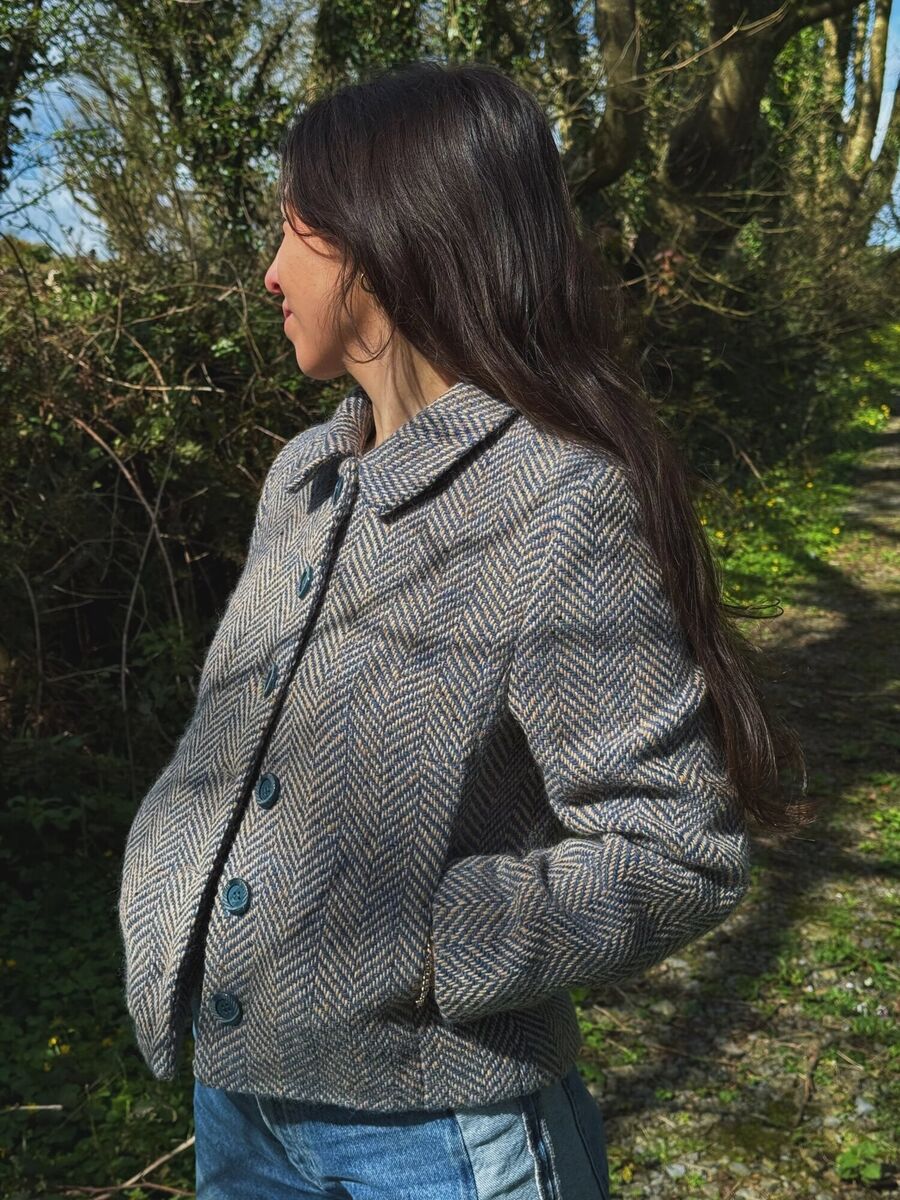
This year she won DCCI’s Future Makers Sustainable Design Award for emerging makers. I’m eyeing up her Báinín throw to snuggle into this winter.
Another 2026 Future Makers winner whose work I’m coveting is Marta Ozog. Her beautiful porcelain work takes inspiration from Braille, handwriting, and classic blue-and-white ware, using cobalt blue lines and raised, achingly tactile dots.
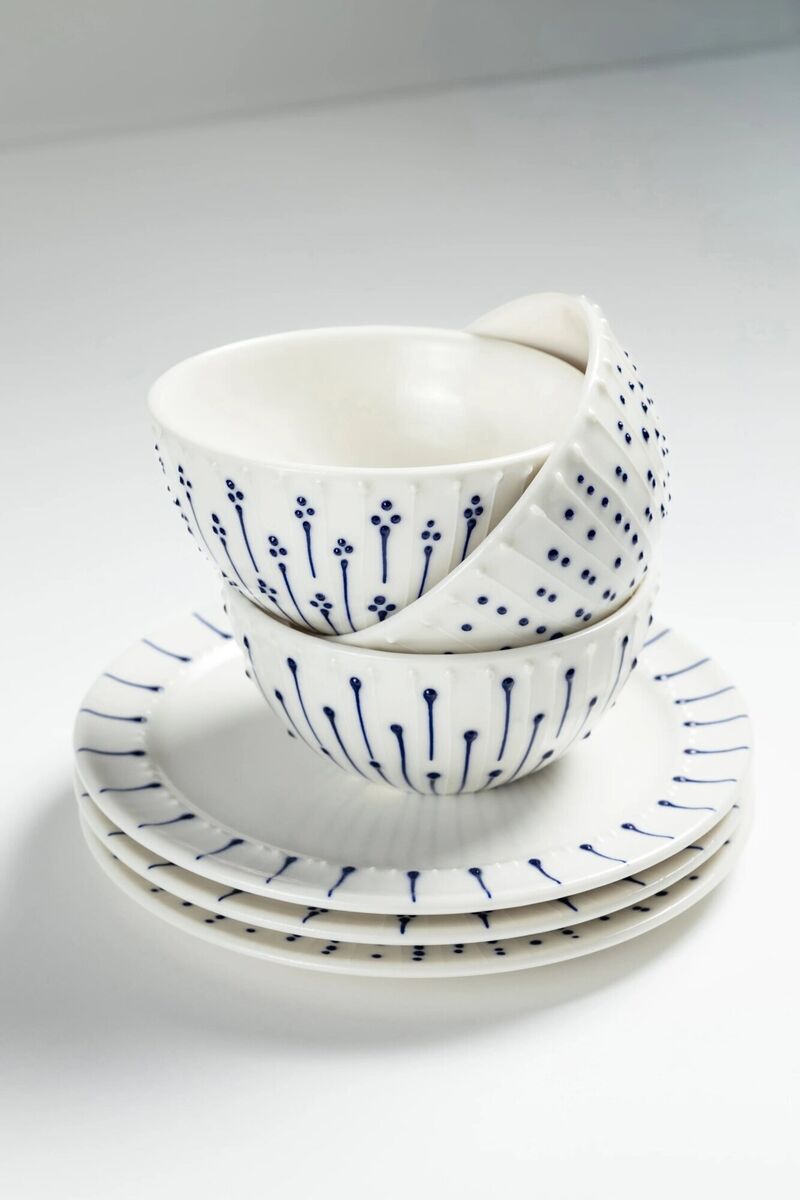
Her pieces — cups, bowls, plates, and accessories — are my favourite blend of delicate, robust, decorative, and useful. By which I mean they can go in the dishwasher. Enough said — I have her butter dish in my shopping cart.
We all know how much I love lighting, and Copperfish Lighting in Wicklow is my latest obsession. Its lamps are handmade from reclaimed, storm-fallen, and sometimes ancient timber, combined with other materials like copper and brass.
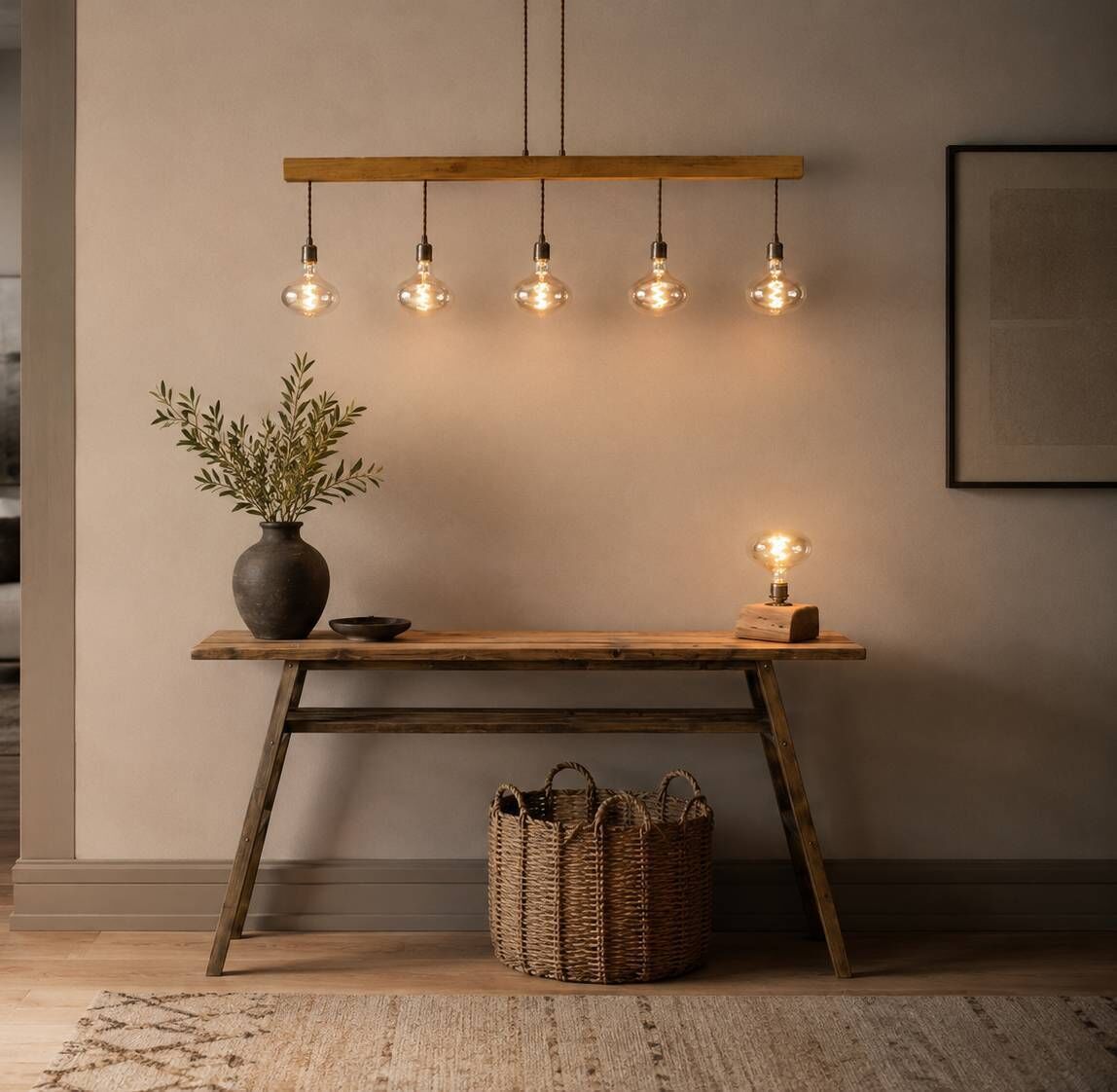
Some of the wood retains marks from its previous life, so no two pieces are quite the same.
It’s a thrilling combination of modern design and visible history. I’m thinking of replacing the pendant over my dining table with the Copperfish Crosóg.
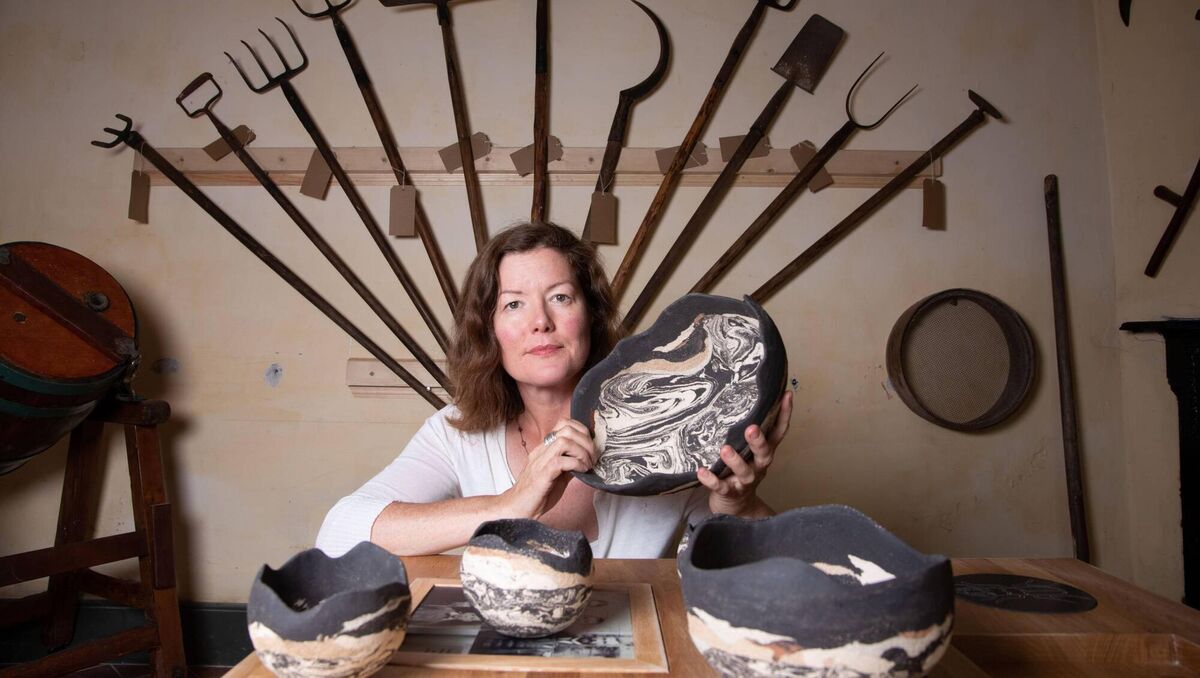
Another fabulous ceramicist, Bernadette Tuite, incorporates clays and sediments collected from the Cork coastline into her vessels. Her sculptural pieces are gorgeously organic and seem (to me) to move and change as you look at them. They would look good anywhere.
I have been lucky enough to see the work of metalsmith Jane Murtagh up close on many occasions, and it never fails to stop me in my tracks.
This year I was thrilled to see that she won the David Shaw-Smith Legacy Award. She uses a variety of metalworking techniques and creates richly detailed pieces influenced by the natural world. I have yet to see one I haven’t instantly been drawn to.
Of course, in Ireland we are no strangers to fine crystal. Criostal na Rinne in the Waterford Gaeltacht is a small family-run crystal workshop, founded by master glass-cutter Eamonn Terry.
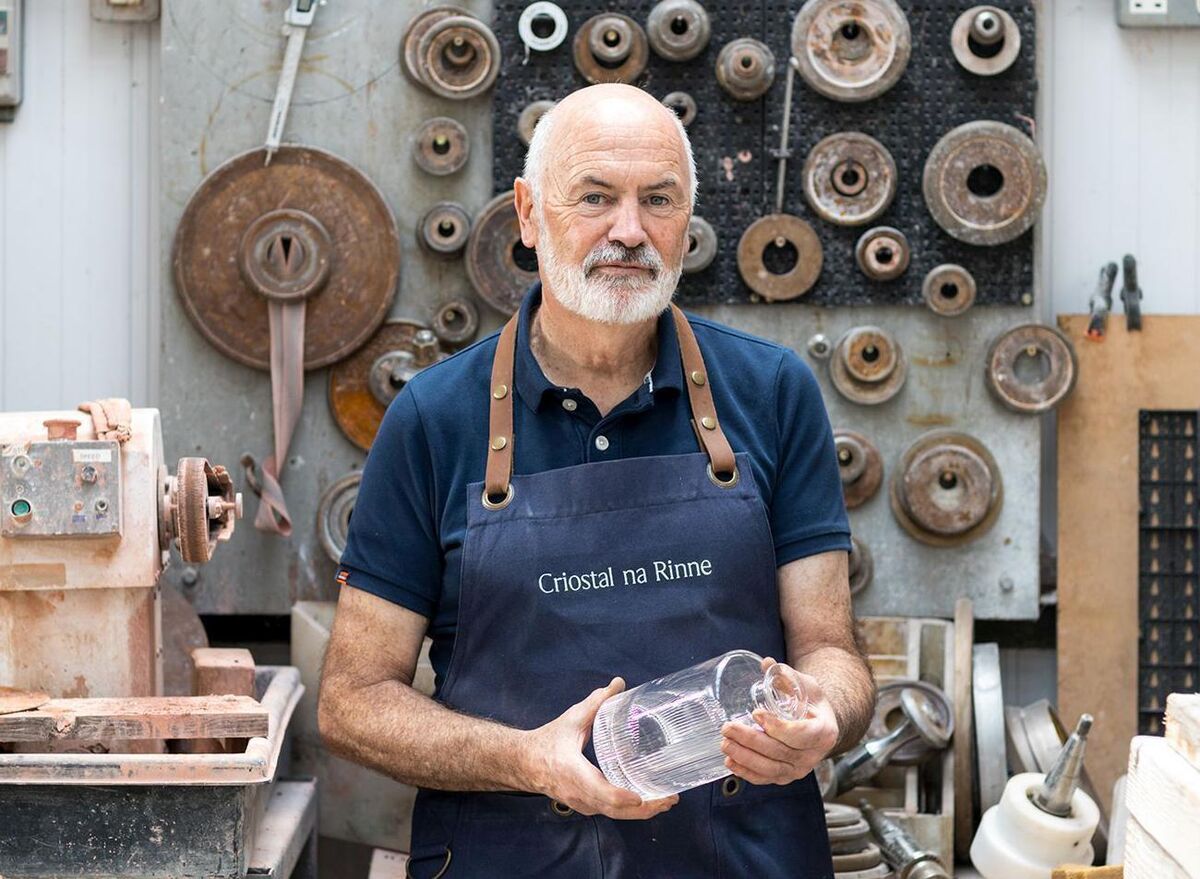
Its beautiful work is not for relegation to the display cabinet — these are fine yet sturdy glasses that should be used as often as possible. You can drop in for a free tour and a demonstration by Eamonn if you’re interested in learning about the history and techniques of glassmaking.
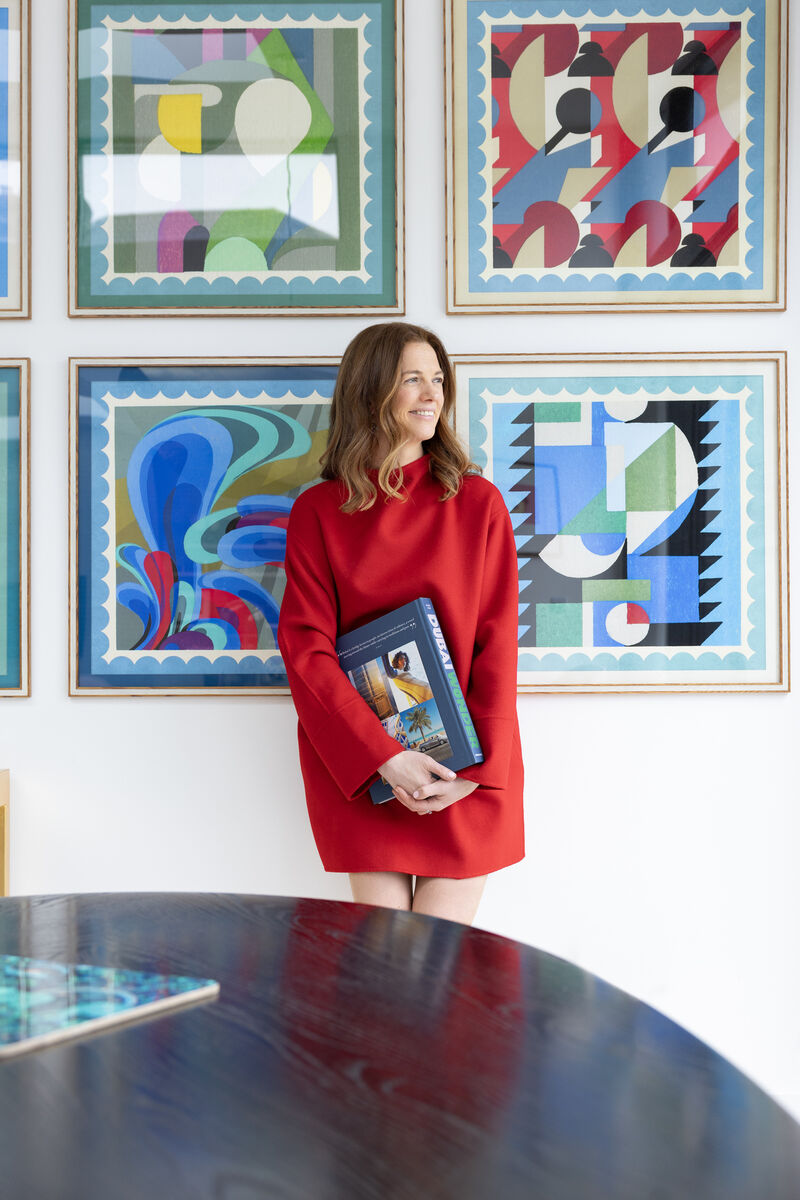
Julianne Kelly, whose Donnybrook design studio I frequent. I encourage you to do the same if you’re looking for inspiration. Her interiors are considered, with masterful layering, resulting in a gorgeous mix of a home that looks beautifully finished but lived in. The sweet spot.
CONNECT WITH US TODAY



Be the first to know the latest news and updates