Jennifer Sheahan on what's causing clutter in your home? It's not what you think
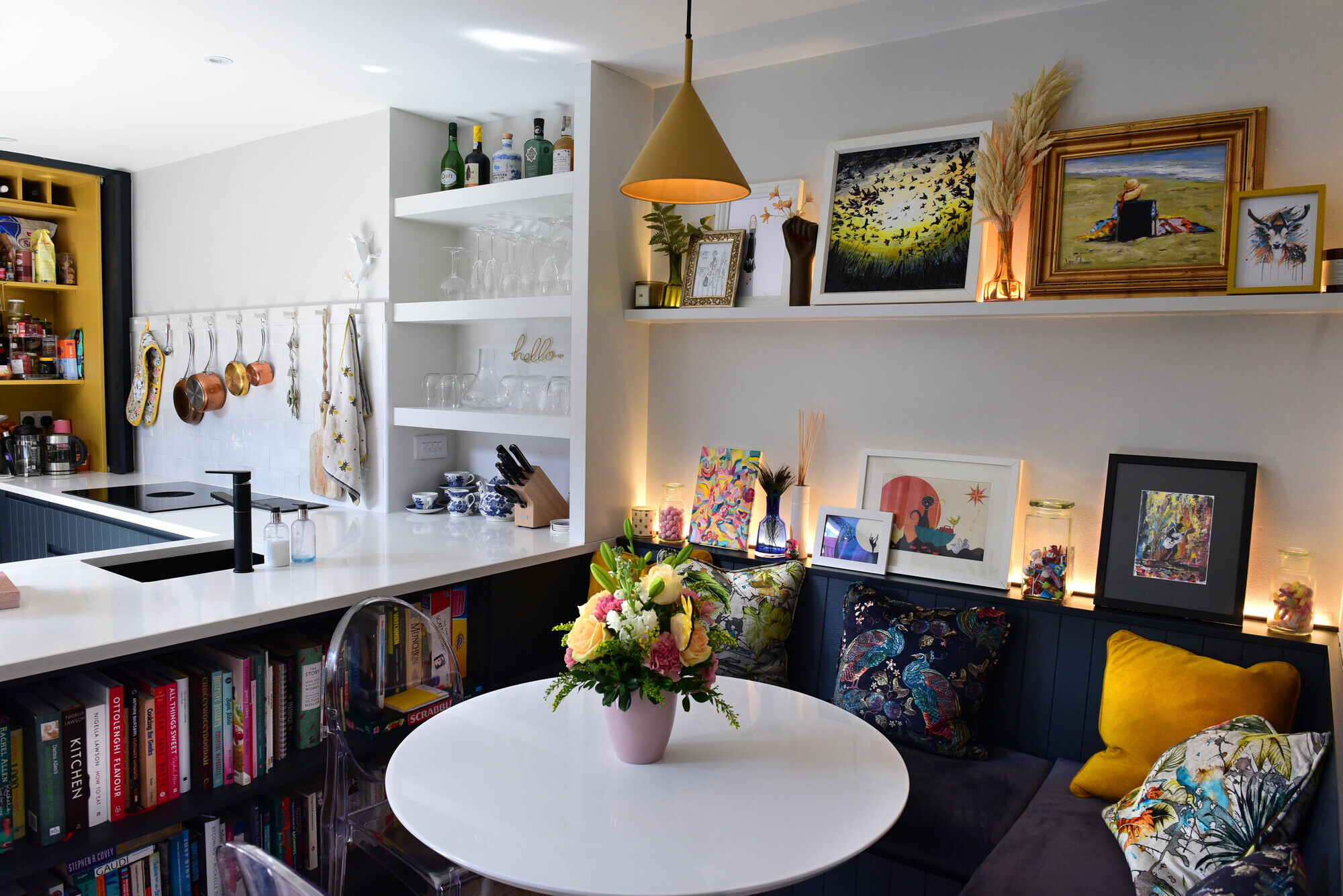
The dining area with banquette seating in Jen Sheahan's Rathmines home, a finalist in the RTE series Home of the Year..Photograph Moya Nolan
Have you ever wondered why some homes feel calm and tidy, even when there is stuff everywhere? And then other homes feel messy and cluttered, even though there may not be much lying around? If so, then come with me down a rabbit hole on the psychology of clutter. There’s a lot to it, but for me it really all boils down to one wise old adage: A place for everything and everything in its place. That is why, if you’re a regular reader or a listener to the podcast I co-host (Rip It Up: The Renovations Podcast), you’ll hear me bang on incessantly about designing your home for how you live. A home that looks showroom perfect is lovely on the glossy pages of a magazine, but if you and your family were to spend an hour there, it’s likely that your stuff would be strewn about, ruining the effect in no time.
This is the fascinating thing about clutter. It really has very little to do with how much you own, or how much is on display, or whether you’re a maximalist or a stark minimalist. It’s all to do with you, and whether your surroundings are well designed for your belongings, your lifestyle, and your personality.
Unlike the theoretical cat, the items in your home can only exist in one state at any given moment: in place, or in transit. An item in place is where it is supposed to be. A coat on a coat hook, a letter in a file, a set of keys in a bowl perhaps, and a pair of worn jeans hung up in the wardrobe. An item in transit is mid-journey and has stalled somewhere along the way - the coat on the back of a chair, the letter on the kitchen countertop, the keys on the dining table (if they can be located at all), the jeans crumpled in the corner of the bedroom. This - the item in transit - is clutter. It has not reached its final destination; it is not in its place.
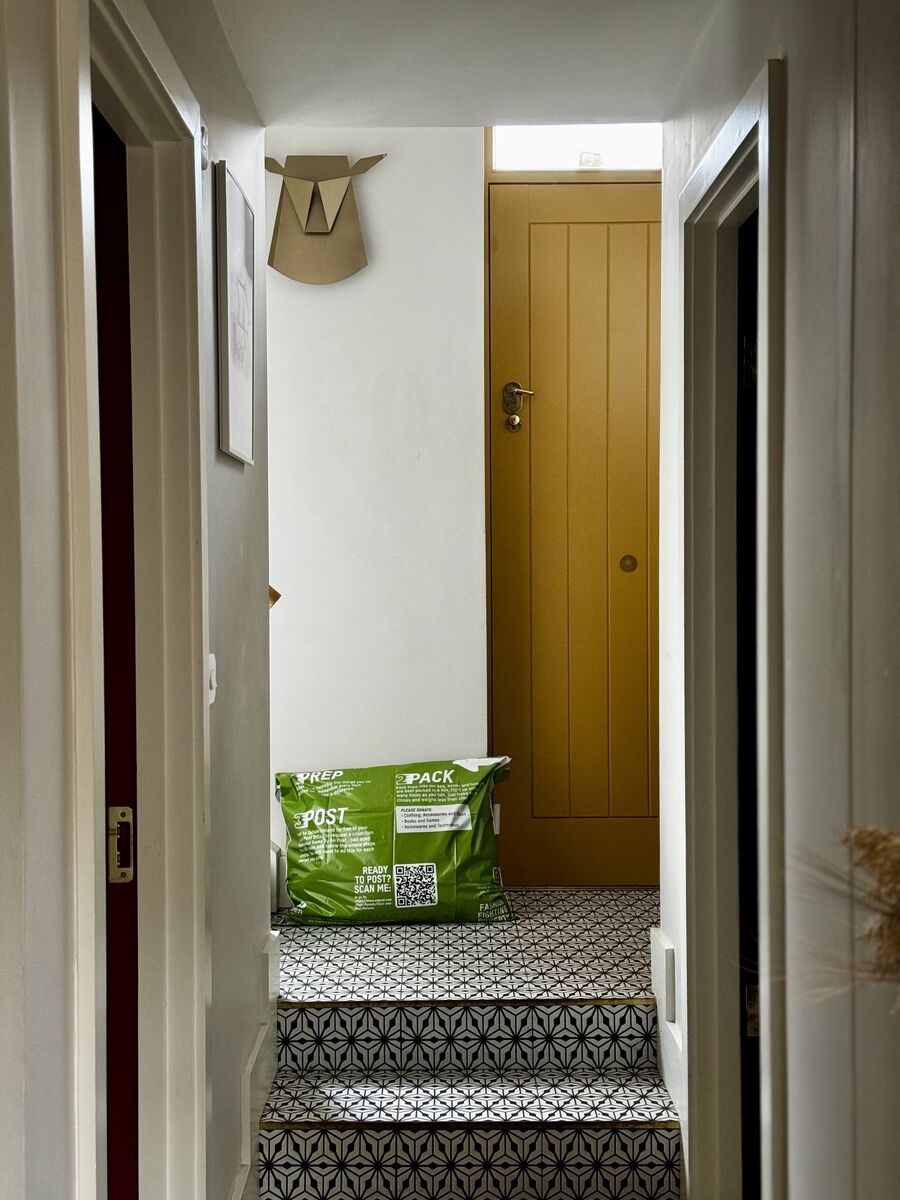
This is why, psychologically, the same items can appear very differently to us depending on where they are. Our brain clocks things that aren’t where they’re meant to be, even if we don’t notice it, and it’s annoying. This is why a full dresser of your granny’s china feels tidy, but a small stack of plates on the sideboard feels like clutter.
Our brains like things to be in an orderly fashion, ideally grouped together; otherwise they compete uncomfortably for our attention. A 2011 study from Princeton’s neuroscience institute found that objects in our field of vision compete with each other for our attention, and that the more objects there are, and the more unrelated they are to each other, the harder your brain works to focus your attention on one object. It’s not a huge leap to apply that to household clutter - items lying around where they don’t belong cause us increased brain effort.
Another interesting 2010 study from UCLA’s Center on Everyday Lives of Families (CELF) found that when we feel a home is cluttered, our cortisol patterns are similar to those of someone experiencing chronic stress. The feeling of something being unfinished persists. Living in a home that you think is cluttered literally impacts your health - your brain is constantly jumping from one thing to another and trying to resolve its transit state. (Interestingly, they discovered a different effect on men vs women, but I won’t get into that here.)
So how come maximalists can get away with having stuff everywhere? Competing colours and clashing patterns and objects all over the place? The reason is that a good maximalist knows how to put all of these items in their rightful place. The designer may not fully be able to explain the logic (design is partly an art, after all), but there are some principles at play.
First is containment. The Princeton study found that grouped objects are easier to deal with than individual ones, so putting a collection of candles and plants together in a tray feels more finished than having them sitting on a surface. A jug for cooking utensils and a basket for post do the same job.
Next is cohesion. Grouping items by tone or material feels calmer - and for some reason we love to see items that are grouped in threes or fives.
Another very important principle is negative space. We need some emptiness in order to be able to see things properly. If every single surface is completely covered, it’s hard to focus our attention on anything, and it feels chaotic. Have a look at homes that you would classify as having a well-executed maximalist design and see if you can spot empty walls or stretches of clear countertops that are actually helping to highlight everything else.
I’m giving maximalists a lot of airtime here, but only because it’s a great example of why having lots of things out on display doesn’t equal clutter. In the same vein, a mostly empty room can still irritate our poor, tired brains. Some of that has to do with items causing clutter - in a starkly minimalist room, items out of place can be very obvious and feel like clutter, even if it’s just a pair of shoes kicked off by a kitchen table. But a lot of it has to do with the feeling of something being unfinished. If a room is sitting empty, unfilled, we get the same sense of a job still to be done. Things that should be there are not there - items are not in their place, even if they’re entirely absent.
It’s well known that prime supermarket shelf real estate is at eye level. That’s why sweets are often placed lower - so they’re at a child’s eye level, and therefore harder to resist. We tend to notice items between around waist-height and eye level first, and so they get most of our attention. This goes for our homes too, and it’s why countertop clutter is more annoying to us than clutter on the floor.
A quick win in your home is to scan surfaces at eye level and assess what is accumulating there. It’s human nature to dump things where it is most convenient, so don’t try to fight it. Instead, design for it. Add a bowl or a basket to catch keys, post, etc. Put shelves near the doorway if gloves and scarves are accumulating as we enter wintertime. Have somewhere to hang the dog’s lead if it keeps getting dumped on the hallway table. The stuff will still be there, but it will have a place now, so your brain will be able to relax.

CONNECT WITH US TODAY



Be the first to know the latest news and updates