Home Q&A: Should I display artwork in my bathroom?
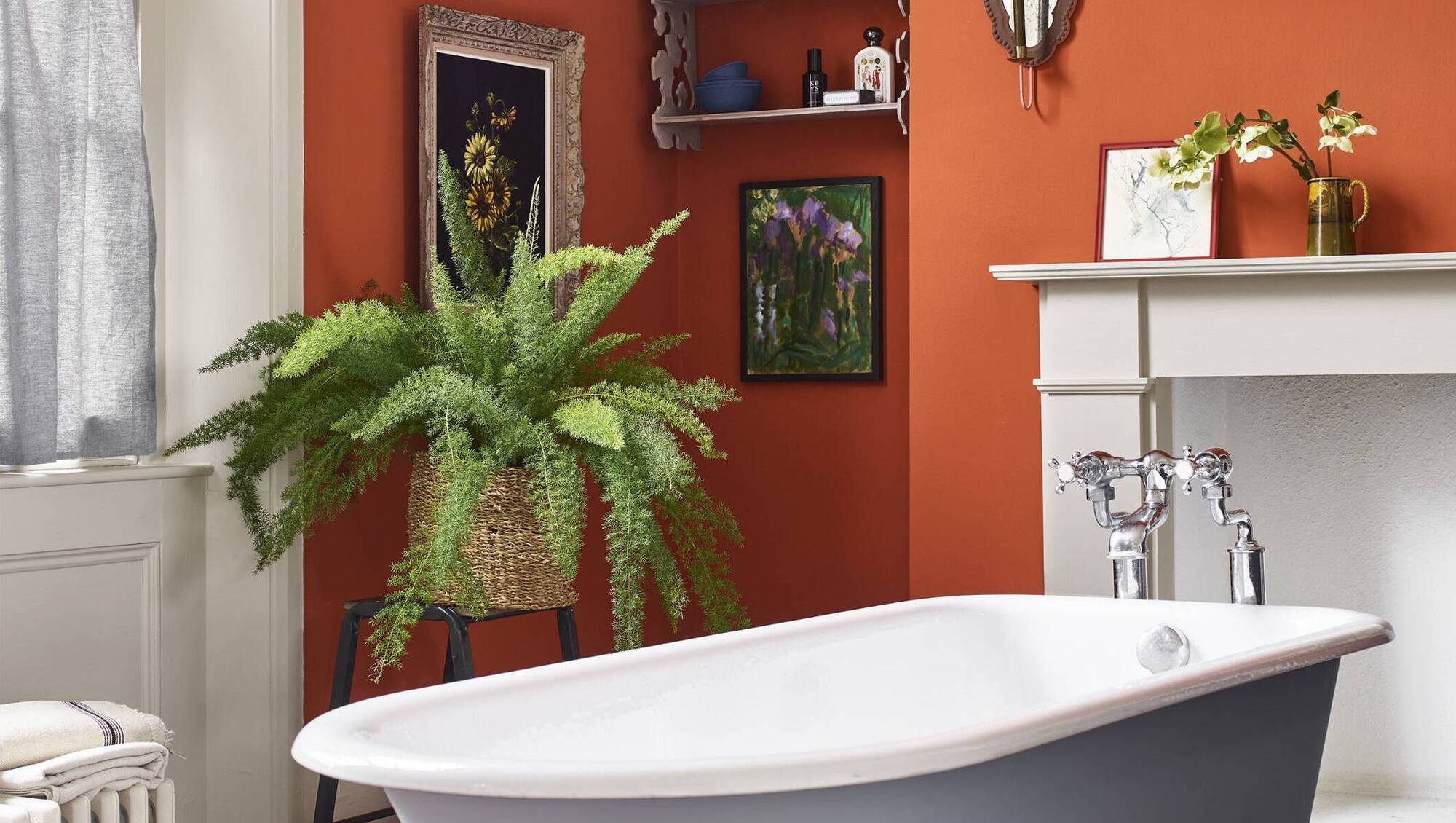
A splash of colour and carefully chosen and curated pieces can transform this space into a gallery 
A small gallery of paintings and objects d'art is taken to the relatively dry Zone 2 of the bathroom in a curated collection. Canvas, Riad Terracotta and Louis Blue in Satin Paint, Annie Sloane; €38.95 for 750ml.

A small gallery of paintings and objects d'art is taken to the relatively dry Zone 2 of the bathroom in a curated collection. Canvas, Riad Terracotta and Louis Blue in Satin Paint, Annie Sloane; €38.95 for 750ml.

Question

Should I display artwork in my bathroom?

Answer

We all love our bathrooms, and even the most quivering, terrified decorator tends to find a little more courage when it comes to injecting real style in these intimate quarters of the house. 

With every bathroom and shower room, we’re forced to tackle the issue of containing and expelling water and steam during short bursts of activity. Sodden dripping walls condensing after a shower, or accumulating mould building over months? Drainage, hygiene and ventilation challenges come with this territory. Even with the best habits, generous wastes, and mechanical installations, the bathroom remains (technically) — a wet area. 

Reactive materials like wood, untreated stone, hydrophilic paper, and many woven, natural fabrics are a no-no. So, given these tropical conditions, could we, should we put artwork into the space?

I’m a huge advocate for decorating the bathroom, and for wall art, the bigger the better. Pictures and crafted pieces are not competing for attention against typical acres of repetitive tile. They really stand out, adding character and charm in an otherwise sharply streamlined setting.

 That said, we are never, ever going to sacrifice a valuable item in the bathroom or shower-room as an ornament. They could be precious in terms of sentiment, not just monetary value. Together with temperature spikes across the day, the misty moisture hovering in the air in any bathroom after a hot shower takes several minutes to be completely whipped away. That’s enough time for it to settle on any surface, not just cool ones. We don’t want beloved objects to be quietly ruined.

Rules are made to be broken. This whimsical bathroom decor comprises a loose marine scene on rough planks applied as panel, Annie Sloan.

Your bathroom has specific splash-zones, and these are handy for placing electrics and certain artwork safely, so let’s look at those first. Except for wet-rooms, every bathroom will have a dry-side, and a couple of wetter zones in between. The splash-zone (0-1) encompasses the area directly over the bath, and from the floor of the shower to a height of 2.25m (or the shower-head if higher).

There’s no art going in here. Use tiling or digitally printed waterproof panels for colour and drama instead. Zone 2 is that area moving 60cm away from the edge of the shower enclosure, 60cm away from where any bath edge meets the rest of the room, and 60cm in a radius around the tap of your sink. It’s a relatively dry place, but with the odd splash around the sink.

Some robust paintings and prints are suited to Zone 2, or beyond it (truly dry; this might be a dressing area off the bathroom or ensuite). One metre away from the edge of any splash zone is about right. 

Cheap, canvas prints are extremely popular in bathrooms, lifting neutral tile and paint colours with a dash of colour and storytelling. Unframed, on stretched canvases, they can put up with humid conditions for quite a while, but the unsealed softwood stretcher will warp eventually. 

Watercolours and gouache are water-based. Keep them out of humid environments altogether. Cured acrylic paint might be waterproof, but the frame and canvas it’s on are still vulnerable. 

Do it with a mural: Here a super-scale picture, Peony Whisper Harmony Mural by Giulio Lurissevich, says it all; €49 per square metre, Wall Sauce.

Affordable acrylic prints are a better option. Don’t assume a thickly rendered oil painting without glazing will survive here. 

The supporting canvas and a typical wood frame will come to pieces under the pressure of repeated settling moisture. 

A nasty bloom may also creep over the work itself. If you’re determined to use a genuine artwork of any value — an oil, acrylic, a photograph or archival inks (a “real” print), we’re going to give it some protection using the frame.

Tell anyone doing the framing work for you where the picture is going. 

They can often head off disaster. At the front, we can use acrylic in the place of glass and in the back, your framer will use a water-resistant backing board and tape that’s less likely to lift. If the piece falls, acrylic will not shatter as glass would; that’s its primary advantage. 

They won’t automatically “seal” the work, as this can cause trouble down the line. Ask your framer if the piece would be best mounted directly onto another material inside the frame for extra protection against rippling.

 Setting the frame slightly off the wall will allow moisture to travel rather than settling in, and keeping the piece set off the glass will stop it ever sticking to the glazing if it does get damp.

Once the frame is well prepared, we can hang the piece on the wall; we can set it securely on a wider vanity (at least a metre away from the tap ideally), or we can lean pictures up on shelves, mixed up with humid-loving plants to curate a little bathroom gallery. 

A small gallery of paintings and objects d'art is taken to the relatively dry Zone 2 of the bathroom in a curated collection. Canvas, Riad Terracotta and Louis Blue in Satin Paint, Annie Sloane; €38.95 for 750ml.

The safest thing is to use inexpensive, mass-produced posters, lithographs and screen-prints in frames that are easy to wipe down. If they come framed, expect cheap frames to slowly degrade in high-humidity conditions. Try anodised aluminium as an alternative to timber. With prints and photographs (even on archival quality paper) — keep them out of direct light to avoid fading or use affordable stretch canvas prints with a UV coating instead.

There are plenty of other honest materials ideal for Zone 2 (this applies neatly to kitchens too). Ceramics with a sealed glaze and glass will not be bothered by steam and even splashes. 

These can be introduced as vases for small displays of flowers, flower pots for staging real and fake plants, and set out as sculpture and eye-catching artwork. The only caveat is positioning and stability. 

We never want any artwork or plant pot in a dense material to tip over, roll, and hit the ground, potentially shattering floor tile. Ensure they are not likely to be jostled while moving through the space or reaching to a stack of towels.

Hardwood, base metals, resin and even sealed stone sculpture can be used floor-standing; just keep it well contained from foot-traffic.

Any artwork in the bathroom should be regularly damp-dusted, or a seriously unpleasant furry funk will stick to its surface. 

A vanity section well clear of the sink with a low-hanging print hung behind glazing; Natica hardware by Pullcast, POA.

Bronze, stone and even oily hardwood pieces should be fine once you have rapid ventilation mechanisms in place. Combine these robust materials with your pictures or play up the presence of a little shelf or niche to create more visual interest. What I would warn against with sculpture or any crafted choice (especially in something big and lumpy), is a lot of carved or moulded detail. This will just catch dirt. Look for smoother surfacing you can easily swat clean rather than mucking around with a small paintbrush.

x

More in this section

Revoiced

Newsletter

Had a busy week? Sign up for some of the best reads from the week gone by. Selected just for you.

Cookie Policy Privacy Policy Brand Safety FAQ Help Contact Us Terms and Conditions

© Examiner Echo Group Limited