Home improvement: The affordable luxury of vinyl flooring 
Kya deLongchamps explores the highly economical talents of LVT
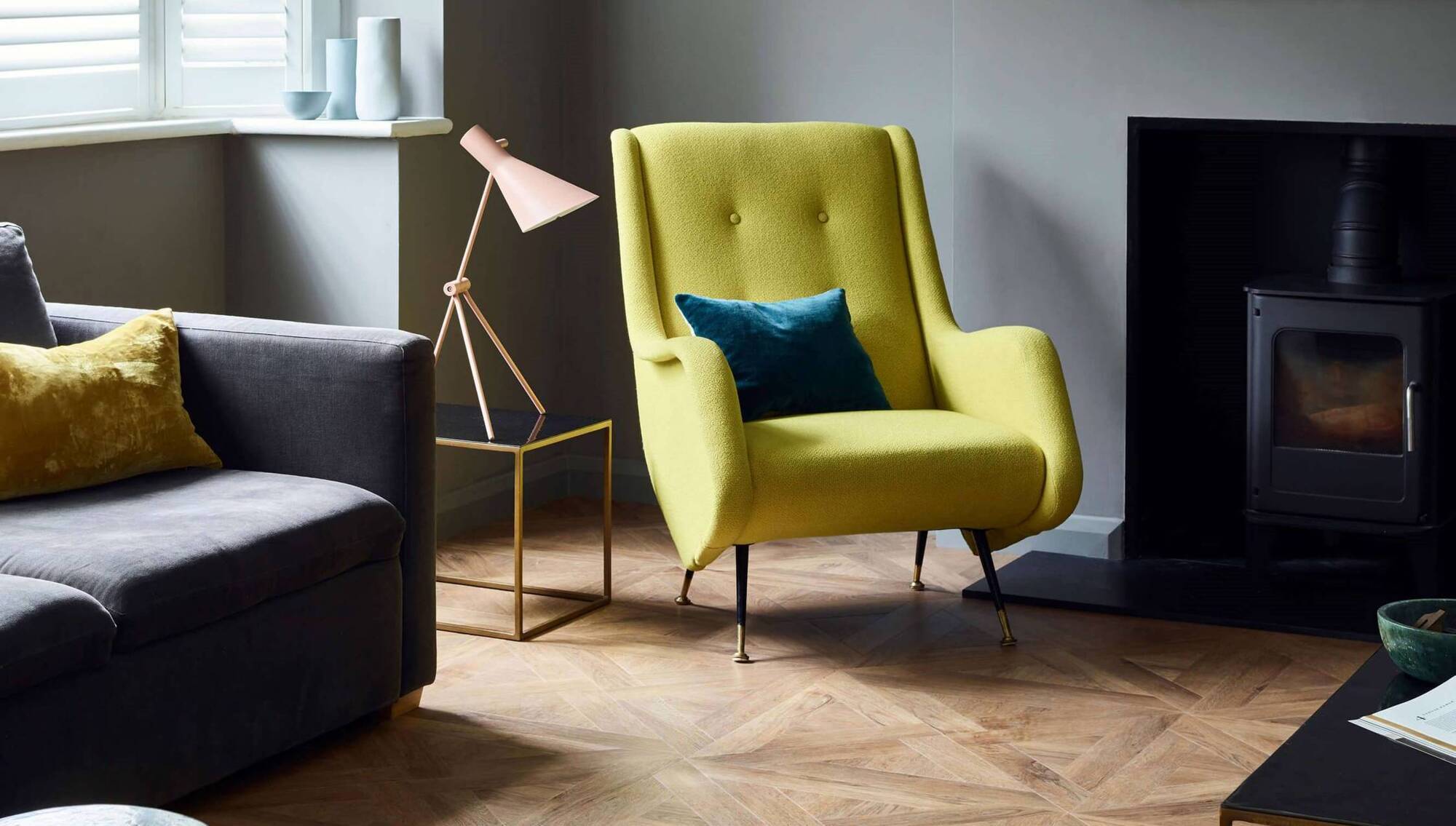
Well-made LVT reads very close to real timber aesthetically; top-quality Amtico Classic Oak (Signature collection) with a lifetime guarantee,  from €95 per square metre.

Well-made LVT reads very close to real timber aesthetically; top-quality Amtico Classic Oak (Signature collection) with a lifetime guarantee,  from €95 per square metre.

There are materials that some interior designers, builders and Insta-renovators are very sniffy about. The pointed comparisons to better choices, and the use of the word “budget” delivered with piteous side-eye? 

When it comes to flooring, luxury vinyl tile (LVT) is often derided in favour of engineered wood, solid wood, or tile. Often confused with laminate products (a different flooring), the pros-and-cons sheet for LVT can make for a painful read.

Acres of open-plan space clad in LVT or laminate are associated with the most economical finish. So, let’s take a closer look at LVT, the greatest of the affordable flooring pretenders. 

Where does it shine, how does it compare with other contestants, and where is LVT best used in your home-flip or build?

What is LVT?

Most of us come across LVT as a wood mimic. The first thing to know is that it has no wood in it whatsoever. It’s a synthetic, multi-layered product with a decorative top face that can mimic stone, timber, tiles, planks, and wood blocks. 

Think of it as a rigid-core vinyl. It may contain some limestone powder in a quality stone-plastic-core (SPC) for additional waterproofing.

Some suppliers will designate their floors as either LVT or SPC, but they are part of the same LVT family as they are laid loose, clicked together or glued down, in a tight, outwardly seamless floor. LVT is hard to spot from its inspirations, unless you get down on the floor or touch a tile (it’s always warmer).

Layers

LVT is an engineered flooring made up of layers. The very top is a translucent wear-layer which takes the slings and arrows of foot traffic, drag marks and cleaning. This topcoat may include a UV acrylic coating to defend against fading — useful in a conservatory.

Right below this is a decorative print with the colour, texture, indicated patina, knots and grain (depending on the design). The vinyl layer is flexible, but not hydrophilic — it will not draw in water or be damaged in most instances by pooling water getting through the seams. SPC cores deliver full waterproofing.

Finally, there is a backing board, sometimes with an integrated underlay to SPC, which makes the floor quieter and more yielding to walk on. Integral underlay can save you money.

Benefits of LVT

Quality LVT is highly scuff- and impact-resilient. It’s water-resistant and even waterproof like SPC. It contains what’s termed an extruded core, which offers superb structural integrity and up to 20 years of service without issue (if you hit the top face with enough pressure, it will scratch or ding). 

With a low thermal resistance (TOG), LVT is absolutely perfect for under-floor heating (UFH), allowing heat to steadily and predictably emit to the air.  Cheaper than engineered timber flooring or solid wood? Generally, depending on the brand and the guaranteed longevity of the floor. 

Built-in, anti-microbial underlay removes a step in installation, including DIY. LVT is a family home favourite in a myriad of styles, colours and plank profiles with commercial-grade slip rating where needed. 

It’s very easy to care for and can be cleaned with any pH-neutral cleaner and a damp mop. Look for AC3/AC4 commercial-grade LVT for heavy wear.

The downside

There’s a gene-level snobbery amongst some decorators towards the extensive use of LVT and laminate flooring. Some people, including buyers, will judge the floor as being less authentic because it’s not “real” tile/block/plank or heavier on natural ingredients. 

Some cheaper LVT and laminates carry a pretty miserable, low-resolution photograph of wood figuring. Add a colour not seen in genuine sawn planks or veneer (a pale or mid-grey), and LVT can be an unconvincing wood dupe. Grey flooring has collapsed in favour over the last two years, replaced by honey tones and raw timber style.

With an uneven subfloor and a clumsy install, your thin board floor may creak — constantly. Unlike solid timber and engineered wood flooring, LVT cannot be sanded, and it can only be superficially repaired with a little colouring and filling. 

It’s therefore not as sustainable as a repairable product. Don’t use steam mops on LVT or laminate flooring unless the makers say it’s safe to do so.

Laminate or LVT?

For dry conditions, laminate flooring generally offers a lower price point than LVT. It offers good photo-realism, a denser, thicker board with a pressed wood core (6mm to 12mm), a decorative layer and a protective top-coat. 

LVT might be thinner (2mm to 8mm SPC), but it has a thicker wear layer, so the embossed design can be more deeply impressed with dimensional detail and texture. Laminate is generally sold as a faux wood floor (choices are improving). LVT mimics wood, stone and decorative tile. Unlike engineered or solid wood, LVT and laminate cannot be sanded back.
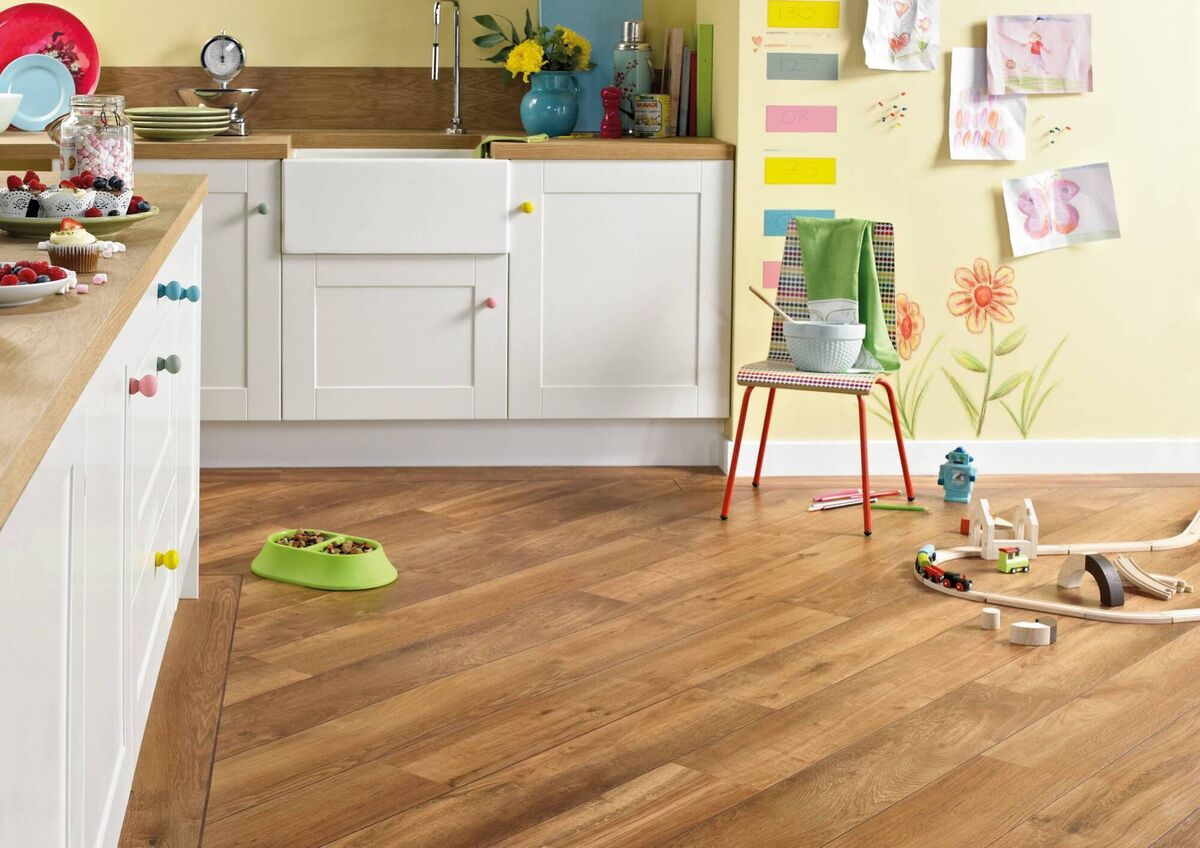
LVT embossing technology delivers an ultra-realistic texture to planks and parquet, bringing depth and authenticity; Karndean Van Gogh Classic Oak from €55 per square metre.

Because of the wood core, laminate floor is never 100% waterproof, but it’s very stain-resistant and reasonably water-resistant for damp dust. Quick-Step Aquanto with HydroSeal (a kit and PE foam) offers high water resistance in laminate (from €37 per metre). 

The wood backing of laminate is more insulating than the backing on LVT, and also reacts to heat over 26C, making LVT a slightly better choice generally for UFH. LVT is generally softer underfoot than laminate. 

So, in short — for a budget floor in dry conditions? Consider the latest quality laminates against LVT.

Is LVT waterproof?

This depends on the level of disaster. The vinyl part of LVT’s layering is 100% waterproof. The theory is that if it gets wet, the sections won’t swell or warp, allowing water to get down to the sub-floor. 

In a full-on flood situation, with standing water enveloping the floor, LVT can lift if glued down to a concrete base rather than click-locked (where it may shift). Include (non-SPC) LVT only on the “dry” side of your bathroom rather than banking it up against a low shower-tray.

SPC is more expensive (averaging around €50 per square metre) and more rigid than standard LVT, but combined with a flexible edge sealant, it’s more fully waterproof.

An exquisite installation will really count in the floor’s survival. Vulnerable edges and weak joints can drink down moisture, which, left in place, can lead to mould growth out of sight on the sub-floor. With laminate and LVT — get pooling spills off the floor ASAP.

Installation

Don’t get carried away by carefully edited Instagram heroics. Laying under door-frames and getting around obstacles like radiator pipes? Flooring is expensive, and professional pin-sharp installation for a typical floating floor is often very reasonable.
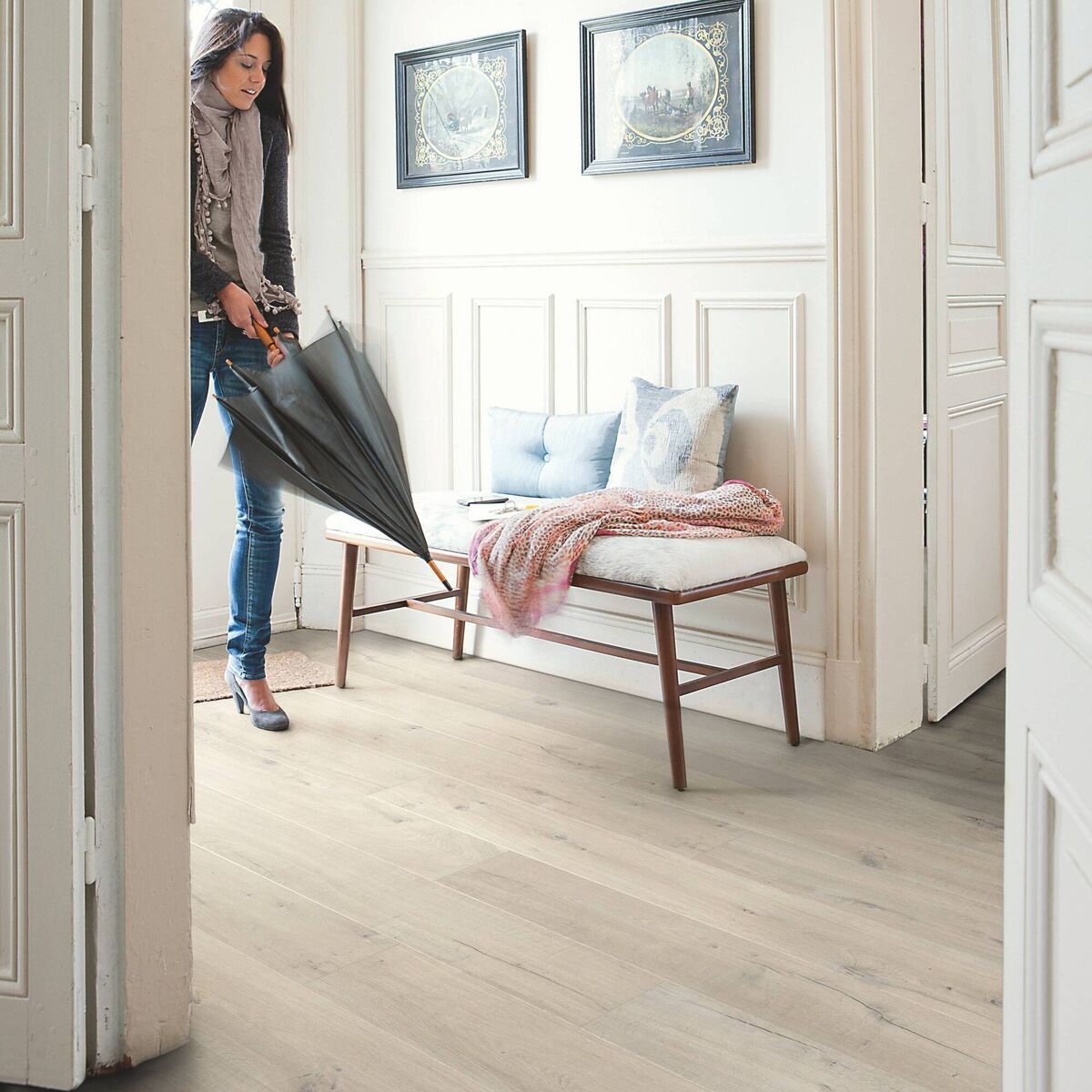
For dry areas, affordable laminate offers a tempting alternative to LVT. Here, Quick-Step Impressive Soft Oak can be used in high-humidity zones, such as kitchens and corridors, from €34 per square metre.

LVT and laminate have a much lower installation cost per metre than tile or random timber boards, and it can be laid over existing level tile if the floor levels are not compromised near door-saddles. LVT is thinner than laminate, so the floor must be very level.

For expensive LVT, SPC in bathrooms, heavy LVT plank sections, and glue-down projects — just as you would with real wood flooring or tiles — pay for an install unless you have confident, proven skills. Ten per cent of the material will end up in the skip due to cuts and staggered joints. 

An experienced installer will separate the patterned boards for an organic look. Budget for these losses. All floating floors, even with 100% synthetic make-up, should have a 5mm-8mm expansion gap all around. 

If you like to change things up every five years, look for loose-lay LVT that sits on the floor using friction and weight. It’s easily removed. Explore Kardean Loose-lay with K-wave grip from €60 per square metre.

x

More in this section

Revoiced

Newsletter

Had a busy week? Sign up for some of the best reads from the week gone by. Selected just for you.

Cookie Policy Privacy Policy Brand Safety FAQ Help Contact Us Terms and Conditions

© Examiner Echo Group Limited