I upholstered my first chair with nothing more than a hammer and a pair of scissors
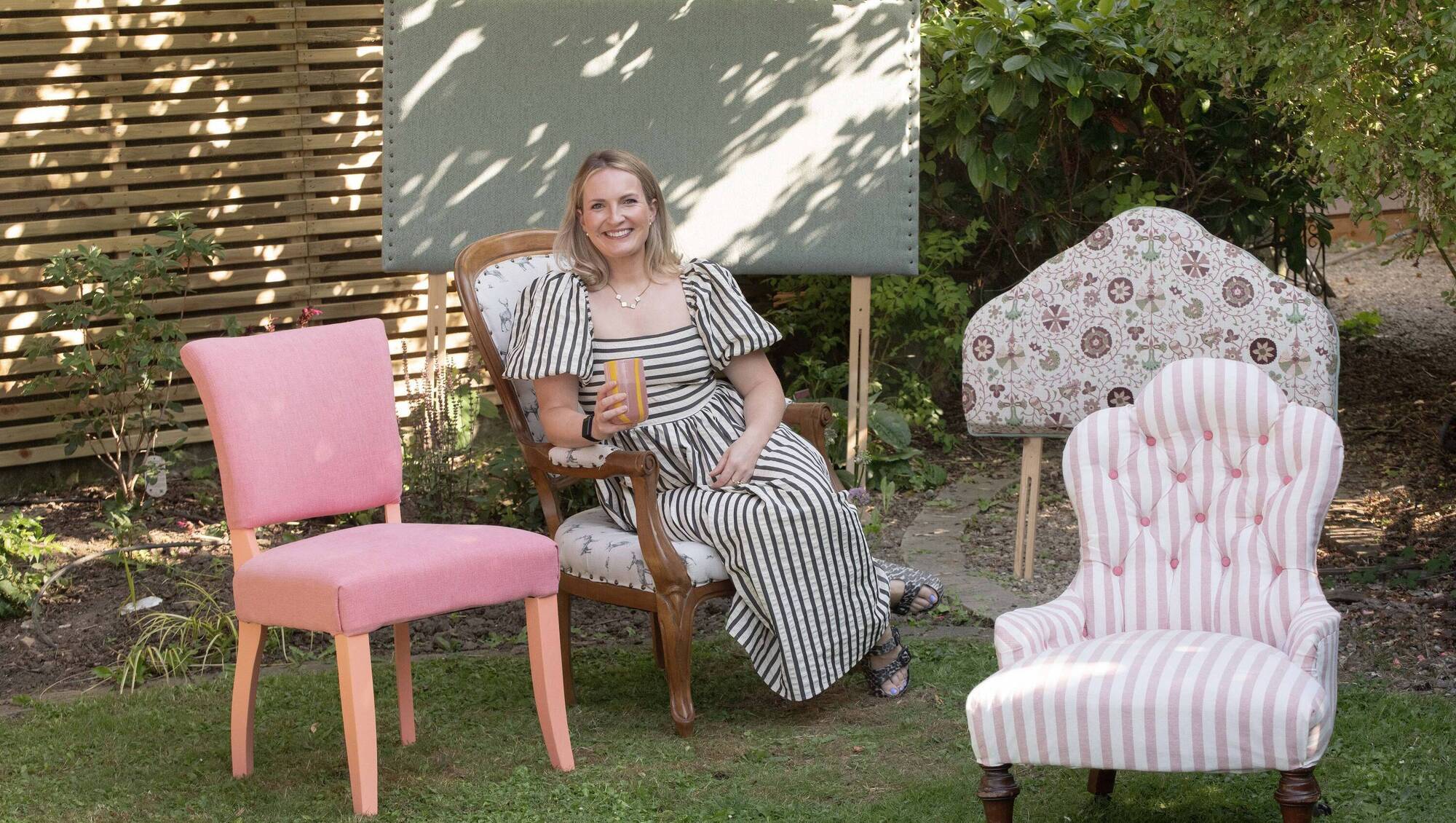
'That's when I realised upholstery wasn't nearly as intimidating as I'd imagined,' says Sara Harrison
Sara Harrison relaxing outdoors this week with some pieces of furniture she has reupholstered. Picture: Moya Nolan

Sara Harrison relaxing outdoors this week with some pieces of furniture she has reupholstered. Picture: Moya Nolan

I have always admired people who can see potential where the rest of us see rubbish. One of those people is my friend Sara Harrison, whose hobby of reupholstering old furniture has turned into quite the passion project.

Through her Instagram account, Second Story Furnishing, she has been documenting the transformation of forgotten chairs, stools, headboards and ottomans into pieces that look entirely at home in a modern interior.

What I love most is that Sara isn’t a traditional upholsterer by trade. In fact, we worked together for years in a corporate office, not a needle or thread in sight.

Sara started as a complete beginner, with no fancy tools, and absolutely no idea whether she could pull it off. “I was fascinated by the idea that beautiful, often handmade pieces that money simply can’t buy anymore end up abandoned in garages and attics, gathering dust instead of being loved,” according to Sara. “It felt such a shame.”

Start simple

Sara’s first project was an old carver chair that looked hopelessly dated. She carefully removed the old fabric, used it as a pattern for a remnant she’d picked up, and finished it with brass studs.

Looking at the finished chair today, you’d never guess that her toolkit consisted of nothing more than a hammer and a pair of scissors. “That’s when I realised upholstery wasn’t nearly as intimidating as I’d imagined,” she says.
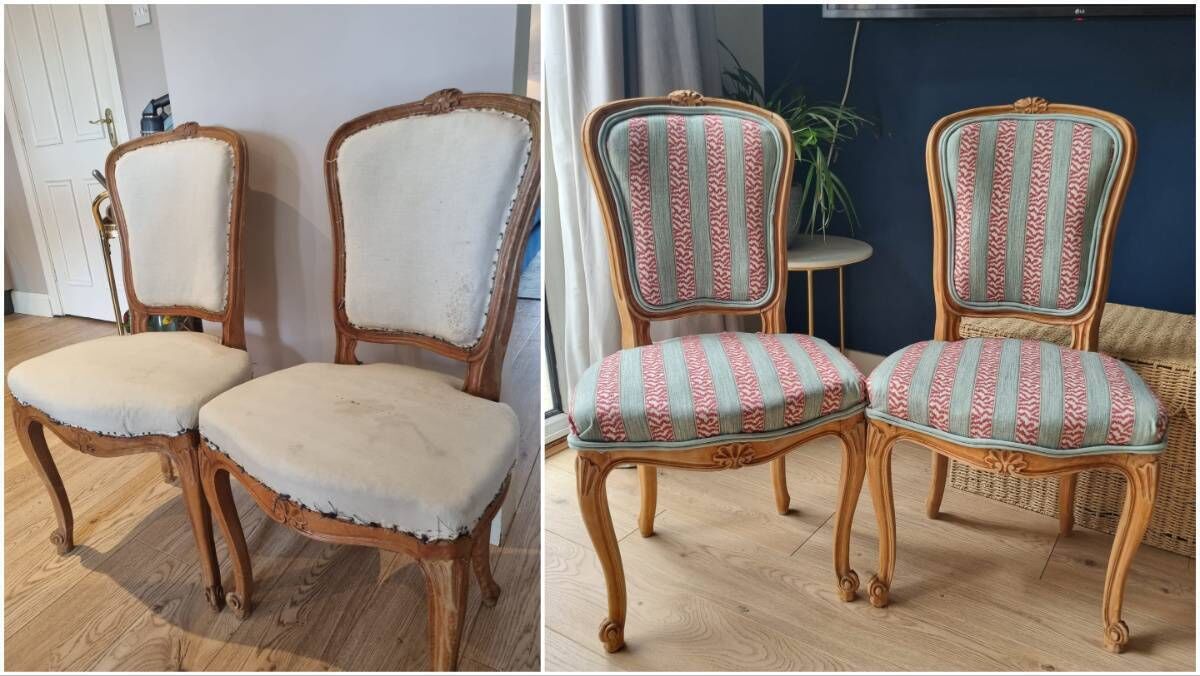
Before and after: These French antique chairs with straw padding, left, were reupholstered in Colefax and Fowler fabric, right.

I suspect that’s true for many DIY skills. They often look impossible until you just put the fear aside and give it a go.

If you’ve ever fancied trying upholstery yourself, Sara recommends starting small.

An ordinary dining chair with a removable upholstered seat is the ideal first project.

In fact, she recently refreshed a 1970s waiting-room chair for her local pharmacy by unscrewing the seat, adding fresh padding and recovering it in a bold pink-and-grey fabric.

The whole thing took about 20 minutes. I can actually vouch for this as I did this same thing myself years ago with a set of four chairs in a rental apartment. I did it with a staple gun, so I can’t claim a seamless finish, but it looked absolutely fine and took minimal effort.

Learn as you go

Footstools are another excellent beginner project, as are simple headboards.

They don’t require complicated shaping, and because they use relatively little fabric, mistakes aren’t especially expensive. “The corners can be a little tricky at first, but once you’ve mastered them, you’ll wonder why you didn’t start sooner,” says Sara.
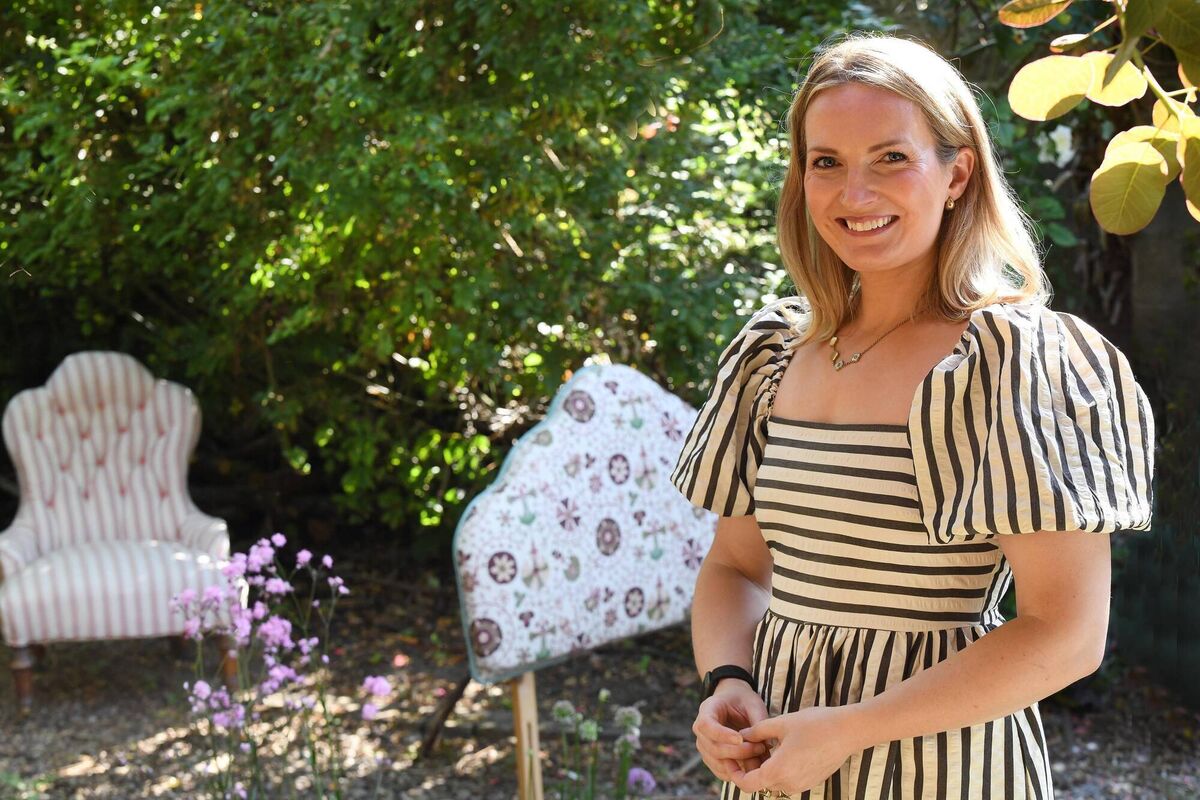
Sara Harrison with a chair and headboard she has reupholstered. Picture: Moya Nolan

See? It’s surprisingly accessible. You just need a starting point. “So much of the process is actually following what somebody else has already done,” she says. The existing fabric usually becomes your template for the new one, meaning you’re rarely starting with a completely blank canvas. As with most jobs, the bulk of the work is in the prep. Putting the new fabric on is usually the quickest part.

Prep carefully

“The biggest surprise was how much time is spent removing the old upholstery,” she says.

Pulling out decades of staples, nails and tacks can take hours, but it’s also become her favourite stage. She’s discovered antique chairs stuffed with straw instead of horsehair — the more luxurious material of the time — and each layer tells a little tale about changing techniques and craftsmanship. “I have enormous appreciation and admiration for the hands that spent hours making these pieces originally.” It’s a lovely reminder that furniture wasn’t always designed to be disposable.

Much of it was made to last generations, and reupholstery is simply the latest chapter in its life.
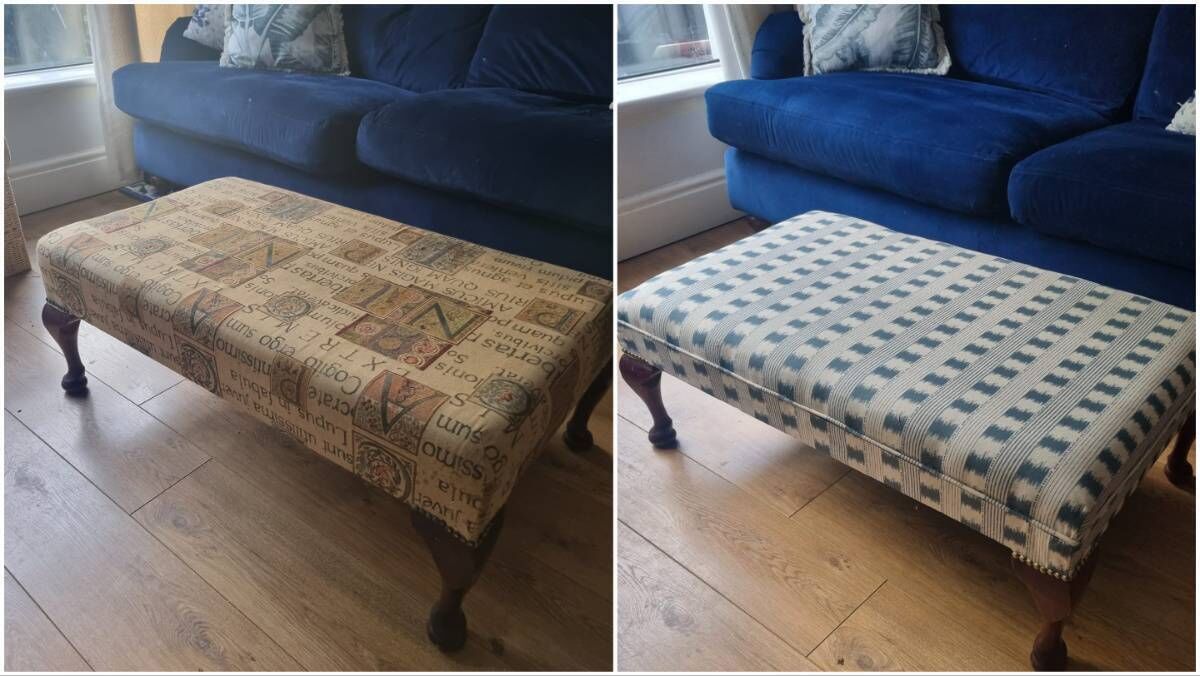
Sara Harrison reupholstered this old footstool, left, in Helen Turkington fabric, right.

Not every piece is worth saving

Sara’s advice is to look for “good bones”. If a chair feels solid when you sit on it, the frame isn’t loose, and there aren’t springs poking through the seat, chances are it’s a great candidate for re-covering.

Structural issues like severe woodworm, missing pieces, or extensive previous repairs are another matter and may justify seeking professional advice before you begin.

A modern twist

“But where do you find the fabric?” I ask her. “Isn’t it very expensive?”

I was working under the assumption that antique furniture should be re-covered in suitably traditional fabrics.
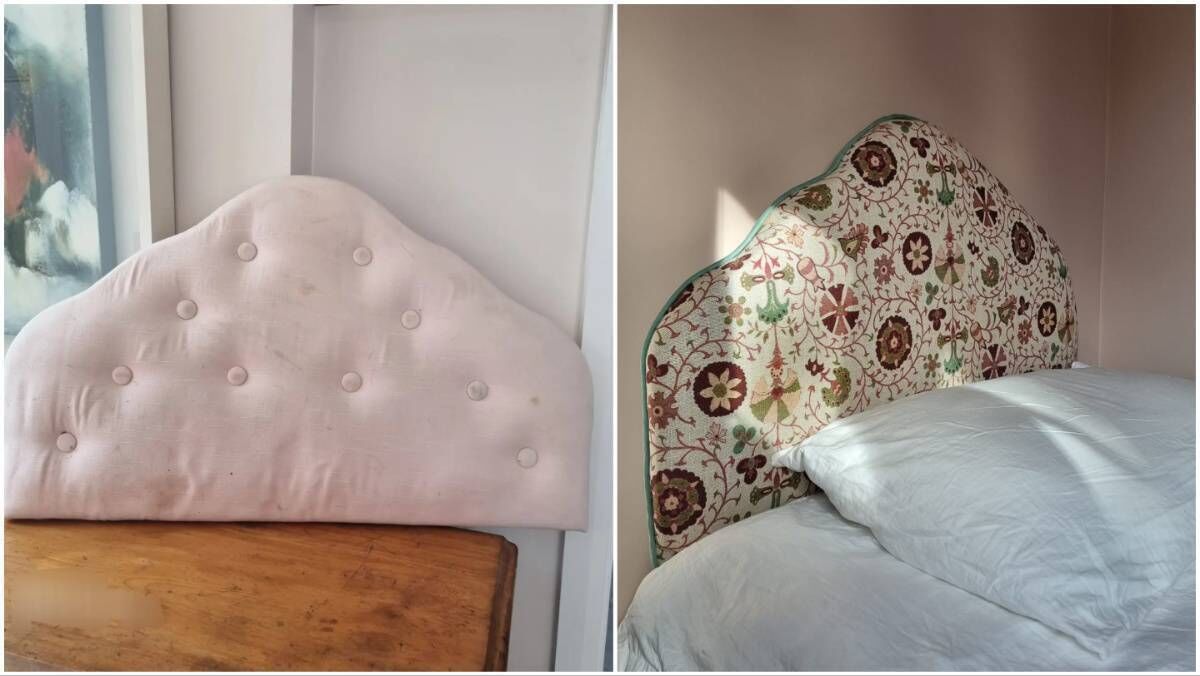
Sara Harrison bought this old headboard on Adverts, left, and reupholstered it in Helen Turkington fabric with piping she made herself from old fabric.

Sara couldn’t disagree more. “If recovering a chair means it will be loved for another hundred years, choose a fabric that makes you smile every time you walk into the room.”

That swiftly busted my assumptions. One of the easiest ways to make an old piece feel contemporary is simply by pairing a classic frame with an unexpected fabric. A Victorian chair upholstered in a vibrant geometric print suddenly feels playful rather than stuffy. Mid-century dining chairs look wonderful in bold velvets or textured bouclés (still very hot right now).

Be realistic

Practicality matters too. Upholstery fabric has to cope with everyday life. Thin cottons or delicate silks can stretch or tear during installation and won’t always stand up to years of use.

Sara recommends proper upholstery-weight fabrics where possible, particularly for frequently used furniture.

That said, you don’t necessarily need to spend a fortune. Some of her favourite finds have come from Vinted, Adverts and charity shops. Curtains can become chairs. End-of-line rolls from fabric shops are often perfect for smaller projects. A footstool may need less than a metre of fabric, making it an affordable way to experiment.

Learn from the best

Sara bought a Victorian nursing chair on Adverts for €50 and brought it to a weekend upholstery course with Pepie and Nigel from Old Chairs (OldChairs.ie). There she learned traditional upholstery techniques while restoring the chair itself. “I was so absorbed I completely lost track of time,” she says.
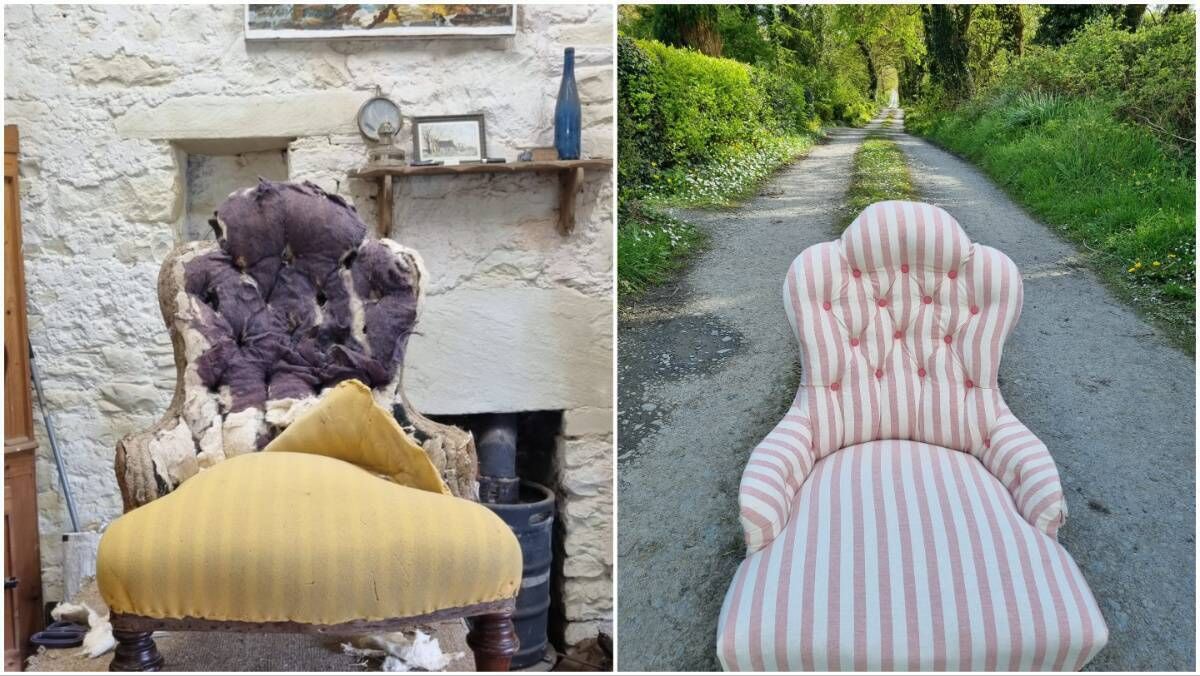
Sara bought this chair for €50 on Adverts, left, pictured mid-dismantling process, and upholstered it in a weekend class, right.

“I left with a chair I absolutely loved, but more importantly, with skills I’ll use for years. It genuinely filled my cup.” 

I think that’s what appeals to me most about upholstery, or indeed anything that requires using your hands.

Yes, you finish with a beautiful piece of furniture. But you also gain an understanding of how things are made, how they come apart, and how they can be given another life instead of heading for landfill. It is a gorgeous antidote to our increasingly disposable culture.
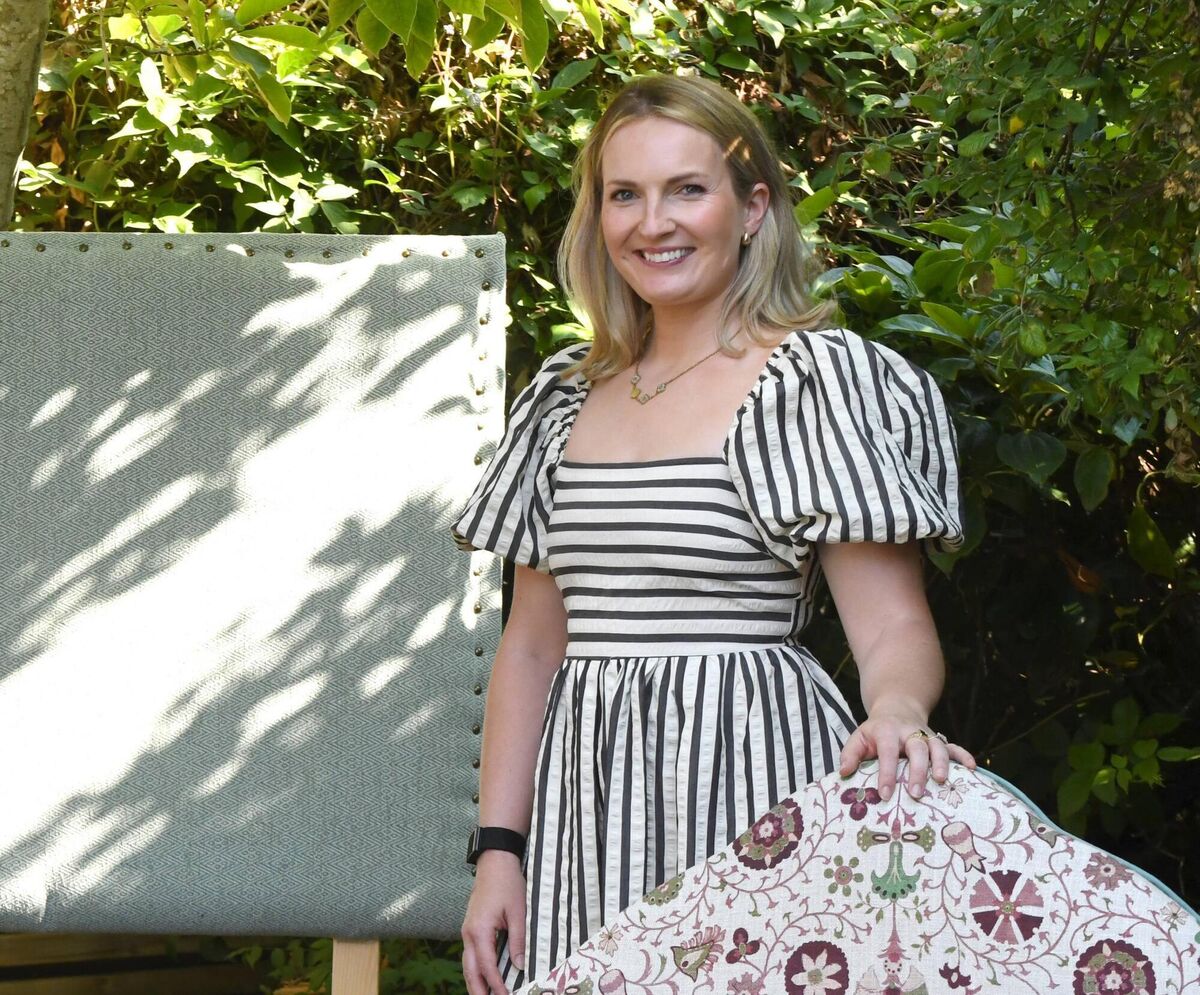
Sara Harrison with some pieces she has reupholstered. Picture: Moya Nolan

Should you give it a try?

Sara offers one final piece of advice to anyone looking at a worn-out chair and wondering whether it’s worth the effort. “Imagine it already finished,” she says. “Can you picture it sitting proudly in your home with beautiful new fabric? If the answer is yes, it’s probably worth saving.” I love that so much.

Follow Sara Harrison’s projects on Instagram at @secondstoryfurnishing

x

More in this section

Revoiced

Newsletter

Had a busy week? Sign up for some of the best reads from the week gone by. Selected just for you.

Cookie Policy Privacy Policy Brand Safety FAQ Help Contact Us Terms and Conditions

© Examiner Echo Group Limited