Peter Dowdall: Summer shows us exactly what we need to do in our gardens

July is the perfect month to walk around our rooms outside, see what’s going on, make notes and take pictures
In winter, when everything is cut back or dormant, it is very easy to convince ourselves that there is plenty of space, but by now, you may see a nepeta smothering a smaller perennial, or a hardy geranium sprawling too far, or a shrub that has grown bigger than expected. File pictures


In winter, when everything is cut back or dormant, it is very easy to convince ourselves that there is plenty of space, but by now, you may see a nepeta smothering a smaller perennial, or a hardy geranium sprawling too far, or a shrub that has grown bigger than expected. File pictures

In May and June, everything can look full of promise. Fresh growth and our own enthusiasm for the season ahead hide a multitude. The early perennials are flowering, the roses are beginning to perform, the foliage is lush, and there is a sense that the garden is building towards something, but by July, however, the garden is showing us what is really going on.

The first flush has passed, and plants are in full active growth. Some are flowering beautifully, some have disappeared, some have flopped across their neighbours, and some are making it clear that they were never happy where they were planted in the first place.

This time of year is a great time to walk around the garden, making notes and taking pictures. You might notice a gap where you were hoping for colour. 

You might see a plant that looked promising in spring but has now vanished under the weight of more vigorous neighbours. You might realise that two plants you thought would work well together are not doing each other any favours.

You may find colours clashing in a way that looked much better in your head. You may see that one plant is too dominant and is taking over the space around it. You may notice a border that looked lovely in June has now gone tired and flat, with nothing ready to carry the show through late summer.

One of the most common things to look for now is gaps, awkward, obvious holes where something should be happening but is not. This is especially obvious in herbaceous borders.

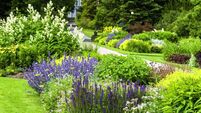
A border can look wonderful in May and June, full of aquilegias, geums, alliums, foxgloves and fresh foliage, and then by July it begins to fade. These gaps can be filled with more plants that hold the garden into late summer and autumn, plants like salvias, echinacea, rudbeckia, persicaria, phlox, asters, grasses, sedums or repeat-flowering roses, depending on the conditions and the style of the garden.

The opposite can also be a problem, and overcrowding is another thing that becomes evident at this time of year.

In winter, when everything is cut back or dormant, it is very easy to convince ourselves that there is plenty of space, but by now, you may see a nepeta smothering a smaller perennial, or a hardy geranium sprawling too far, or a shrub that has grown bigger than expected and is casting shade over plants that need sun. 


You may notice that something beautiful is in the wrong place. Not because there’s anything wrong with the plant, but because it is the wrong plant for that exact spot.

Look now also for plants that have flopped badly, especially after rain or wind. Are they in soil that is too rich? Are they reaching for light? Are they planted in a place that is too exposed? Would they be better supported by neighbouring plants, or would a more self-supporting variety be a better choice?

The same goes for repetition; good planting schemes need structure, balance and repetition. That does not mean everything must be symmetrical or formal, but the eye needs something to hold onto.

Repeating a plant, a colour, a leaf shape or a texture helps a border feel more intentional. Without that, a border can become a collection of nice plants rather than a piece of planting.

This time of year is a good time to stand back and ask, does this border work? Does one area connect to the next? Is there a colour or shape that needs to be repeated? Is there too much of one thing and not enough contrast?

But now isn’t the time to necessarily correct any of these issues, as most plants are in active growth now. Many are flowering, feeding bees, hoverflies, butterflies and other insects. They are drawing water and magic from the soil, making leaves, forming flowers, setting seed and doing all the living work of summer.

Digging them up now, dividing them, moving them or redesigning whole sections of border will inevitably lead to dead plants.

If something has collapsed completely, you can cut it back or tidy it, or if a gap is driving you mad, there is nothing wrong with using a pot, an annual, or a temporary plant to carry you through the season. Major changes, however, are better left until late autumn or winter, depending on the plant, the soil and the weather.

What you can do now is take photographs, and lots of them. Then make notes, record what you can see now, because come winter, you will not remember what it looked like during high summer

By January, the border will be much more bare, and you will look at the empty spaces and, if you’re anything like me, convince yourself that everything was probably fine.


x

More in this section

Revoiced

Newsletter

Had a busy week? Sign up for some of the best reads from the week gone by. Selected just for you.

Cookie Policy Privacy Policy Brand Safety FAQ Help Contact Us Terms and Conditions

© Examiner Echo Group Limited