Peter Dowdall: Why these plants are catnip to every gardener
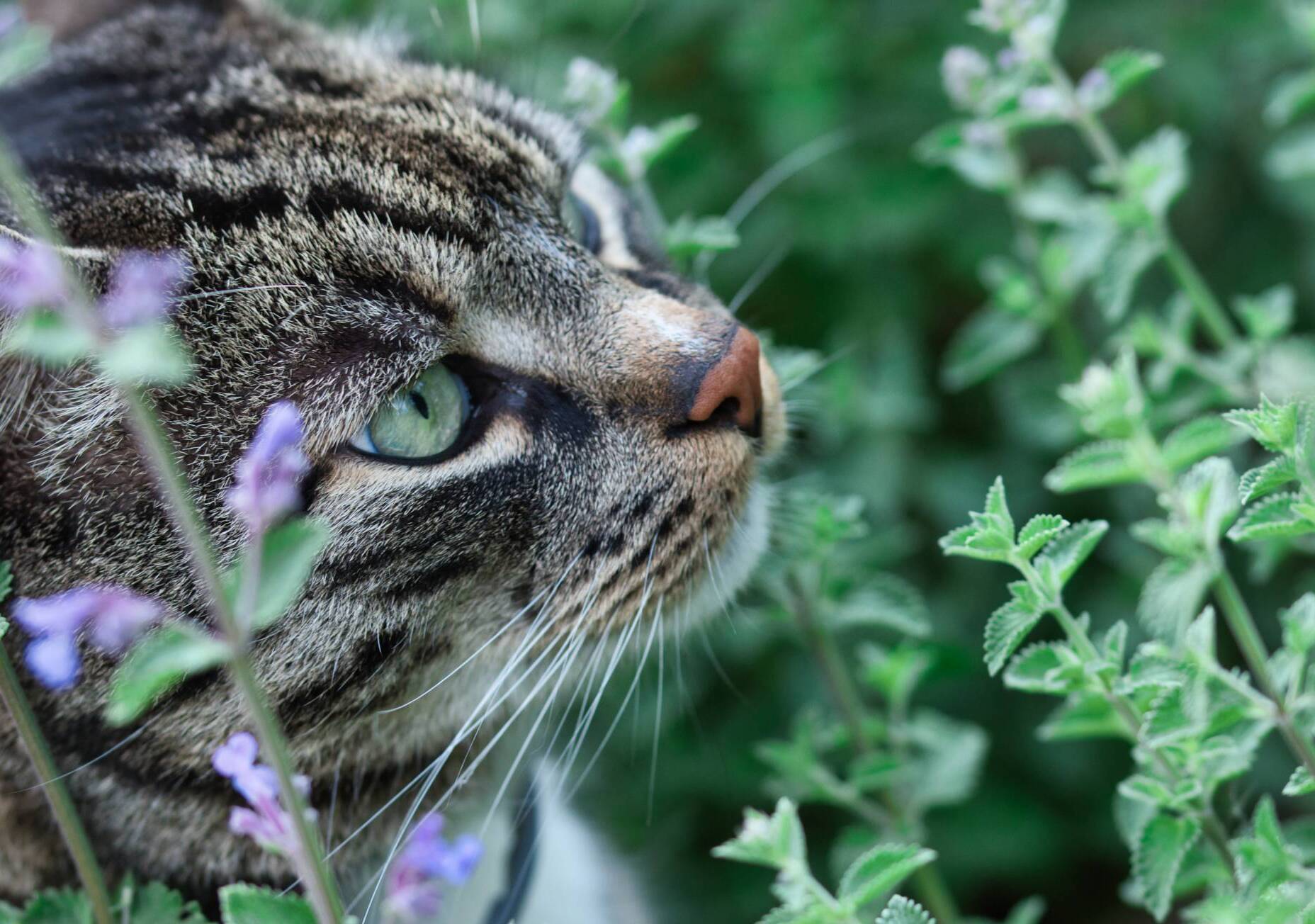
Cats love playing with catmint, nepeta. Planted at the foot of your alliums, it will fill 'the understorey' with a soft haze of grey-green, hiding everything beneath while the great spherical heads float above it as though suspended in mid-air. File pictures

There are plants that stop you in your tracks in other people's gardens, and alliums are exactly that kind of plant. The spherical heads held high on tall straight stems, bobbing gently in a May breeze, have a quality that is just captivating. Architectural, stylish, colourful and easy to grow, May is when they come into their own, and if you have never grown them, let me tell you, you should.
They are bulbs you plant in autumn, and come spring, the foliage arrives first, broad, strap-like and fresh and luxuriant with all the promise that a new spring brings. This is when you think you have done rather well. Then, as the energy of the plant begins to redirect itself upward and into flower production, those same leaves start to yellow and wither at the edges.
This is the point at which a lot of gardeners panic about the dying foliage. They assume something has gone wrong, that there is a disease or a deficiency, that they have perhaps watered too much or not enough. In truth, nothing has gone wrong at all.
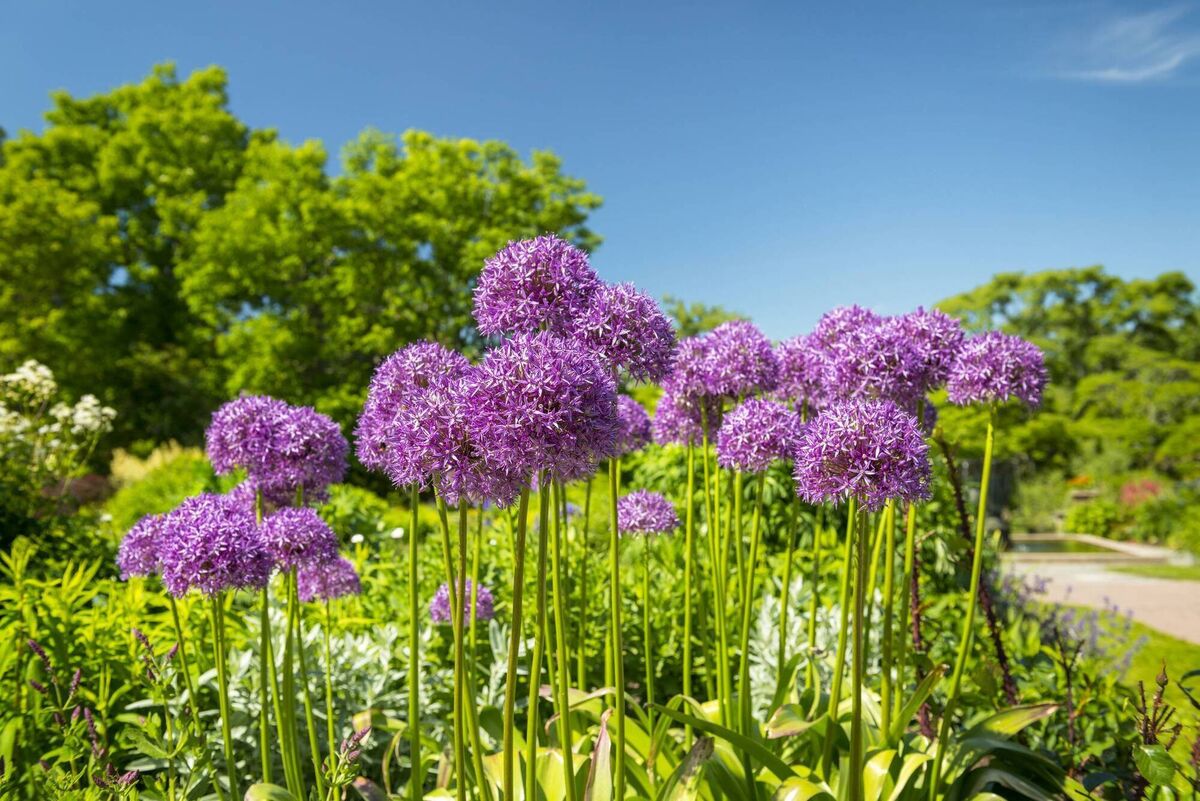
The plant is doing exactly what it is supposed to do. It is concentrating its resources on producing the flower head, and the foliage simply has to give way to that process. The right response is to do nothing. Leave the leaves alone, let the plant get on with it, and turn your attention to what is coming.
That said, if the dying foliage bothers you aesthetically, simply remove it. A gentle tug will usually free the looser leaves, but don’t pull hard. If it's not ready to come away in your hand, give it a clean cut at the base. The plant will not suffer, and what you want to preserve is the stem and the developing flower head.
Allium hollandicum Purple Sensation is the one most people picture, a deep violet globe on a stem that reaches about a metre, and it is a reliable and beautiful thing. Gladiator is a little taller and a touch paler in colour.
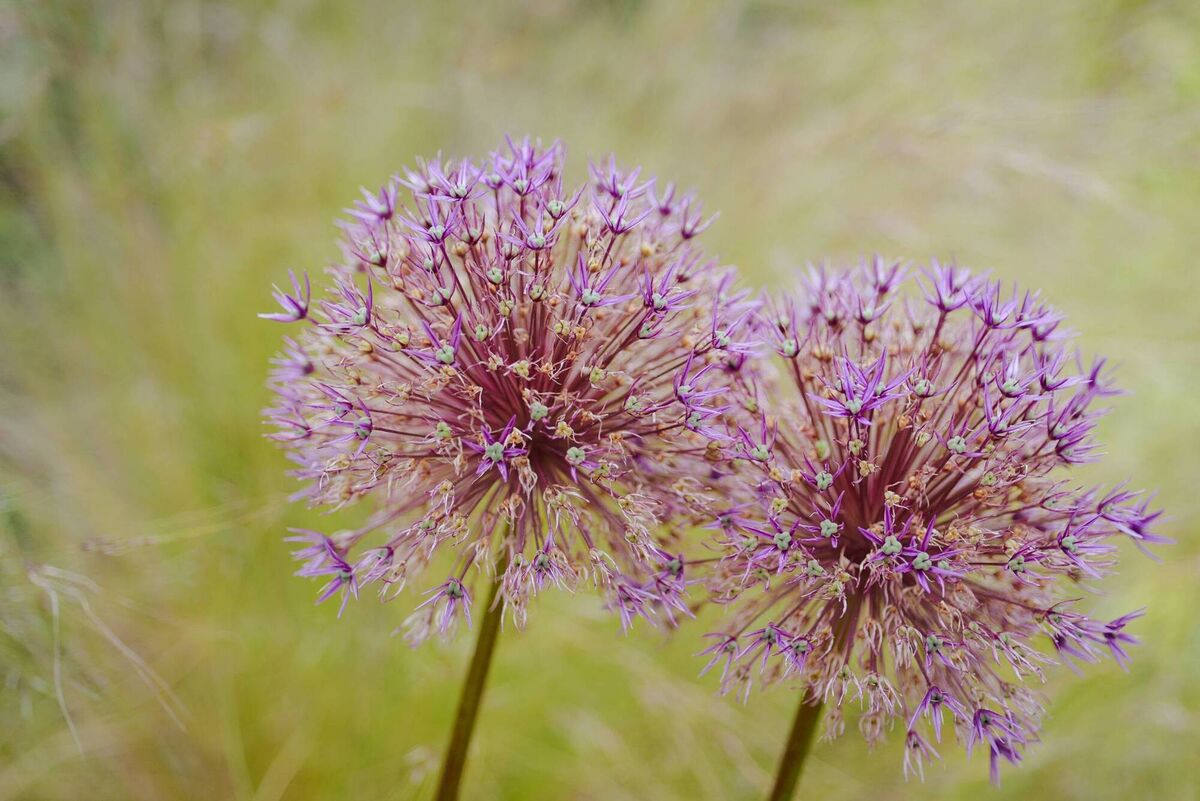
At the more dramatic end of the scale, A.schubertii produces a flower head that resembles a firework frozen in the moment of explosion, the florets held on stems of wildly varying lengths so that the whole thing looks like a starburst. It is not subtle, but it is extraordinary, and it dries magnificently if you cut it just as the colour is fading.
All of the alliums are excellent for pollinators; the bees find them irresistible, and on a warm May morning, a well-planted clump of alliums will be humming with activity.
The real skill with alliums, though, is in the planting combinations, and this is where a little thought will bring the display from “nice” to that perfect Instagram moment. The challenge is the height. If you leave the dying foliage in place, that will detract from the beauty, but even if you remove it, if you have nothing planted beneath, then the blooms can look a bit tall and lanky, so the trick is to plant through or alongside perennials with enough body to conceal any foliage and stems.
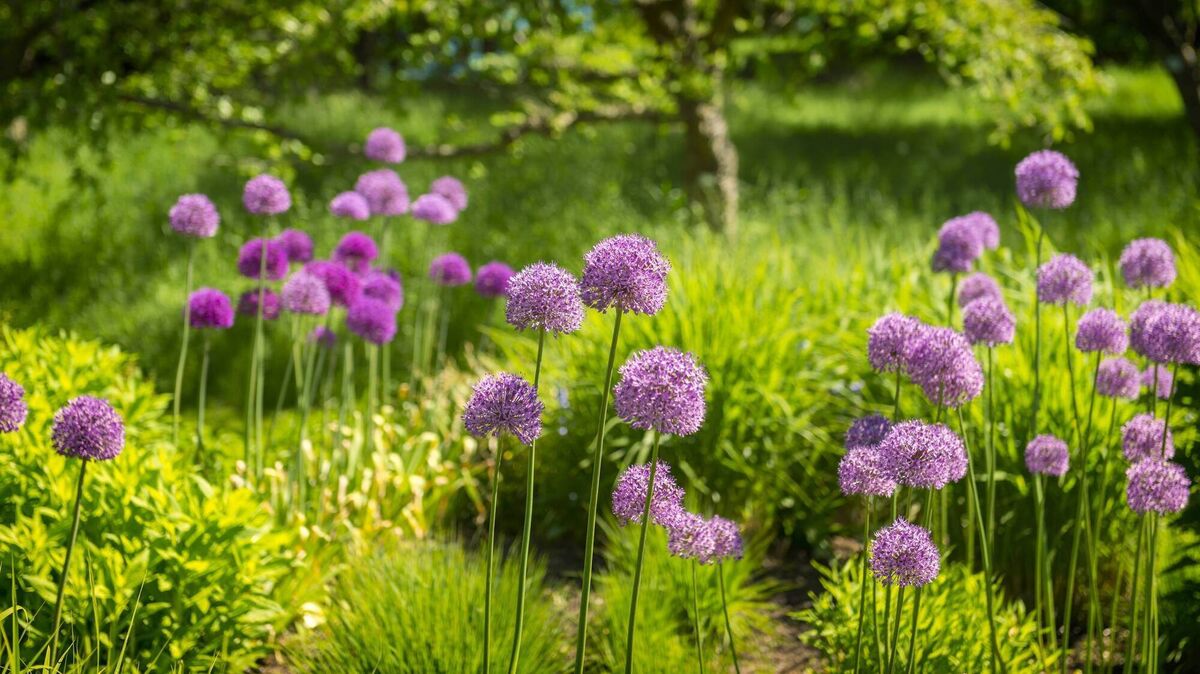
Geraniums are ideal, the hardy cranesbill types rather than the tender pelargoniums, because they spread and fill at exactly the right time, and their foliage sits at a height that masks the allium leaves without competing with the flower stems above.
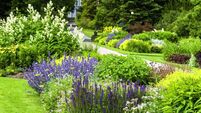
Nepeta, the catmint, does the same job beautifully. Planted at the foot of your alliums, it will fill the understorey with a soft haze of grey-green, hiding everything beneath while the great spherical heads float above it as though suspended in mid-air.
Salvia nemorosa works well too, producing its own vertical spires of purple or blue at much the same time, creating a layered effect that feels just right, without looking contrived. Ornamental grasses, too, such as Stipa tenuissima, can work brilliantly with alliums as they move in the breeze alongside the allium stems in a way that is almost hypnotic.
The effect you are aiming for, with all of these combinations, is one of lightness. The allium bloom should appear to hover, to have arrived above the surrounding planting by some gentle accident.
That quality of floating, of being held at exactly the right height above a sea of foliage, is what makes them so perfect in a well-planted border. It takes a little planning in autumn when you are putting the bulbs in, but when it comes together in May, you can clap yourself on the back for getting it right.
Now, a word of honesty about their perennial label, because alliums have a habit of disappointing on that front.
Like tulips, they do not always return the following year. The bulb may have exhausted itself, the drainage may not have been quite right, or they may have been eaten. If yours do come back, treat it as a bonus rather than an expectation. What I do is, I add a few new bulbs each autumn, regardless, topping up to make sure that the display continues each year.
- Got a gardening question for Peter Dowdall? Email gardenquestions@examiner.ie
CONNECT WITH US TODAY



Be the first to know the latest news and updates