Expert advice to save on energy bills: People think they need to drastically cut usage to save money, that's not true
Towards the end of your package, it’s time to contrast, compare, and more than likely jump ship. Picture: iStock
Kya deLongchamps explores ways to level up our expenses against the prospect of soaring energy and service costs
I had to resist the temptation to lap the drips off the diesel nozzle the last time I fuelled up the jalopy.
There are world order-level happenings beyond our control with tragic human consequences.
It feels very overwhelming. Having our transport, power, and central heating fuel under threat? Challenges to unavoidable domestic bills are jangling the nerves of Irish householders. Nobody knows your domestic round and peculiar personal habits better than you do.
Could we feel more empowered in the face of those rolling bill shocks? Let’s explore just a few ways to level up our expenses against the prospect of encroaching energy and service bills before next winter hits.
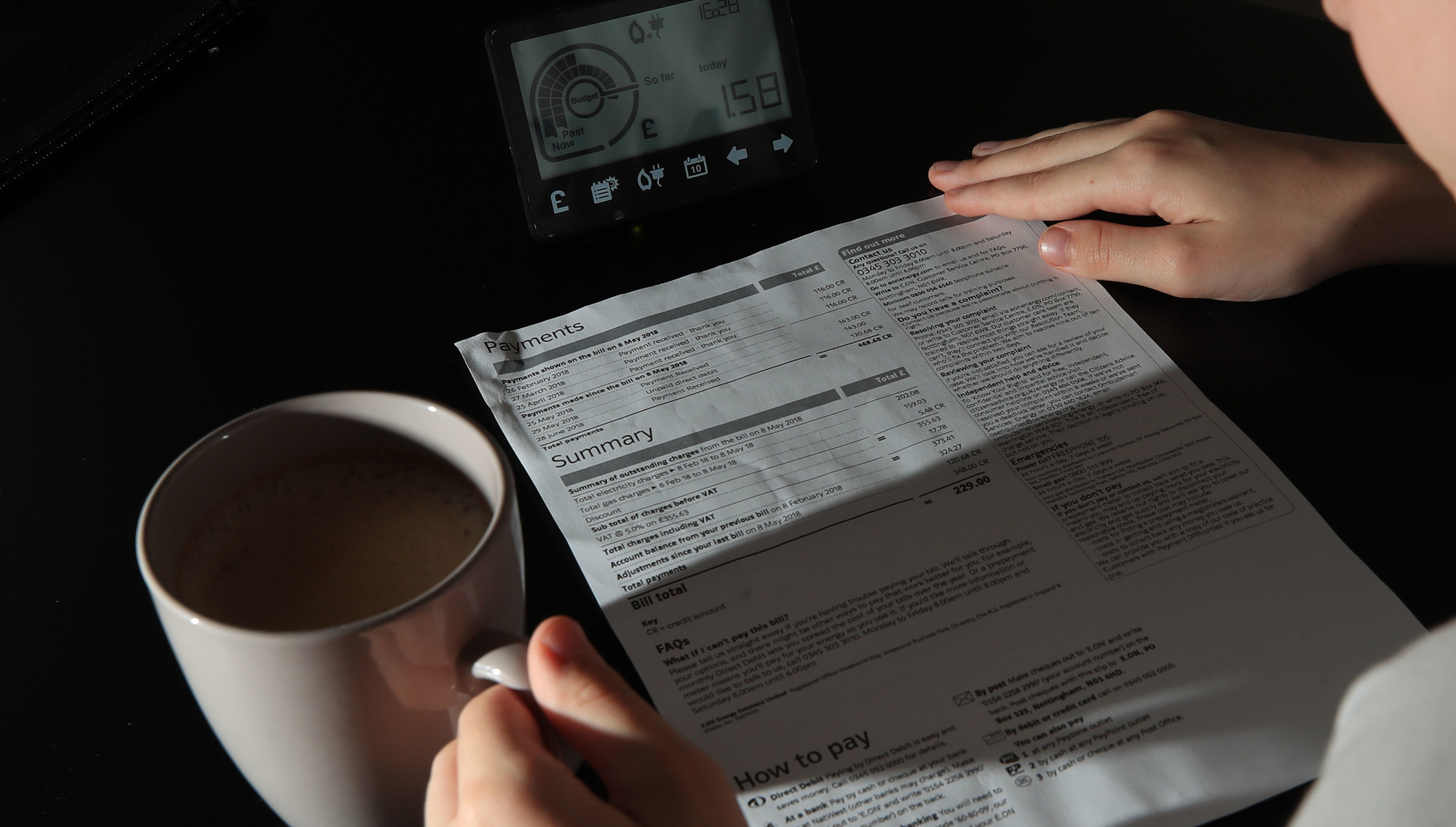
The level of indifference to switching service providers remains stubbornly high. Towards the end of our power/gas/mobile/insurance/broadband/media package — it’s time to contrast, compare, and more than likely jump ship to pick up on new customer bonuses and reduced charges.
If you don’t engage with your service contracts and instead let them roll over annually (health insurance is the devil here), you are missing out.
Developing certainty by pacing and anticipating bills to the best of our ability is a powerful approach.
Depending on your needs (say a 24-power tariff or high feed-in tariff credits for a PV solar system), you may even be better off taking on the penalties of going out of your existing contract.
This is detailed stuff that will require you to evaluate your needs carefully and weigh the products on offer. Switching services offer brilliant comparison tools with all that essential, granular detail in just a few clicks.
The team at comparison/switching firm Switcher.ie tell us that Irish households could be €600 out of pocket from annual price rises on just broadband and mobile.
Eoin Clarke, telecoms expert at Switcher.ie, says: “The move toward annual price increases began in 2022, with telecom providers using an inflation-linked formula to set yearly price rises.

“This has meant that households have seen the cost of their broadband and mobile plans soar by hundreds of euros over the last four years. Although inflation-linked pricing is being replaced with an annual flat-rate rise for newer customers, these mid-term hikes can still cause a price shock.”
Grace and favour are awarded to nimble, supply-hopping new customers.
“The changes to monthly bills may seem small, but the cumulative cost over multiple years can really add up — especially for households with more than one contract on the go,” Clarke says.
“Based on a typical family with one SIM-only contract, one bill pay contract, and a 1GB broadband and TV bundle, the increase since 2023 could have amounted to over €600* if they had stuck with the same supplier and hadn’t switched when their contract ended.”
Focusing on the area of broadband, Clarke says: “Ensure you factor in the price after the promotional period, as well as crucial features such as speed, contract duration, and any rewards or perks.”
For TV service, he strongly suggests we combine our broadband, TV, and mobile services into a single package to reduce monthly expenses.
“Many Irish households rely on streaming services like Now and Netflix for sports and entertainment.
“Bundling broadband and TV, and adding your mobile SIM-only plan can lead to significant savings compared to individual plans.”
When it comes to our mobiles, Clarke says the ultimate saver is to move to a SIM plan.
“If your phone contract is up, and you’re still happy with your phone, shop around for the cheapest SIM-only plan and try the smaller, no-frills providers. They actually use the same networks as the bigger brands. Unlike bill-pay contracts, which include the cost of a new device, SIM-only deals just charge for calls, texts, and data, offering huge savings and flexible, shorter contracts. Obviously, watch that you data usage does not slip into a higher usage charge. They will let you know.”
Brendan Halpin, the founder of Weswitchu.ie, offers this crucial advice on energy contracts.
“Many households are simply on the wrong plan. The biggest energy saving most households can make isn’t using less — it’s being on the right tariff.
“Many homes can save €400–€600 a year just by moving off expired discounts and onto a current plan. Discounts don’t equal savings — two suppliers can offer the same percentage discount, but very different real costs once unit rates and standing charges are factored in. Tariffs matter more than ever — we’re seeing a big increase in households installing solar panels or moving to electric vehicles and, for these homes, smart tariffs or night rates can make a significant difference if used correctly.”
“As more homes move to EVs and solar, choosing the right tariff is becoming just as important as choosing the right supplier.
“Smart tariffs aren’t automatically cheaper if usage doesn’t shift away from peak times. They can actually increase costs. Most people are overpaying without realising it — especially after the first 12 months when rates quietly increase. More broadly, energy has shifted from a set-and-forget bill to something that needs a more active approach. What we’re seeing now is that savings don’t just come from switching once a year, but from staying on the right plan as prices change.”
BACK in the house, spring and summer and a false sense of confidence might incline many of us to wait out the energy crisis, especially when it comes to fossil fuels. This is the time to think of the worst-case scenario and to plan strategically to reduce heating bills in winter 26/27. Obviously, there’s the usual round of getting your CH system serviced, closing doors between rooms, and tickling the thermostat down 1C to save up to 10% on your fuel and so on.
However, what if you’re dependent on kerosene for heating and cooking?
Home heating oil is becoming stratospherically expensive. What saved us in the chill of March this year was the various SEAI grant-aided insulation improvements we made, which meant an hour of the boiler raging warmed the house for up to four hours. We use small electric appliances for cooking, not radiant oil-fed ovens.
If the house is wicking away heat through the walls/doors/floors or windows, we’re in trouble. Address that as well as you can right now. Even if you’ve abandoned the idea of a full SEAI granted upgrade (common according to a recent ESRI report), the SEAI website is still a brilliant resource for cheap, DIY improvement savvy. After that, if you could create a smaller cluster of modest rooms to live in, what would that look like? Get creative. 2kW of power from even a small area heater can do an excellent job in a study/dining room, or a comfortable, smaller kitchen/diner. Those conduit areas (if you have zoned heating) should be no more than 18C, and no — apart from steady output of heat pumps and UFH — leaving your heating on 24/7 will not trim the bills for electricity/gas/kerosene.
Older customers should keep rooms at a comfortable 20C/21C, and I have found my senior relatives have needed some encouragement to not skimp on their well-being. If you are self-employed or in an LLC, keep a record of your heating demands as this can be set against your tax bill at the year’s end.
If your contract is up, shop around for the cheapest SIM-only plan
Read More

CONNECT WITH US TODAY



Be the first to know the latest news and updates