Home Q&A: How to control the temperature in a conservatory
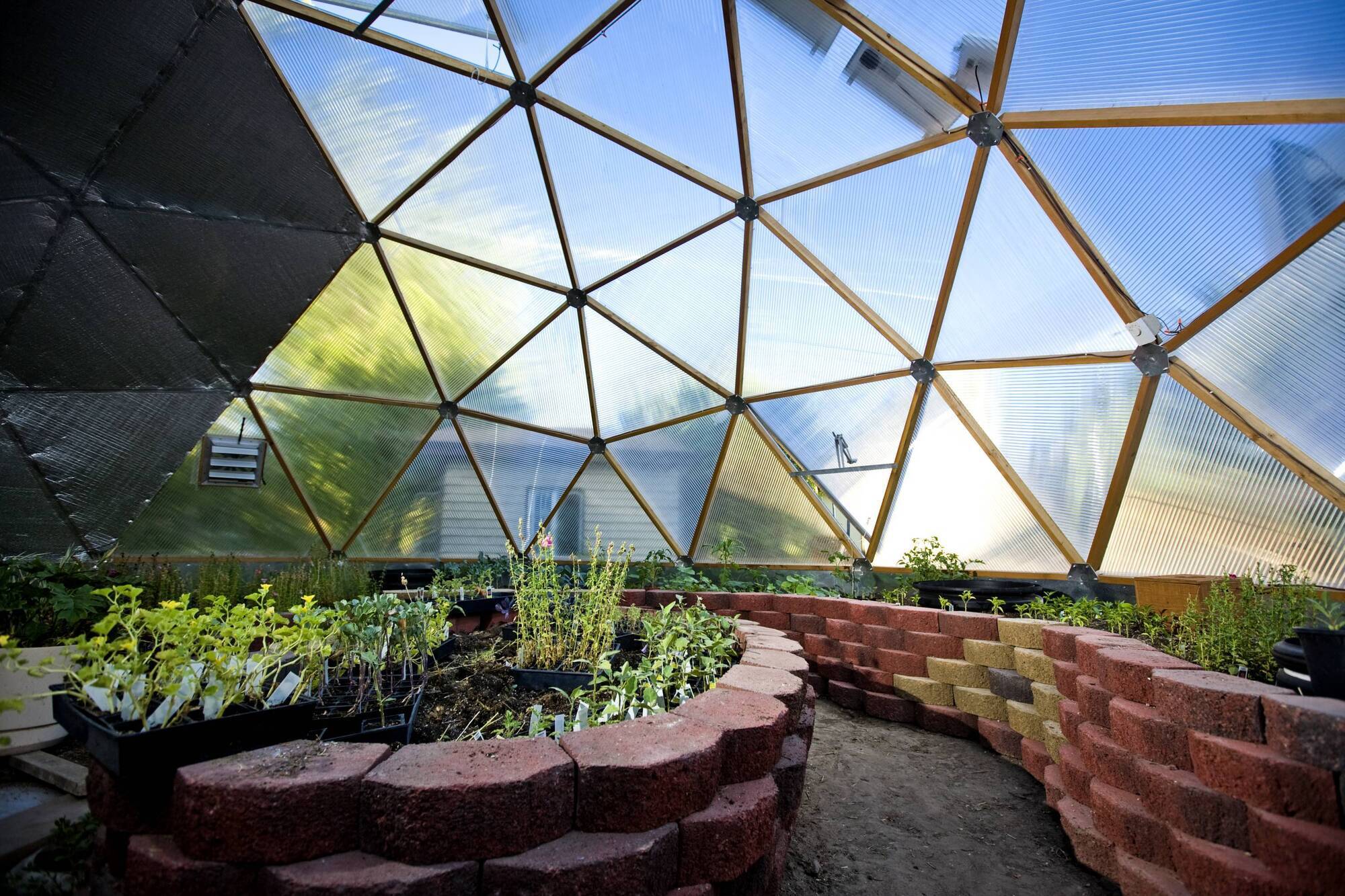
If you’re willing to invest into four figures, you could consider replacing or altering the conservatory roof. File picture
How do I control the temperature in my all-glass conservatory?
Conservatories nestled on dwarf walls, with glazed roofs and walls, became a suburban and rural must-have from the 1980s that could be ordered off the shelf. For a fraction of the price of a block extension, they allowed householders to kick out the footprint of the house in the ultimate sheltered and sealed indoor/outdoor space. Still, designed as horticultural grow-houses, with single or outdated double-glazing throughout, and without any sort of heat control and shade, what’s freezing in winter can be completely unbearable come June.
It’s a pity, as properly detailed, even unheated conservatories and sunrooms can act as heat-shunts for the rest of the house on warm winter days, allowing passive solar gain to drift into adjoining rooms by just propping open the insulated door that should separate any glasshouse from the main body of the home. Whatever the size, aspect or quality of your conservatory, here are a few ideas to get more control of its dramatically changing environmental conditions throughout the year.
CLIMATE & SUSTAINABILITY HUB
First of all, use your windows wisely. Most older conservatories have windows with open/lock settings that allow you to leave them cracked without compromising on security. When ordering a conservatory, ensure you have good solar control glass and window positions that allow for cross-ventilation on both open/lock and fully open for a bit of shocking German “luften”.
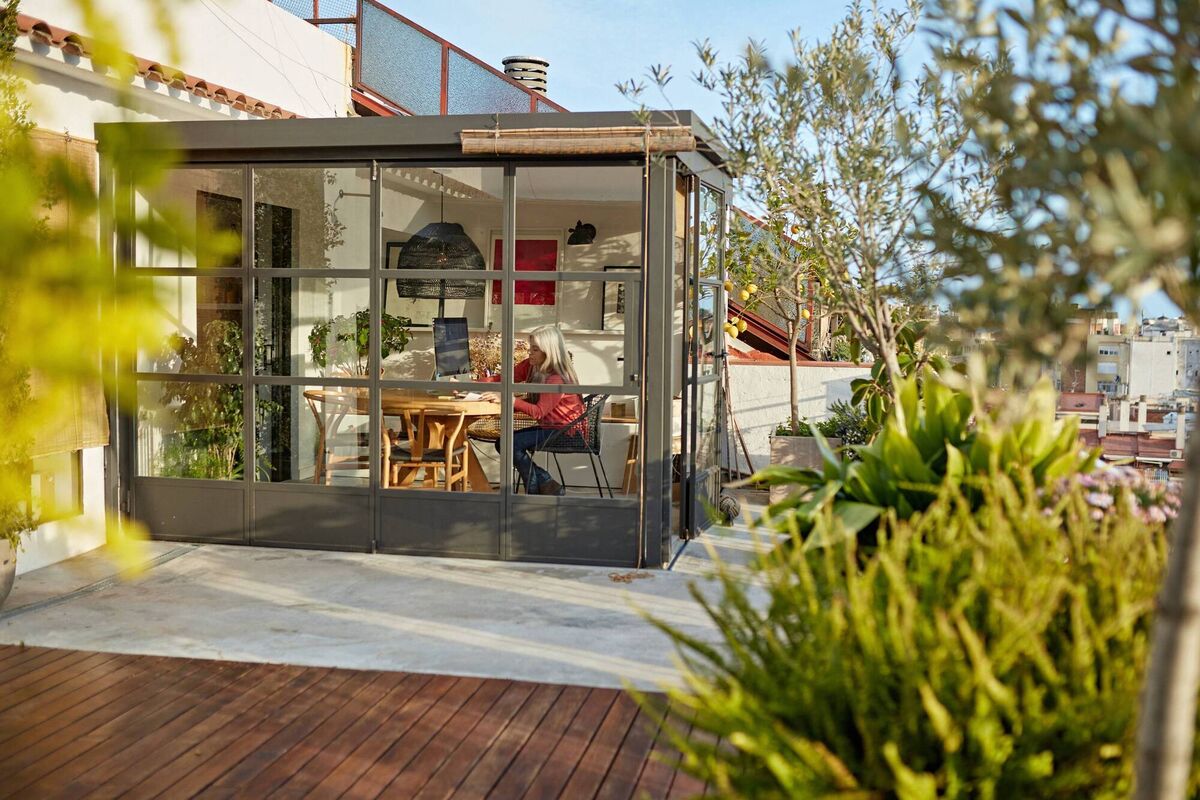
Opening one window on either side, a breeze will be naturally tugged across the space, cooling the area within a few minutes. Opening all the windows wide and propping the door open often results in just flooding the area with hot, stifling air.
Moving to shading — start outside with some clever planting of small trees, trellises and tall grasses that, once established and leafed up in spring, can reduce the solar gain through the walls and even the roof if they are tall enough. This is especially useful on the south aspect. If your supplier offers designs with roof overhangs, these can again run interference, limiting the light coming through any glazed or solid roof and the top edge of the windows. Think about the colours of the furnishings you include indoors.
Dark colours will absorb heat, irritating bare skin, and radiate it back into the space. Bare metal tables and chair elements can become hot to the touch. Pale colonial shades, wood and composites are better choices.
No one will be blinded by the solution of blinds, but there are a few choices to finesse the budget. Thermal blinds are there to both hold heat off and keep heat in as needed. In UV-resistant materials, with reflective and honeycomb linings, they should be fade resistant and unlike venetian blinds (great for just reducing glare) we’re looking for a continuous piece of material that rolls into a cassette or folds up and onto itself. If you have good U values in a glass extension, sun-room or conservatory, you might want to let in more light to heat the space in winter while not completely uncovering windows that are creating privacy from neighbours. Varieties of pleated blinds and rollers come in either a traditional single or what is termed a transition-blind.
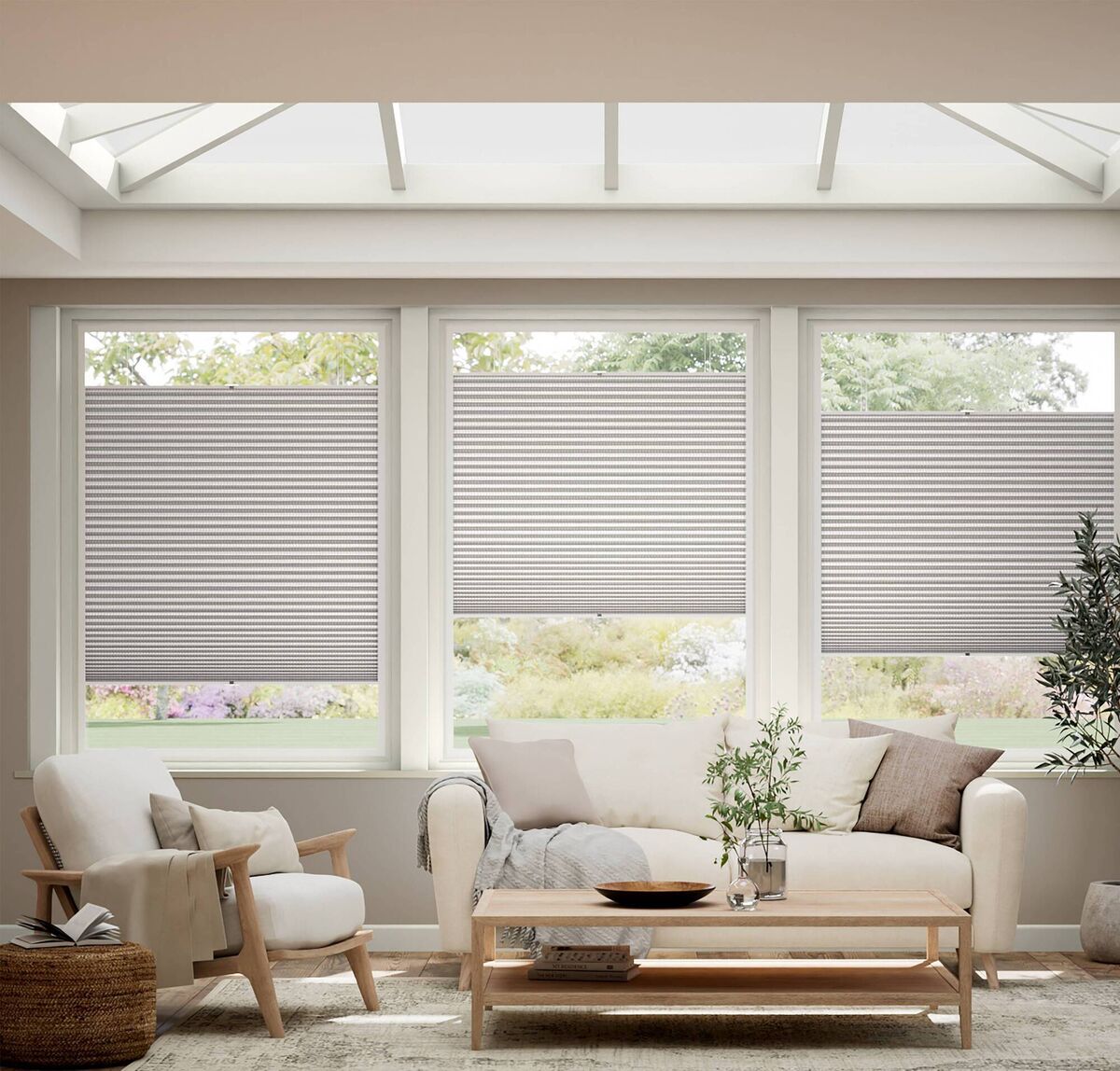
Transitions offer two weights of material, allowing you to lightly veil the windows or completely cover them at any position, depending on the weather conditions and time of year. Each blind weight can be set independently of the other. For a cheaper option, look at day/night roller varieties with opaque and solid vertical panels that move over each other.
No-drill “perfect-fit” styles are integrated into PVC frames and worked by remote electric operation or a small tab pulling up and down close to the glass. Sleek and contemporary, they are highly popular for this and other awkward situations where you a fiddling with blind settings repeatedly. Used on the doors and the window panels, they can shroud the entire conservatory, or open across the aspects of the building as the sun moves throughout the day.
Lightweight polyester pleated roof blinds are best measured and fitted by your supplier, especially where you have complex, triangular panels to your conservatory. Pay attention to the specifications for the percentage of solar transmission when closed — 12% to 15% would be typical. For an economical, relaxed, casual blind with manual operation for windows? Roman designs are highly versatile for problematic positions. Budget afternoon fix for summer? Try a weather-resistant fabric sail on eyes and strings, set outside the problem area of the conservatory to create a little shifting shadow at the height of midday.
If you’re willing to invest in four figures, you could consider replacing or altering the conservatory roof. Older conservatories rarely deliver warm square metres throughout the winter, and they have a notoriously low energy efficiency rating — heating swiftly but losing heat rapidly as outdoor temperatures fall. Replacing your glazing, with many conservatories, amounts to a total restructure, so look into adhesive films to slightly improve the reflectivity and thermal qualities of the glass or polycarbonate. Joom does a wide range of products from €12 a roll, Joom.com.
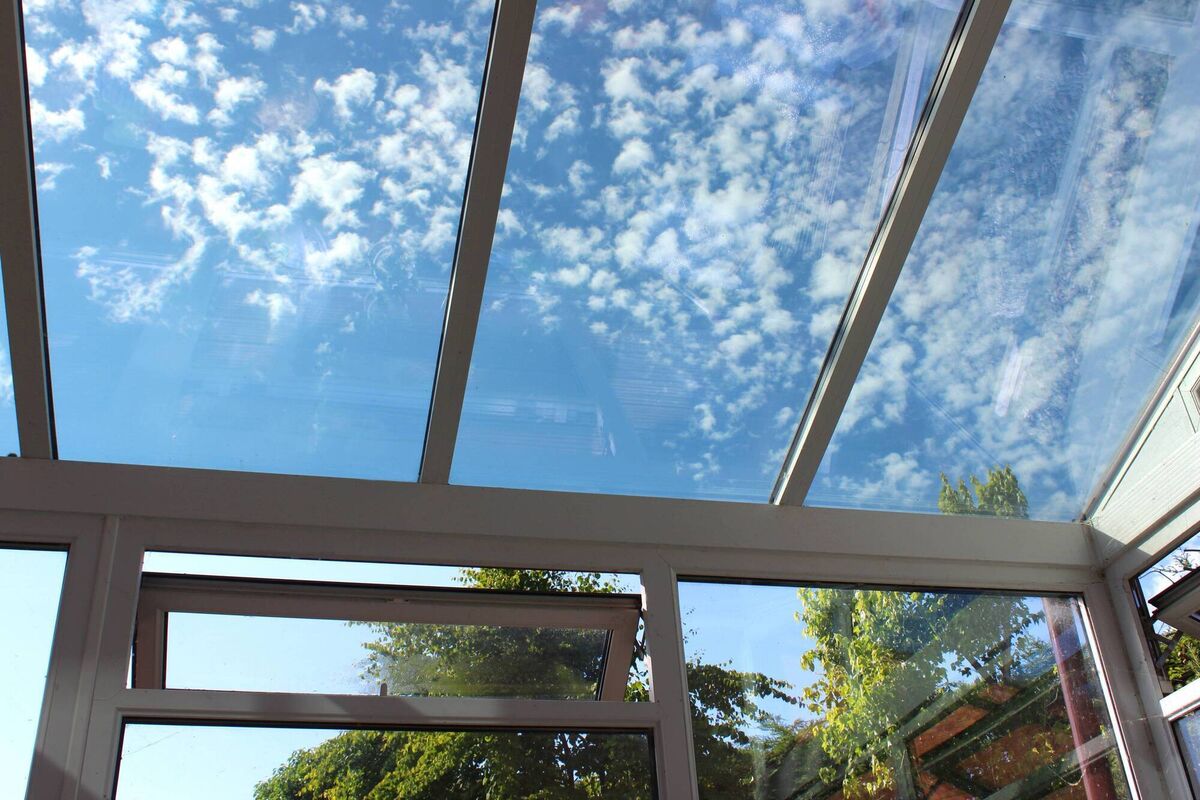
Fully replacing the windows in your conservatory is pricey, but it will deliver more robust, energy-efficient glazing that will cut back on issues like overheating and condensation. Companies like Energlaze can fit Low-E-Plus Solar Control glass into solid, existing PVC frames. There are also lightweight, retrofit roofing panel systems that sit on the original structure of a conservatory, protecting the interior from light and increasing thermal insulation year-round. The composite tiles are intended to deal with the lightweight of a typical conservatory. Together with retaining more heat in winter and holding off blistering temperatures in summer, this new warm roof is substantially quieter (without drumming rain on glass or polycarbonate), with any former leaks solved.
CosyRoof (U value 0.17) is a popular weatherproof heat-proof tile, combined with 300mm rockwool insulation, and a further 75mm between the rafters. Designed to be self-supporting, it’s individually tailored to the conservatory and can be installed on a typical Edwardian/Victorian conservatory or lean-to design in one-three days, finished with plaster indoors, ready for painting, cosyroof.com. Guardian roof is another retrofit system available in various styles, which can be fully detailed to suit the client. Suppliers include SkyWindows.ie (Cork) and Energlaze, Energlaze.ie and Cork Windows, Corkwindows.ie.
You generally do not need planning permission to change the roof of a conservatory if it’s under three meters in height, at ground level, and largely glazed. Call your local authority if you’re in any doubt about this or any visible, external alterations to your home.
Struggling with the perennial issues of an inherited conservatory? Many owners, instead of tolerating an inadequate, dated lean-to, recognise an opportunity. What about using that area for a more substantial “real room” with full foundations, more walling and insulation values matching that of the house (and part L of the building regulations). This allows the home to be fully opened to a ground-level extension of up to 40 sq metres, often without planning permission if there are no other extensions, it’s to the rear of the home, and it doesn’t reduce the outdoor room to under 25 square metres.
CONNECT WITH US TODAY



Be the first to know the latest news and updates