How to dry clothes indoors without ruining walls or air quality
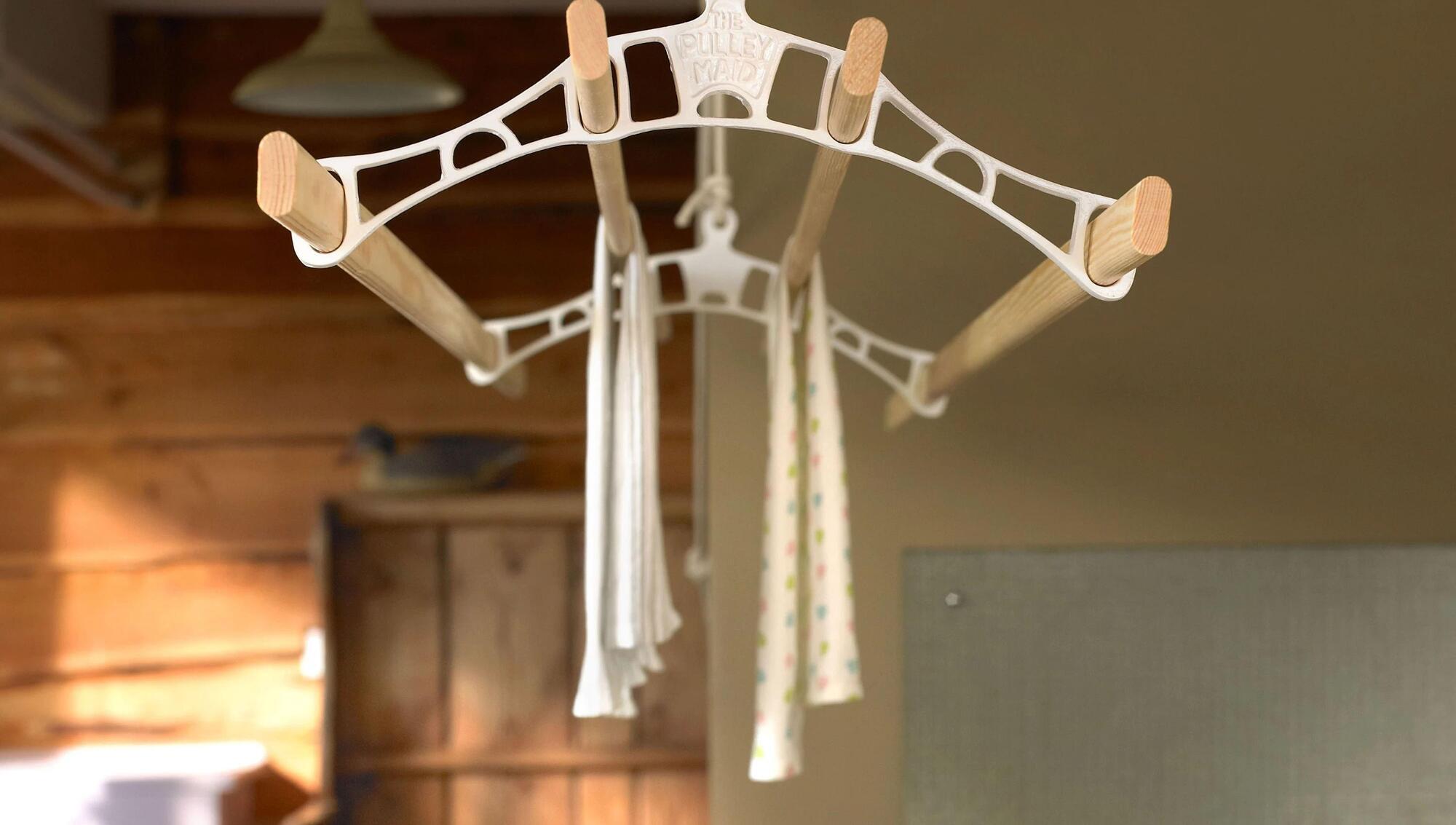
The iconic PulleyMaid. Even cottage-core favourites nestled in warm air on the ceiling must allow clothes to breathe moisture back outside or into a dehumidifier. From €95.99 (free delivery), PulleyMaid.
With autumn well on the way, even those of us who live by the economy of the washing line, know our time is almost up.
Drying clothes is a kilowatt-heavy, space-hungry chore, but there are a few tricks to slip into your domestic science skills. Good habits will make drying cheaper, easier, and potentially less hazardous to your indoor air quality quietly heaving in harmful pollutants, condensation and even radon. After the easy-breezy days of open windows and the line in full sail, with the house closed up against the cold, there is more water vapour created indoors. Using suspended racks and airers, the utility room can soon become a high-humidity area just like the kitchen and bathroom. Be warned. Condensation can even travel through your building’s fabric.
The Sustainable Energy Authority of Ireland offers this warning, “There is a strong natural force, termed “vapour pressure” that causes water vapour to migrate from high-humidity air or materials to low-humidity air. This migration of water vapour passes through ceilings, insulation and wood and even successfully circumvents a vapour barrier. It moves into the attic space where it can readily condense into liquid water on the cooler structural members such as rafters, trusses, and especially the cold roof sheathing”. We don’t want this to happen – obviously. Before you snap up one of those trending heated dryers or set up a draped sheet for a heat-pod hack, put ventilation first.

Starting with airing on racks. Do not use open racks at home or dry your clothes on a radiator before you put your ventilation into good order. Tempted by that grinning influencer balancing their immaculate linens on a cute ash PulleyMaid winged from the ceiling? With low air exchanges common to older homes in the colder months, fetid, humid air rising from garments, bedding and towels can cause a variety of problems from mildew gathering in corners of the ceiling, to respiratory problems in vulnerable family members. If you have a poorly insulated garden room or conservatory that catches the sun – it’s actually a much better place to park a standard rack with dripping washing than the utility room or kitchen. There are three approaches here, some of which can be neatly combined even in a spare room if you’re stuck.
First of all, while using a drying rack, we can introduce a mechanical extraction fan, just as you would in the bathroom to whip moisture-rich air out of the space at a greater rate of litres per second. Fitting into an exterior wall or routed with a flexible ducting out through the attic and through a wall, the greatest expense here with be a qualified RECI electrician to set it up. Units from €15 – €150 depending on features. A 15-minute over-run will ensure that even after being turned off, the fan will rapidly dry out the atmosphere. In new builds the standard for fans in utility rooms is 30l of air per second.
Passive vents between the utility room and a better-ventilated space can also help – but the results are more hit-and-miss. If there’s better ventilation in adjoining rooms, interior door vents or a propped open door can at the very least share the load. If you have a window on hand, ensure any trickle vents are functioning, left open and use it for “purge” ventilation on warmer days. Opening it even a few centimetres, the difference in air pressure will drive humid rich air outside.
Secondly, you could solve the issue in one afternoon (in this room at least), by investing in a dehumidifier to swallow the humidity down as it rises from a rack. The only nuisance is emptying the unit, but dehumidifiers are versatile appliances you can use for a range of issues. You can find my forensic guide here: irishexaminer.com/property/homeandgardens/arid-41335957.html . Depending on where you do your drying, ensure you choose a model that will sit at the optimum distance from your clothes without disturbing passers-by.
The warm, dry air created by a dehumidifier will be returned to the room. JML do an enclosed Dri-Buddi with a hanging rack and vertical tenting, which confines the load (1.2kWh working on 10kg of clothes) but it does not deal with any water vapour created by the process. Best price €80, currys.ie . Another popular approach for a 4–5-hour result, is to match a heated airer to a dehumidifier – again you are guiding the moisture to a collector, not simply letting it settle on cooler surfacing, including the walls and ceiling. Black & Decker models from €87 for a 750mm by 500mm model, B&Q (300w). “Heat retention covers” huddle warmth to the clothes and will speed performance.
Finally, we should finesse our use of our washers and dryers to get the best drying performance possible from the machines. Condensing dryers (this includes all heat pump dryers) are room-sealed appliances that should not require you to have extra ventilation measures in place. You simply empty the integral reservoir or pump the water from the clothes to an outside drain. If you feel the air being blown out of the machine is damp, check your lint collectors and any sponges are clean and dry. With venting dryers, it’s vital that the moisture-heavy air is blown out of the building. It should never be returned to the room. In terms of cost per kg to dry – heat pump dryers run at approximately 40% of the cost of a venting dryer, but they run for twice the time to do their eco-best.
A good dry starts in your washing machine. Presuming your pump is working properly, and the lines are clear, investigate the spin speed. With an average of 1200rpm in a standard washer, this should deliver damp, creaky clothes without drips. To get the best results, don’t overload your machine, wash similar weights of materials together and be prepared to give bulky items with filling (for instance, a down jacket) – an extra spin. Take the items out and give them a good “snap” before hanging on a rack or delivering them onto the tumble dryer. If you prefer to continue to use your washing line occasionally, see if there’s an undercover area you might utilise, and get the load back in before dusk when the dew sets in. Ensure laundry is bone-dry before storage. Damp clothes in the hot press? Without a vent to the wall, you’re back in the land of mildew-speckled walls in a dark, neglected space you might not notice is in trouble.
CONNECT WITH US TODAY



Be the first to know the latest news and updates