Home Q&A: When and how should I use a dehumidifier?
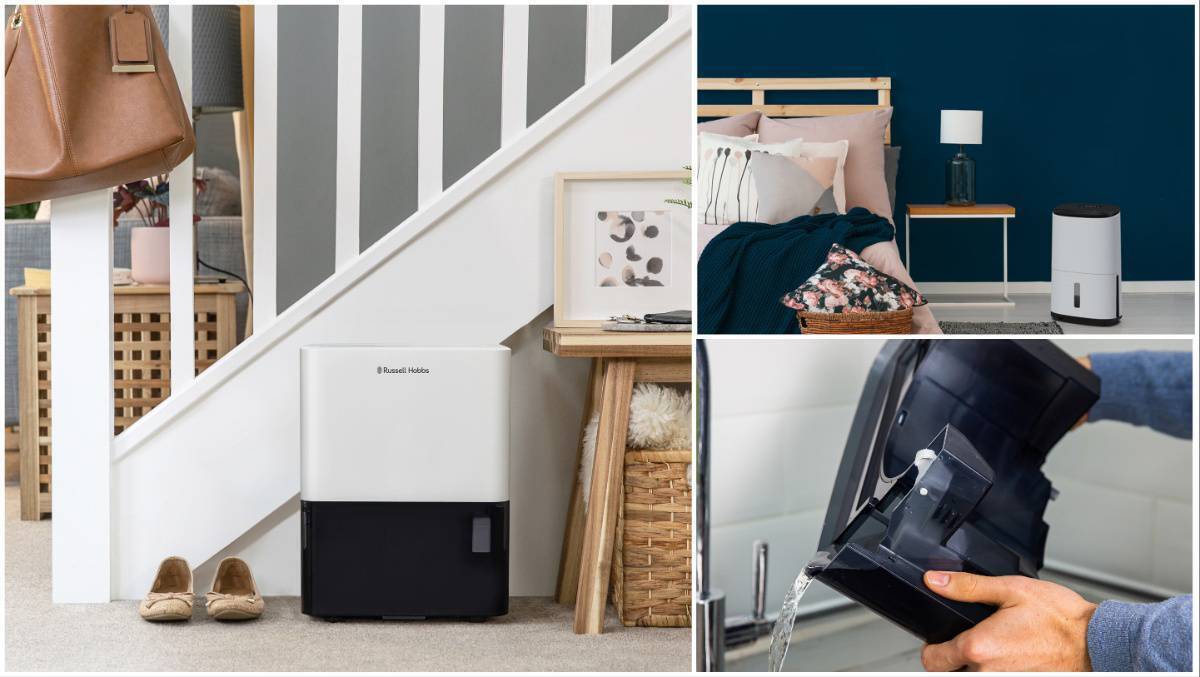
It’s important to understand that dehumidifiers are only a stop-gap solution for handling chronic damp.
Dehumidifiers can be used all year round, depending on what you need them for. However, it’s important to understand that they are only a stop-gap solution for handling chronic damp. If you have condensation or other recognisable damp problems in one room or the whole house, and cannot track the reason, a survey by an engineer is the first point of call. Together with poor air exchange issues (not uncommon if your house is well insulated), it could be a simple problem with a leaking pipe or a blocked downpipe seeping water back into the walls, but you need to know. We’ve all lived in an old house with multiple energy issues that simply have areas that are perpetually damp without a dehumidifier running in the cold months. Here, a dehumidifier is a beneficial ally.
A digital hygrometer costs around €20-€25, and you can use it anywhere in the house to measure the humidity in the air (40%-60% is regarded as normal).
Dehumidifiers draw moisture from the air, moisture that could lead to dust mites, fungi, mildew, and house moulds. They can mitigate a humidity issue, but they do not solve a serious, ongoing damp or condensation problem. If you have water beading or pooling at the base of the windows, you have a condensation issue, and this could rot out a wood frame and compromise the air quality as time goes on.
Mould and mildew may appear on the walls or curtains. If your available vents (in the frame of the windows or passive vents in the wall) are free from debris, open and working, you could utilise a dehumidifier to handle this extra moisture in inhabited or uninhabited rooms. Ensure any thermostatic radiator valves are set to the frost setting to keep the unused room a little warmer when your central heating is on. This may help until you trace the source of the issue.
Another common application for a dehumidifier would be a gym in a cool area of the house or a partly insulated outbuilding. If you pound out long distances on a static bike or lift weights several times a week, a dehumidifier can pick up where inadequate ventilation left off — dealing with profuse sweating and moisture-laden breathing when you cannot open the windows.
When using a dehumidifier, the windows should be shut — otherwise, you’re drawing outdoor air through the unit, and making it work harder and use more energy. Drying laundry indoors? A dehumidifier can head off condensation issues where available ventilation is inadequate for the job.
There are two types of machines — refrigerant dehumidifiers (also known as compressor types) and desiccant dehumidifiers. Refrigerant dehumidifiers are good for general, domestic use and can work in all but freezing conditions, as the coils could potentially freeze. Desiccant humidifiers draw moisture into absorbent materials. They are more expensive to run, but you can leave them in very cold outdoor buildings like garages and indoor/outdoor spaces like garden rooms and conservatories without worry.
Both types of machines can be used after a flooding event to help dry the room out more rapidly, and some people use them during builds and renovations to draw water out of wet finishes like plasterwork to speed drying times. In this case, a continuous pipe can guide water to a suitable drain — you just need to put the unit slightly higher than the drain position to let gravity do its thing. Look for units with an indicator or alarm to let you know if any tank is full. If the room is heated, a refrigerant dehumidifier will be adequate for most problems. Typical functions would include continuous extraction, auto-shut-off, a boost function, and a sensor for humidity levels that can be set to 30%-80%.
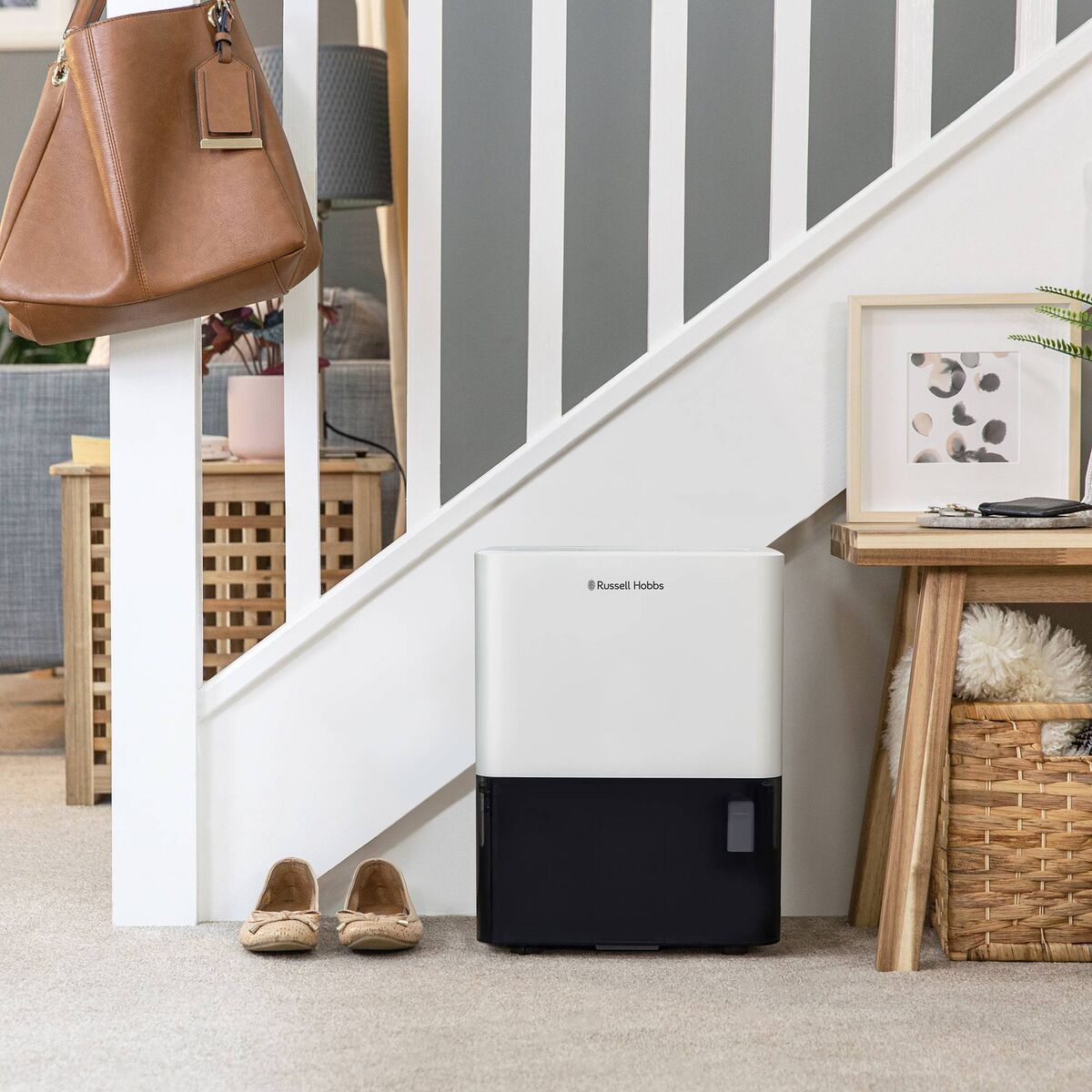
Sizing a machine will depend on your needs and the room size, but they can take a serious amount of water out of the air. The Russell Hobbs RHDH2002, for example, removes up to 20l in 24 hours and is suited to up to 60sq m. A Black+Decker 12l model is designed to handle a room of just 15sq m (both priced at €219, Co-op Superstores). Prices start at around €139 for a 10l refrigerant machine.
Drying clothes indoors without mechanical ventilation in place, a dehumidifier can hold off potential damp issues, but it’s not as good as an open window or drying outside. All tumble dryers that don’t collect to a reservoir or feature a pump to extract water to a drain, should be vented through a wall or window. If the bathroom has inadequate ventilation, a mechanical extractor fan or an open window is the best solution in warmer months.

Some better machines offer timers and boost functions to take in more water on drying days by say dropping the humidity from 40% to 35% for a period, with auto-shutoff to allow you to handle tank emptying more effectively. In all these cases you know where the additional moisture in the air is coming from — a good thing.
Using your humidifier, ensure the room is as clean as possible. Set the unit away from walls, curtains and big lumps of furniture, and away from heat sources like radiators. If a particular window is at issue and presuming you have weather-sealed to the best of your ability, set the dehumidifier by the window about 20cm from the wall. You can always whip it away when visitors are coming, but most dehumidifiers are neatly and discreetly designed. Using it for clothes drying, set it with the fins pointed at the load, but not against them. Read the PDF or paper instructions to the letter and use the control panel to turn the unit on or off as it may have an integrated cooling cycle that continues after it is shut down.
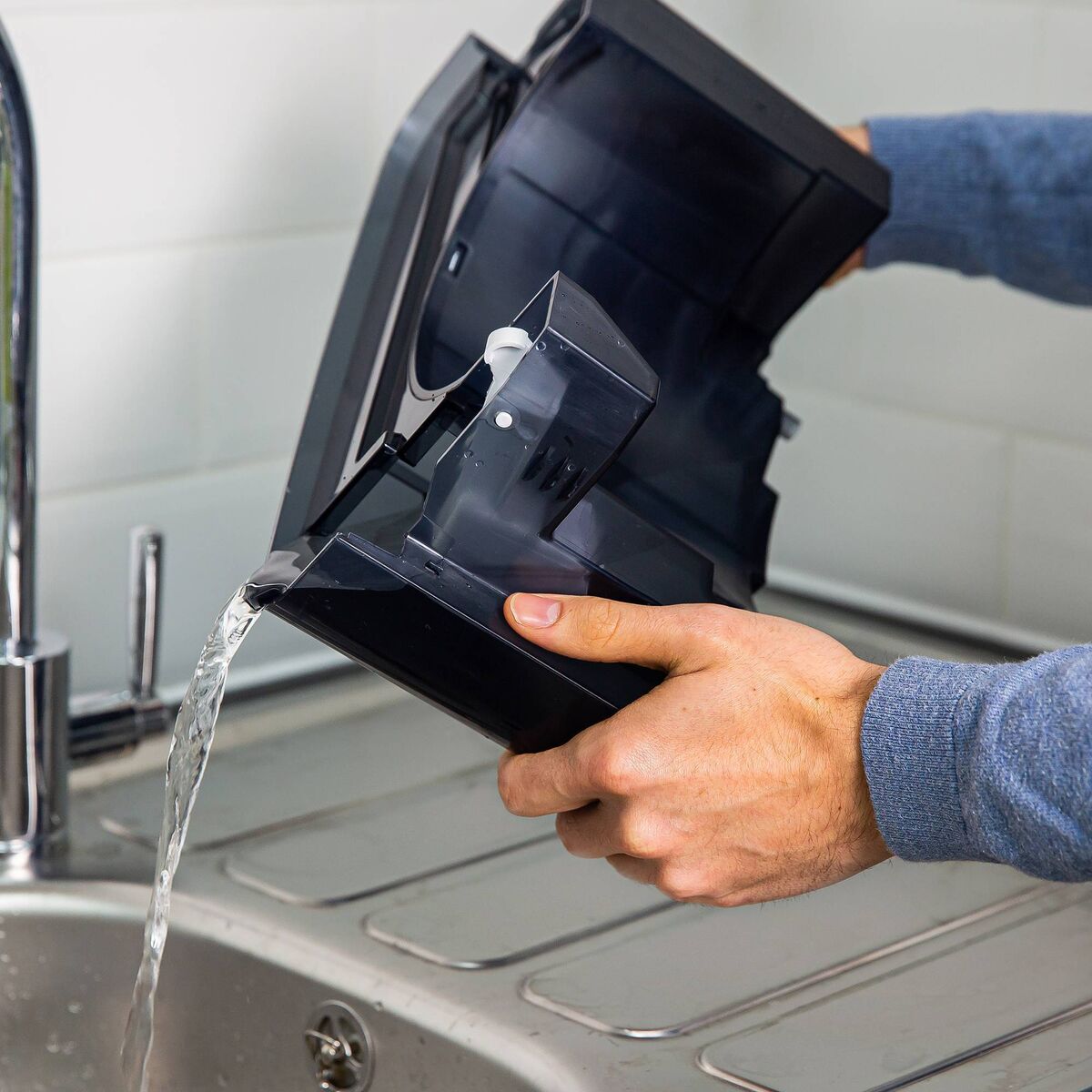
It’s not uncommon to find moisture settling on a unit. Wipe it down daily with an absorbent cloth vacuum the filter and empty the water collector as recommended.
Dehumidifiers do have dust filters, but without a series of carbon filters, most do not operate as air purifiers (a different appliance that handles tiny particulate dust). Cheaper models will pull in and expel air, potentially raising finer dust. There are hybrid models like the MeacoDry Arete that act as both devices, with HEPA filtration (€325 for a 40dB super quiet with an almost silent Night Mode and 20l tank, meaco-dehumidifers.ie).
CONNECT WITH US TODAY



Be the first to know the latest news and updates