How changing or challenging energy suppliers cuts costs
Know how and when you use most of your power.
A recent survey by price comparison website Switcher.ie shows that the average utility draw for a one-two-bedroom apartment is in the area of 2900kWh for power, and 6,900kWh for gas for householders. This rises to 5,400kWh for electricity and 13,700kWh of gas for those in a four-five-bedroom household supporting up to five individuals.
The Commission for Regulation of Utilities (CRU) counts 4,200kWh of electricity and 11,000kWh of gas as average use.
The average electricity bill is just over €1,700, and the average gas bill is just under €1,500 living in a typical three-bedroom house (at time or writing). This gives you some idea where you sit with your current bills based over 12 months. If you’re sloppy with your usage or living in a house with efficiency challenges, the story may be far grimmer than these happy-clappy figures suggest.
Even with lean, green habits we all know how unavoidable bills for electricity and gas usage can escalate due to unforeseen storms in the international market.
And even with significant correction in the past year, electricity prices have doubled since 2017. No-one bruised by the experience will forget that from March 2021 to March 2022, power prices shot up 300% in just 12 months (statista.com) falling back just 67% last year. The most recent forecasting is actually very good.
A survey by marketing consultants, Cornwall Insights, released in April of this year, suggests a fall in wholesale gas and electricity prices that should hold until 2025. From January to June 2024, Ireland managed to produce 35% of its domestic electricity from wind, with Cork in the lead according to Wind Energy Ireland.
Still with sanctions on Russian imports still in place, we can’t be blithely optimistic. We still rely heavily on a volatile supply of fossil fuels, and odd happenings like a crack in a gas pipe in Norway.
Just tiny increments of 2C-3C per unit multiplied by thousands of kWhs? It doesn’t take much for a bill to run away from us into hundreds of extra per year. There’s a lot you can do to turn the tide. Starting with your supplier, transparency and choice is right there at your fingertips. Competition is fierce as winter approaches, so be alert. SSE Airtricity, for instance, has just dropped its power and gas unit prices for the second time since December 2023, a massive 10% for its 300,000 variable rate customers (a possible annual saving of €254 for a dual-fuel client — wiping out a standing charge on electricity).
Airtricity did tip the scales against solar-PV users, slashing the rate it formerly paid per unit of power returned to the grid under the Micro-Generation Support Scheme (MSS) by over 18%. This trend is something solar-PV households will be watching closely as metered electricity generation increases year on year.
Every 12 months, even where you’re locked into a one or two-year contract or have slipped out of contract, you should ruthlessly examine your energy bill — gas and electricity.
Exceeding a contract, suppliers are increasingly retaining the benefits for their customers as a sweetener to just let it ride. Most of us are taking the standard 5% discount offered by paperless billing. An email drops, we might glance at the number, but how many of us log into our account, download the bill and take a forensic second look? It’s this apathy that could be costing you dearly.
Starting with power, there are not just variable products, but fixed-price contracts in the mix, something many of us thought would never spark to life again. Spoiler alert — a fixed term is not a fixed rate. One is the contract length, the other gives you a fixed price per kWh for a fixed term. Additionally, together with the generous surviving day/night rates for day/night meters, time-of-use tariffs attached to smart-meter usage, present the opportunity for a highly specific electricity contracts based closely on how we use our individual supply over 24 hours.
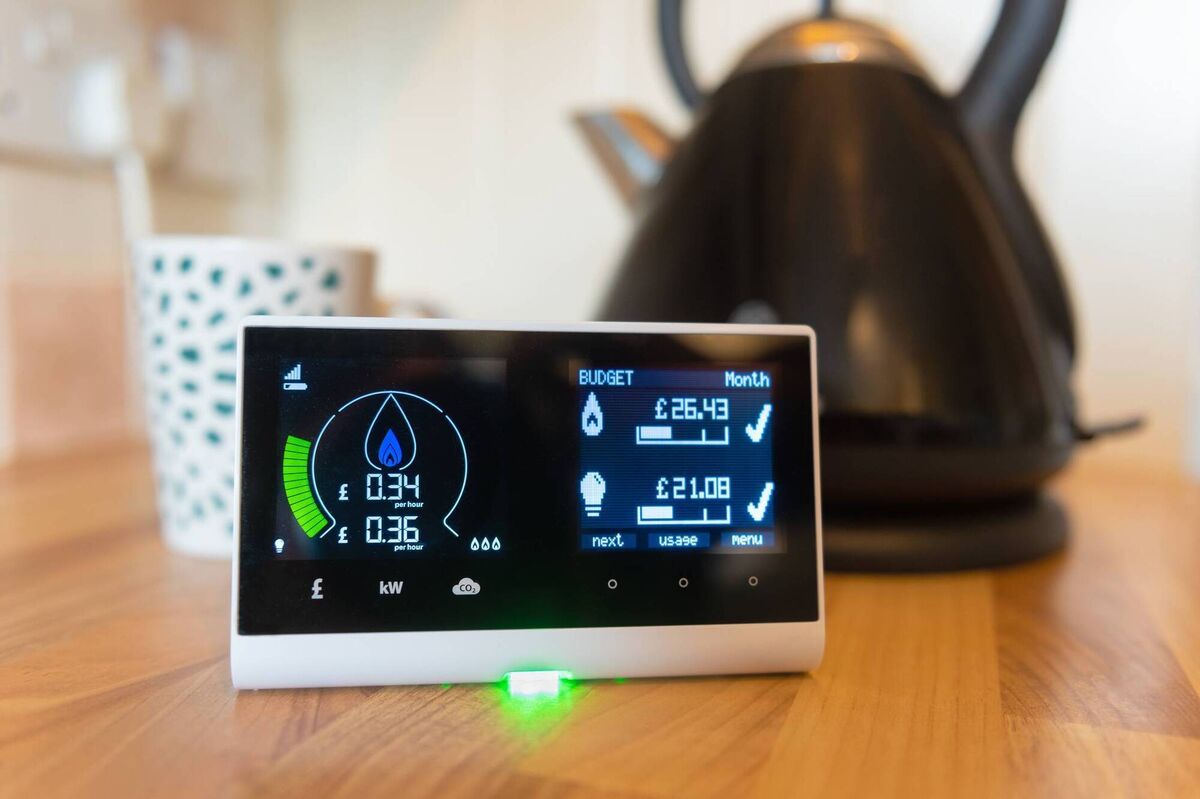
Be very attentive to standing-charges, as they remain high and can vary from one deal to another. It’s something that many of us overlook in the excitement of off-peak, on-the-floor tariffs, and fixed-priced deals. Rural dwellers will generally pay more for standing charges as we’re just more trouble and expense to supply and service. If you refuse to give up on an old meter that’s not a day/night variety to a smart meter, search for 24-hour tariff deals. With pricing like 24.55C per kWh (Bord Gais) — the rates are currently excellent, and introductory discounts for swapping suppliers can be well worth a few keystrokes.
Don’t stress over the process of switching supplier — the energy companies will do most of the heavy lifting for you. Pull up a chair, put a steaming cup of tea at your elbow and run the numbers. It’s not rocket science once you know your usage patterns. You cannot get it wrong with a 14-day cooling-off period when changing suppliers or buying a new product online. If there’s a price announcement that impacts you during that 14 days, just follow the protocol of the supplier you applied for (ensure you chase a confirmation by email that you’ve cancelled) and pull out.
If you’re still in contract, depending on the penalty for breaking that contract, it may still pay to change when the possible savings are worked out over 12-24 months. A spank of €50 for electricity and €50 for gas would be typical. That’s just €100.
The CRU projects a saving of around €800 on a poor dual-fuel bundle simply through switching suppliers without any new frugal gymnastics on your part.
There have been increases in both electricity and gas in the form of standing charges, carbon taxes and new levies to support sustainable technologies. These cannot be wiped off any bill. Keep in mind that the VAT on electricity in Ireland was only temporarily reduced from 13.5% to 9% until the end of October 2024. We’ll have to await Budget 2025 to see what happens next, but the results are beyond our control. Instead, with an idea of where your power is going day to day (hour to hour with electricity), muscle the numbers you can manage — those unit prices, together with discounts and rewards. Using price-comparison websites, ensure you are comparing like-with-like. These tools allow you to include or exclude bonuses and discounts to project an annual bill, but don’t assume all cash-back offers are included in these comparisons — double-check by going to their “calculations” sheet. Obviously tick that box for a direct-debit and paperless billing for a further slight saving. Bundling power and gas from one source can lead to considerable savings.
Before you start, and whatever switching device you choose, you will need the following on hand.
- For electricity, your meter point registration number (MPRN)
- For gas, your gas point registration number (GPRN)
- An up-to-date meter reading to make sure you are billed accurately
- You should know what tariff you are currently on, and any time remaining on the contract
You can find your MPRN and GPRN at the top of the front page of your bill.
The CRU strongly advises talking to our current supplier before walking away from an existing or ending contract: “Your current supplier won't want you to switch. They'll try to keep you as their customer and may offer you a better deal. By phone or email, ask if they can offer you a better deal or price plan, and find out what discounts are available for existing customers.”
Your supplier wants to hang onto you, so you’re empowered at this point.
The CRU-approved price-comparison sites for independent, accurate information are Bonkers.ie, Switcher.ie and Powertoswitch.ie. All are regulated by not just the CRU but the Central Bank of Ireland. Keep in mind, no matter what you do in terms of hopping suppliers, simple energy efficiency measures remain your sharpest weapon against unmanageable winter bills — more of that to come.
CONNECT WITH US TODAY



Be the first to know the latest news and updates