Design: London calling on how to build a low-carbon home
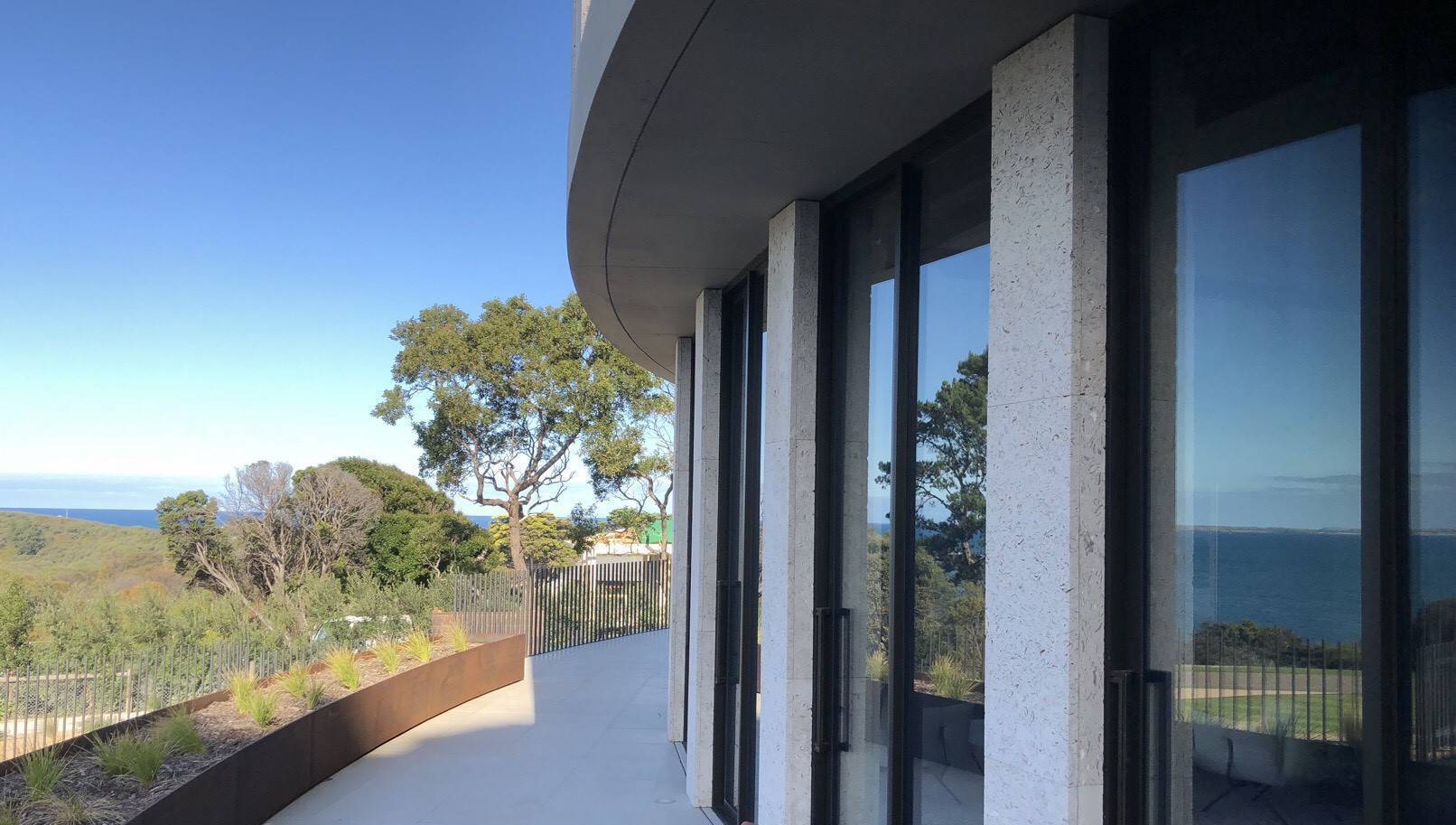
Portland Stone home; picture supplied by Albion Stone, which along with Hutton Stone has displays as part of the How to Build a Low-Carbon Home exhibition.
What would the "Three Little Pigs" say if they knew about developments which would have future generations living in houses made from, among other things, straw?
What about thatched roofs, or would our ancestors evicted by rack-rent landlords who then set light to the thatch to prevent reoccupation, turn in their graves?
Using wholesome alternative and traditional materials is addressed at a new exhibition, which runs until March 10 at London’s Design Museum, with a specific reference to any concerns the Three Little Pigs’ or their own descendants, understandably, may have.
Interestingly, the museum is housed in a 1960s concrete monolith, originally home to the Commonwealth Institute, an organisation dating back to the 19th century whose job it was to do scientific research into raw materials from across the British Empire.
Now the new home for the Design Museum, the exhibition explores traditional materials, blending tried and tested methods with new technology including robotics.

So, if you’re in research mode for building a home, are dreaming of doing it using an environmentally sustainable approach, and you happen to be visiting across the water, take the London Underground to High Street Kensington and explore these new ways of building to challenge the belief that houses must be concrete or brick.
Unusually for a museum, the exhibition is future-focused, developing out of a research initiative called Future Observatory which supports the transition to a greener way of doing things, launched at COP26 in 2021. It’s timely, as the UK faces another issue in common with Ireland.

According to Future Observatory’s curator and the exhibition’s co-curator George Kafka, this is where the housing and climate crises intersect, with the big question being addressed in this regard: How do we develop low-carbon homes when the building industry is notoriously high carbon and how to build quickly?
Even when more environmentally friendly materials like wood are used, the transportation of a tree from the forest to a timber yard and onto the building site results in a significant carbon footprint being expended.
Currently, it’s estimated that 30% of global carbon emissions are caused by embodied carbon — what’s produced in making, preparing and getting materials to the building site — and in running buildings.
“The key themes in the display,” says George, “are embodied carbon in buildings, how we design our homes to respond to the climate crisis and how architects are reimagining straw, wood and stone — familiar materials repurposed for contemporary living.”
UK architecture firm Waugh Thistleton who are designing homes with engineered timber, Material Cultures which is a bio-based straw proponent, and Groupwork which uses structural stone, along with engineers Webb Yates, are the exhibition's collaborators, with displays following the route of these materials from fields, forests and quarries to finished buildings, explained through scale models, samples, tools, film work and photography.
“We wanted it to be accessible,” says George. “Show why construction has such a big carbon footprint. We have people with houses coming in, school parties.”

But despite these developments and clear enthusiasm from the public visiting, he’s realistic about the change needed to make this mainstream and the timeframe involved.
“Infrastructure and skills to support local doesn’t exist in the UK so we’re looking at what would have to change in the next fifty years to be compliant," he says.
For a modern Irish visitor, there’s a certain warming to the re-emergence of thatched roofs but it raises the topic of straw and timber’s flammability.
“It’s something we’re very conscious of with the museum being so close to Grenfell,” says George, referencing the 2017 fire which engulfed a high-rise apartment block claiming many lives. “Combustible materials have been banned that were used in Grenfell, and there’s an argument that engineered timber can be structurally safer in a fire than steel. Steel bends.”
But are we ready for timber skyscrapers, I ask?
“Large-scale buildings are being developed in London using cross-laminated timber,” George replies. “There’s even a twenty-floor timber skyscraper in Sweden.”
A quick Google search sites it in a place called Skellefte å in northern Sweden, made from glue-laminated timber (glulam) and cross-laminated timber (CLT). With the involvement of three teams of structural engineers, it’s now considered the blueprint design for what we may well be calling "plyscrapers" in the future.

CONNECT WITH US TODAY



Be the first to know the latest news and updates