Peter Dowdall: Victorian Quarter and MacCurtain Street at top of Cork tree plan
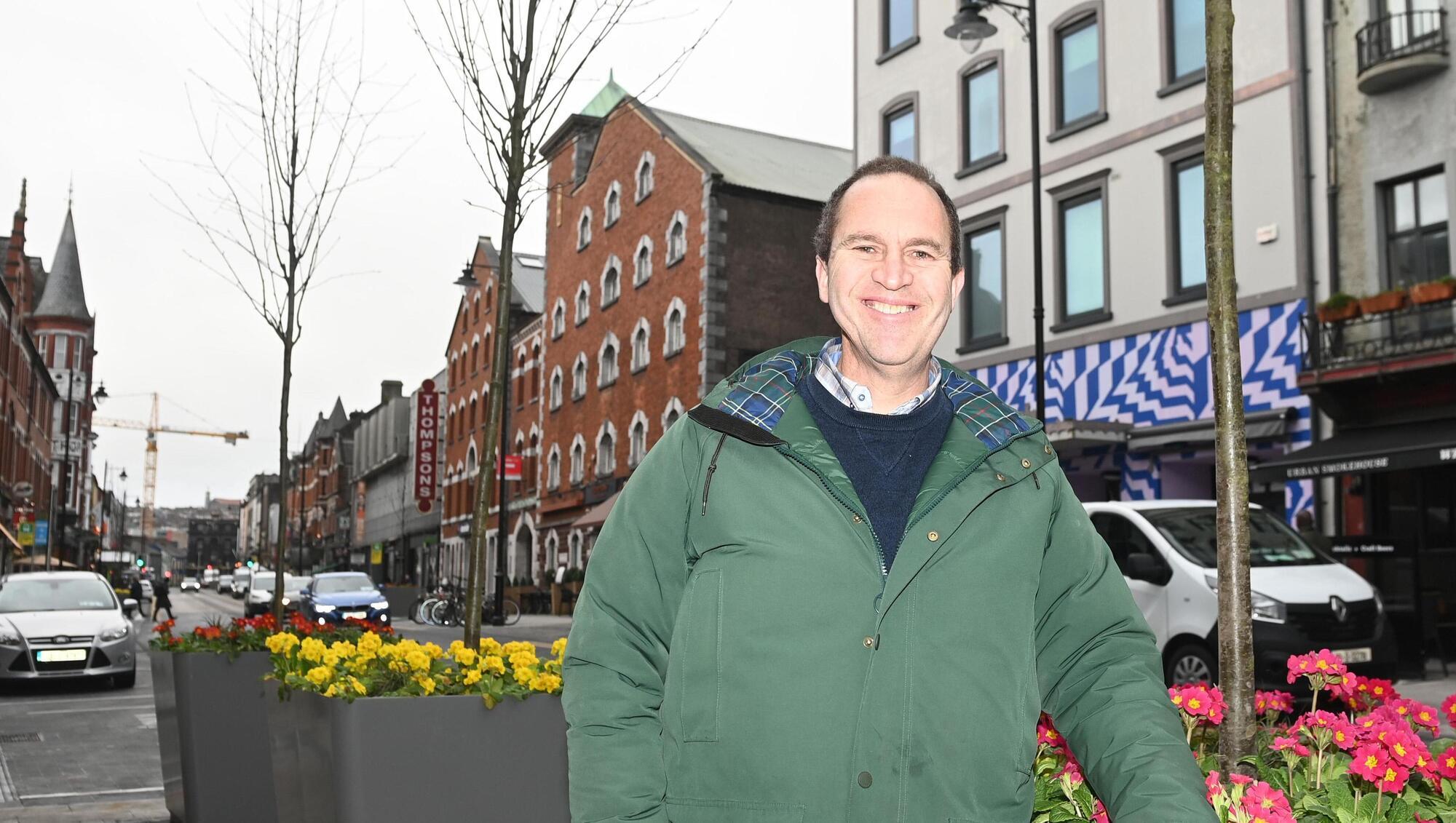
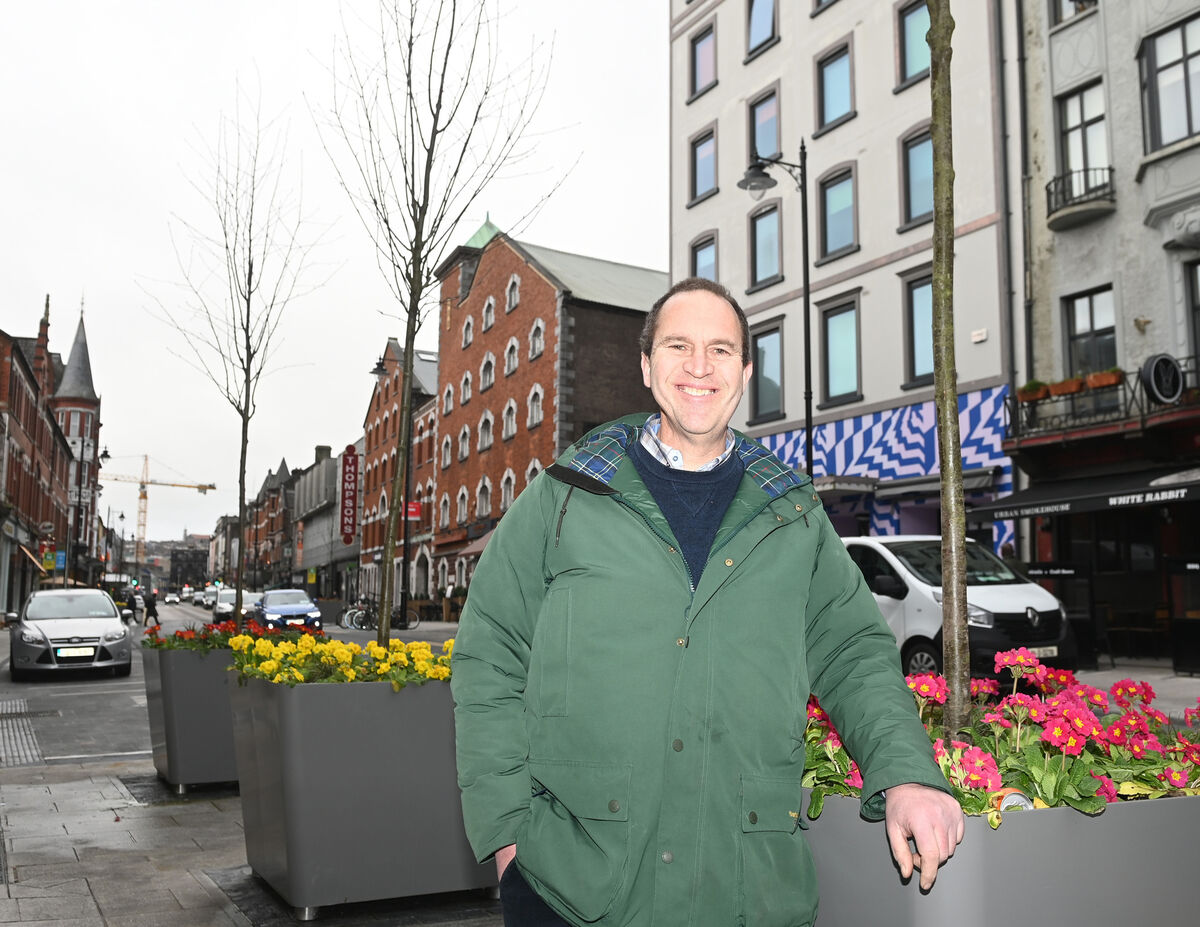
Irish Examiner garden columnist Peter Dowdall near the newly planted trees on MacCurtain Street, Cork. Pictures: Eddie O'Hare
Green and blue infrastructure (GBI) refers to the network of natural and semi-natural spaces and pathways within a city. Think of cities as living organisms, with GBI acting as their veins and nerves amidst the built environment.
These “veins” consist of interconnected greenery, soil, and waterways that make up the city's natural ecosystem, co-existing with urban development. This network supports people, biodiversity, and natural systems, with trees being a crucial component.
Underground services on Cork's MacCurtain Street limited the area available for tree planting but this street in the thriving Victorian Quarter (VQ) is now leading the way in how the city can develop.
It looked up for inspiration. The result? We now see trees growing in large planters all along the street. The VQ in itself is a shining example of what can be achieved when a group of well-intentioned people and businesses work together for the greater good.
Cork and all cities need to focus on not just trees but ecology and horticulture in general and this draft strategy is valuable.
CLIMATE & SUSTAINABILITY HUB
Cork City Council has prepared a draft tree strategy identifying existing trees in the city along with setting out policies and actions to be carried out over the next five years.
The council is seeking public feedback and submissions about this strategy and the last day for submissions is Friday, February 16, 2024.
The draft strategy can be read and submissions made at Cork City Council's online consultation portal.
Cork City currently boasts over 310,000 trees and 1,400 kilometres of hedgerows across various urban and natural settings, including streets, parks, gardens, campuses, riverbanks, and woodlands.
The council proposes planting 4000 trees this year and between 2000 and 4000 to 2028.
Trees play multi-faceted roles in enhancing human well-being, preserving the city's character, and contributing to its economy.
Given its significance, Cork City aims to expand its tree cover. However, doing so in a busy urban environment presents challenges.
As Cork continues to grow and evolve, integrating existing trees and planting new ones demands careful planning and collaboration to ensure their health and longevity. This tree strategy outlines Cork City Council's internal policies and action plan until 2028, encompassing the management of public trees, the preservation of existing ones, increased tree planting, and the foundation for a long-term tree strategy.
The importance of trees to Cork City is identified under several headings, namely that trees are fundamental to cities and to people; pollution and flooding reduction; human health and well-being, biodiversity and natural ecosystem; economic benefits; and climate adaptation and mitigation,
Simultaneously, the Cork City Habitat Study is in progress, identifying vital ecological corridors that encompass features like hedgerows, treelines, wetlands, and riverbanks. Trees in these areas can stabilise riverbanks, mitigate flooding, and improve water quality.
However, the study may also pinpoint high-value habitats where extensive tree planting might not be the best approach. The study's findings will directly inform tree planting plans in these ecological corridors, which may involve partnerships, community involvement, and collaboration due to private ownership of some riverbanks and corridor areas.
This is a well-thought-out and very well-intentioned strategy and I only hope that all the goals set out are achieved within the five years, or even sooner.
Areas with the lowest tree cover are identified and “the neighbourhoods with the lowest tree canopy cover will be given extra emphasis in respect of new tree planting”.
At the moment, the areas with the lowest tree cover include North City Docks, Churchfield, Knocknaheeny, South Parish and the city centre.
Incorporating new trees on the streets and roads of an existing and historical city is not without its challenges such as existing services under the ground, the width of existing footpaths and the costs involved.
I may not be popular when I say that I am delighted to see that the “conversion of parking spaces could be considered in some instances” as in my opinion, a city with trees growing and the biodiversity that thrives as a result is a far nicer and healthier city than a streetscape filled with parked cars and concrete.
The Cork City Development Plan (2022-2028) outlines three new tree planting initiatives, the development of two new regional parks (North West and North East) and the Lee to Sea Green Route, a significant greenway with potential for woodland planting. Currently, these projects are in their initial planning stages.
In addition to these, the incorporation of new tree planting will also be a standard practice in the design of new roads, streets, and public realm enhancements, whenever feasible.
MacCurtain Street is now a guiding light as to how the city can develop.
Cork and all cities need to focus on not just trees but ecology and horticulture in general.
The draft strategy is a great piece of work. All that’s needed now is to see the results.
CONNECT WITH US TODAY



Be the first to know the latest news and updates