How to choose material for kitchen counters or worktops
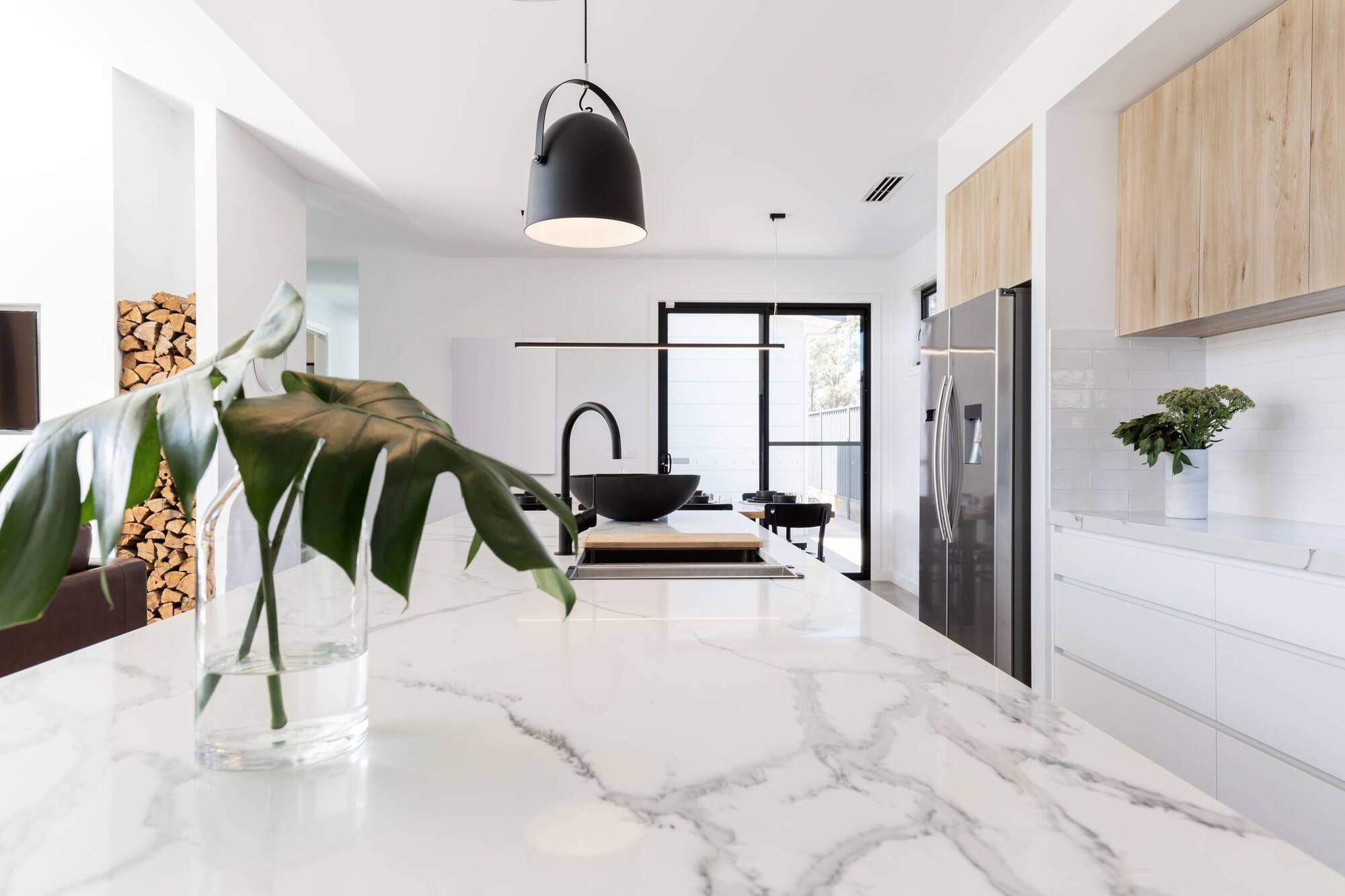
From porcelain to wood, stone, quartz, concrete and composites, we get professional advice
How to choose material for kitchen counters or worktops

Explore the affordable end of granite and compare with quartz and other composites. File picture

Scalding pots and pans, the gouge of a thousand knife blades, a dedicated worktop should be able to withstand abuse, retaining its looks and performance for years with little more than a hot wipedown.
What’s the best advice when choosing a kitchen? Joe Nash, founder and joint director of leading Munster kitchen design house Celtic Interiors, says: “When choosing your countertop, it all comes down to budget. If you can afford a quartz top from Silestone, you will have a good top that should last for many years once you’re careful with hot pots.

“If you need your kitchen to take more of a beating, then go for Dekton. Finally, if it’s style and the latest trend you’re after, it’s porcelain — but be prepared to dig deep in your pocket.”

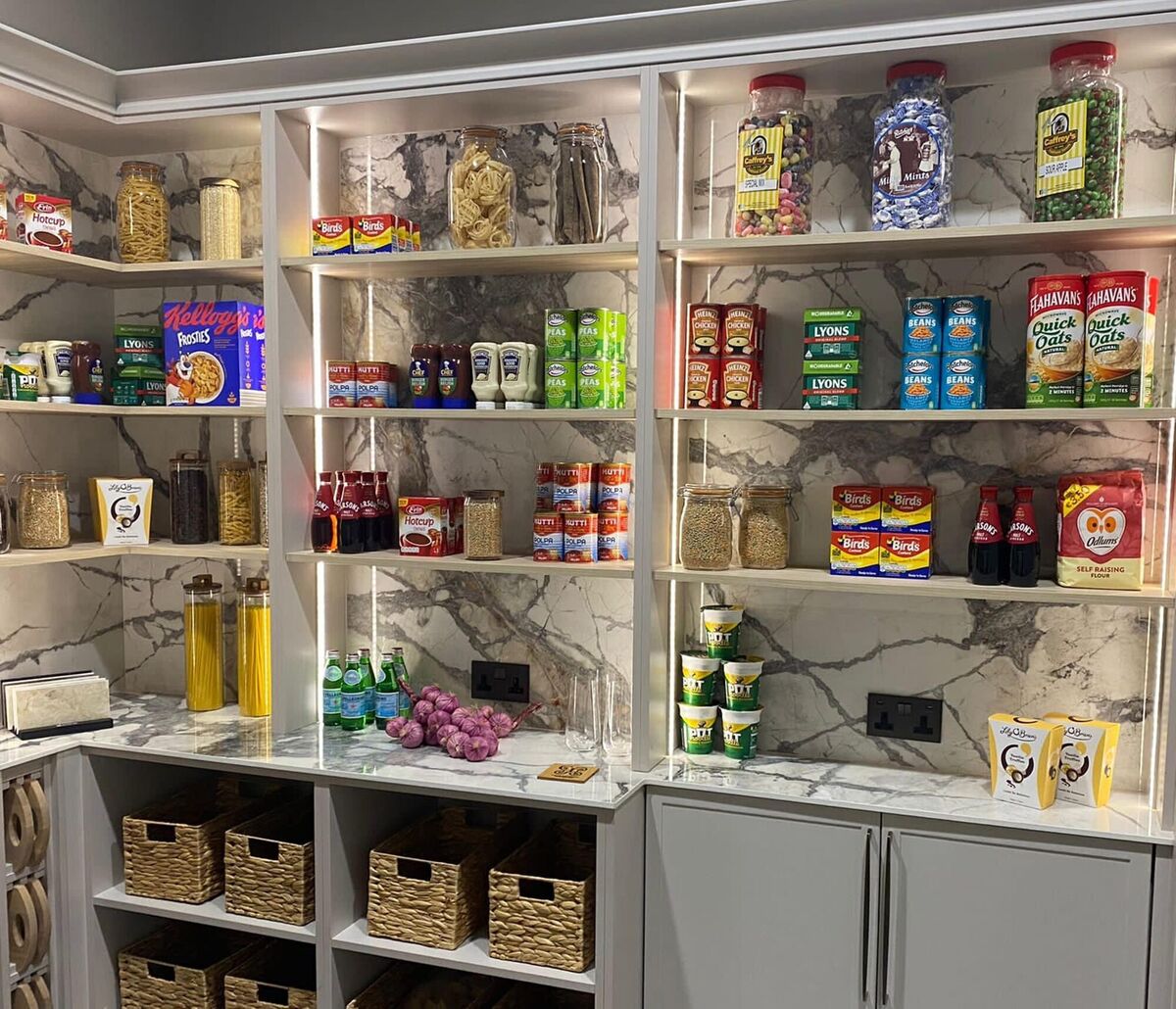
Pantry detailed with counter and cabinet backs in veined 12mm Xtone porcelain slabs. Picture from Celtic Interiors, St Patrick's Woollen Mills, Douglas, celticinteriors.com.

PORCELAIN

A porcelain worktop is not only lush but virtually indestructible. Porcelain can withstand very high temperatures (better than quartz, for instance), so there’s no need to worry about scorching it from a hot pan, according to Mr Nash.

“It also can book-match like marble and fine veneer, for waterfalls and back-splashes that are works of art,” he says. “It’s more expensive than quartz or composite stone counters but delivers unbelievable pattern possibilities (extremely detailed veined worktops). “These superstar slabs are, in my opinion, the next biggest trend for this year.”

Porcelain can take a gloss, matt, satin, or more natural finish. Dense, with a low porosity, it can even be used for your outdoor kitchen.

Cons: Price.

A bespoke pricey product. Only order a porcelain counter or detailing through a top supplier/installer.

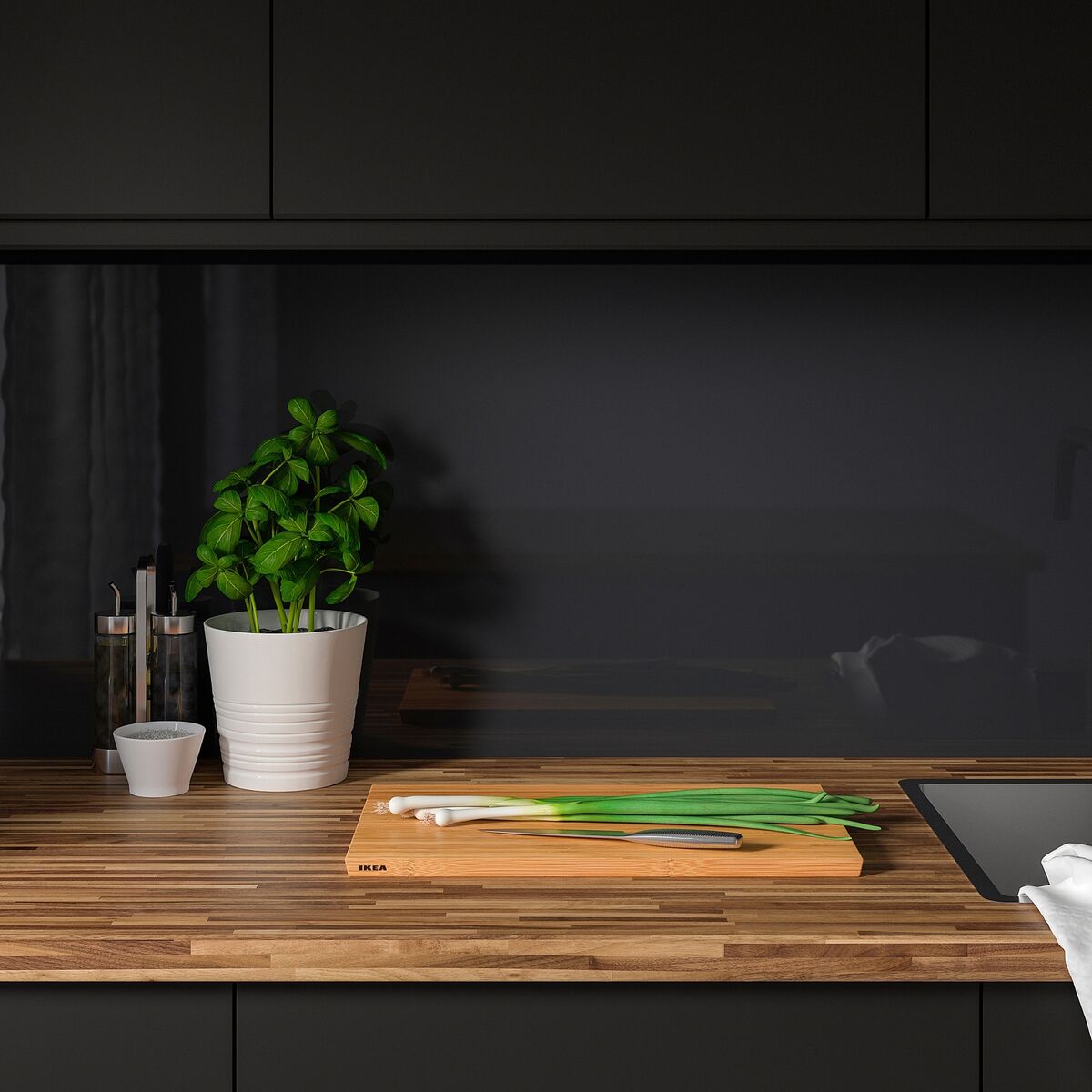
Engineered timber counters include clever, affordable veneers. Ikea Pinnarp offers a walnut wood veneer with layered construction over particleboard, €155, ikea.ie.

WOOD

Wood gives a warm, tactile, traditional feel. FSC-certified, it’s a sustainable choice.

Set on contemporary cabinets it’s not overtly rustic and can be tailored into clean cutouts and elegant curves by a competent carpenter. No other material can be so easily stained, sanded, filled, and repaired. 

End-grain with decorative heart-wood, glued together in blocks or strips is tough and sustainable — with beech, oak, cheery and ash top choices for durability. Tropical hardwoods offer a gallery of delicious figures and tones.

Iroko, wenge and teak — rich in natural oils — will cheerfully slough off water.
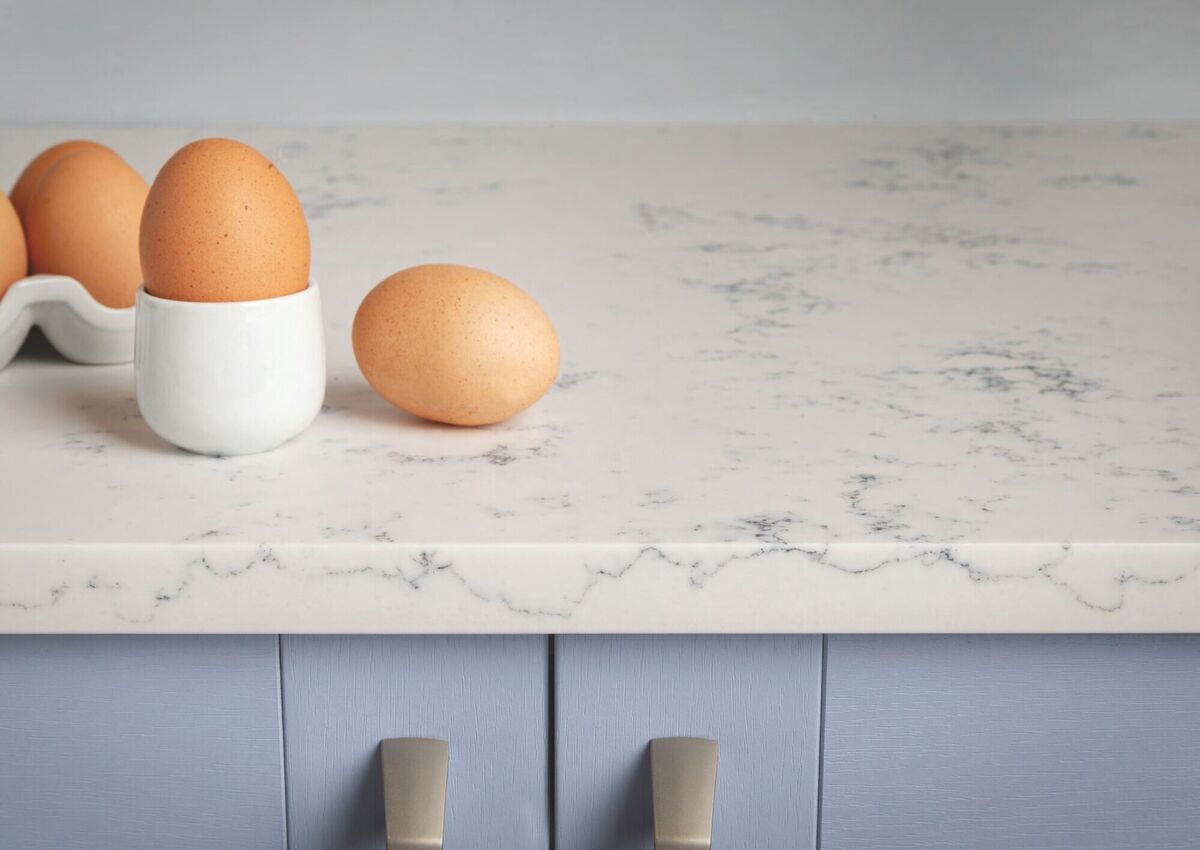
Laminate can mimic a large range of materials. Prices start at €40 per linear metre, Noyeks Minerva.

Expect to pay more for full-stave oak or walnut. Choices include solid wood, thick veneers (can be sanded and are less sensitive to humidity), and laminate pretenders. Ikea Barkaboda chevron design veneer countertops are priced at €235 for 1.35m, 38mm depth, ikea.ie; 40mm. Solid oak in 2m lengths is €745, B&Q.

Cons: Water ingress can warp and stain a raw wood surface. “We still use a lot of timber, but only on areas for dining — for instance, at a high-stool area at an island or the kitchen dining table,” says Mr Nash.

“It has a warm tone and temperature, but I would not recommend it for a full worktop — especially near the sink area. Many householders like to incorporate say a section of timber on the island for timber and stone everywhere else.”

STONE

With a unique character of nebula and mineral grains, real stone is an expressive, heritage choice with a signature cool touch. Due to its density, it is stain and heat-resistant and impervious to liquids once sealed.

Sculptural cut-outs can form integral draining boards and, with a low surface temperature, it’s ideal for rolling out pastry. Granite, marble (Portuguese, Indian, and Italian), and limestone offer intense colours balanced by a high mirror shine or light honing.
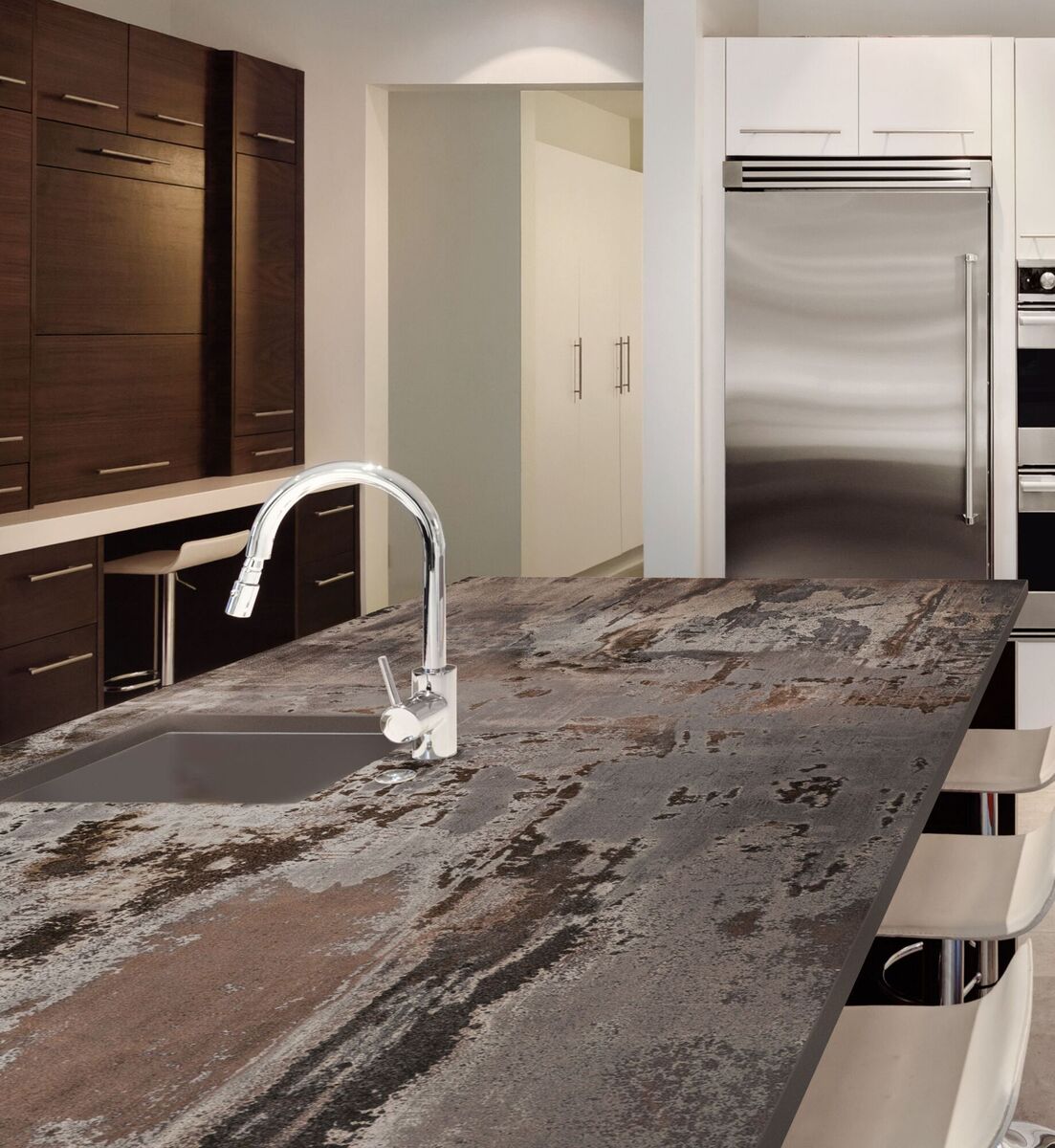
Dekton Trilium sintered stone worktop, a form of composite stone including porcelain, quartz and glass that is close to indestructible under normal conditions; from €550 per square metre.

Check out the whole collection your supplier offers, as granite comes in surprising rich, berry reds and granular pearl-blue varieties from India. Factor in any bespoke edging choices and the optional inclusion of a splashback. Prices start at €450- €600 per linear metre for imported polished and matt-honed worktops.

Cons: Placing and matching seams, which remain visible. It’s extremely heavy and best installed by a professional team, who will also ensure the carcasses are stout enough to carry its weight.

Stone is lethal when bouncing down towers of fragile dishes. Marble is porous, and white varieties can be permanently damaged if the seal is damaged.

“Quartz is much easier to keep than marble. Absolutely nothing can compare to a solid marble top for style, but it’s a nightmare to mind!” Mr Nash says.

QUARTZ

Composite stone counters are made up of a mixture of silica, resins, and a high quantity of natural stone, offering the look of stone slabs in a wide spectrum of colours. Quartz composite like Silestone is a market favourite. Including 93%-96% natural stone, it’s beautiful, versatile, and tough in a family setting with a large range of depth profiles and colours.

Abrasion-resistant and 100% waterproof, it doesn’t require sealing and can take a bevelled edge. The fresh, silken touch and honest look are all there, and quartz actually surpasses natural stone for non-porousness, stain, and heat resistance. It is also super easy to sanitise.

The slender profile of quartz matches the new fashions for finer depths, in both cabinetry doors and counters. For a protected granite, look into Sensa by Cosentino.

Cons: Very few. Quartz and other stone composites can mark and melt with abuse, and dropping something from a height can ding and damage their surface. Prices vary wildly depending on quality, but you can expect to pay in the area of €450-€650 per linear metre for a quality product in 20mm-30mm depths, especially in a trending colour.

MINERAL

Also in the composite division, this counter is commonly known here under the quality Dekton branding from Consentino. It includes natural minerals and acrylics bonded together to give the dense weight and durability of stone but with the malleability to pour into a mould.

Composites come in sintered stone, with the glitter of glass and porcelain inclusions. These non-porous counters have around 60% natural stone and can be crafted into just about any shape using “thermo-formation”.
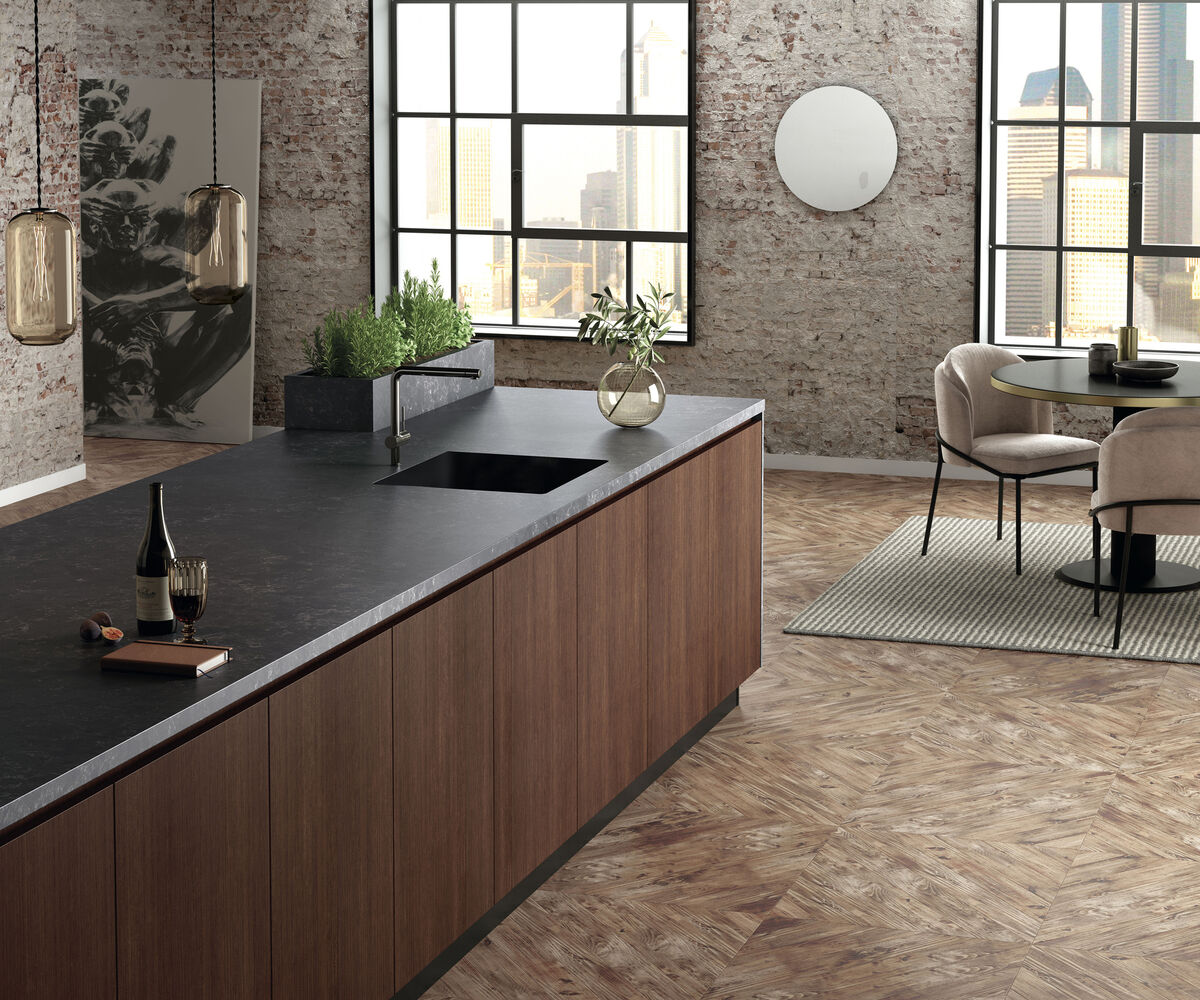
Silestone by Cosentino, a quartz composite, contains 94% crushed quartz; from €650 per linear metre.

Stone composite is very strong and heat-friendly, and it can be bonded to other surfaces — delivering a worktop of more than one material.

Difficulty choosing between quartz and Dekton? “Quartz is the keenest price-wise, but you need to be careful with very hot pots etc. It comes in 20mm and 30mm thicknesses,” Mr Nash says.

“Dekton is a step up in terms of price, but there is no problem with temperatures and lots of great finishes and colours to choose from.”

Cons: It can crack and chip, but scratches can be sanded out and filled.

You’re very likely to be caught in the either/or of quartz or these other composites. A highly bespoke, unusually coloured or finished product may push up the cost per linear metre.

ELEGANCE

For inexpensive elegance, laminates are an intelligent choice in most kitchens and if you want to fit your own kitchen are easier to cut and fit.

It’s impossible to beat their price point, from €40 per linear metre. Made from layers of paper impregnated with resin, under a transparent layer of melamine, laminate is economical and installed as a gap solution. It can be replaced with a new design with little cost.

New digital printing tech allows for pattern repeats over two linear metres with marble veining convincingly run over rolled edges.

Warranties (with proper use) are routinely 25 years. Most laminate will tolerate up to 160C before marking. A 40mm laminate is designated “high pressure” and is highly heat resistant. A daintier 22mm or 28mm might be a trendier in 2024 but such an option would be available in fewer colours and textures.

Cons: Impossible to hide once touched, this mimic of wood, granite, marble, or quartz may be perceived as a budget compromise. Laminate is almost impossible to repair once the surface is melted.

Seams and end pieces must be properly finished with PU adhesives to keep the internal wood core dry. Doesn’t suit under-mounted or Belfast sinks.

CONCRETE

Poured concrete is an unexpected, but beautiful, choice. It can carry mesmeric inclusions from stone chips to recycled glass and fossils, before being polished to a mirror shine.

Every counter is unique and poured, in situ, into a shutter from a mixture of types of cement and pure silica sand. Profiles vary from 15mm to 100mm depths.

The counter can be tinted to any colour, flowing into organic forms with bevelled edges, embracing sinks, and extra detailing — such as routed-out draining boards — and stunning metal inlays.

It develops a pleasing patina over time.
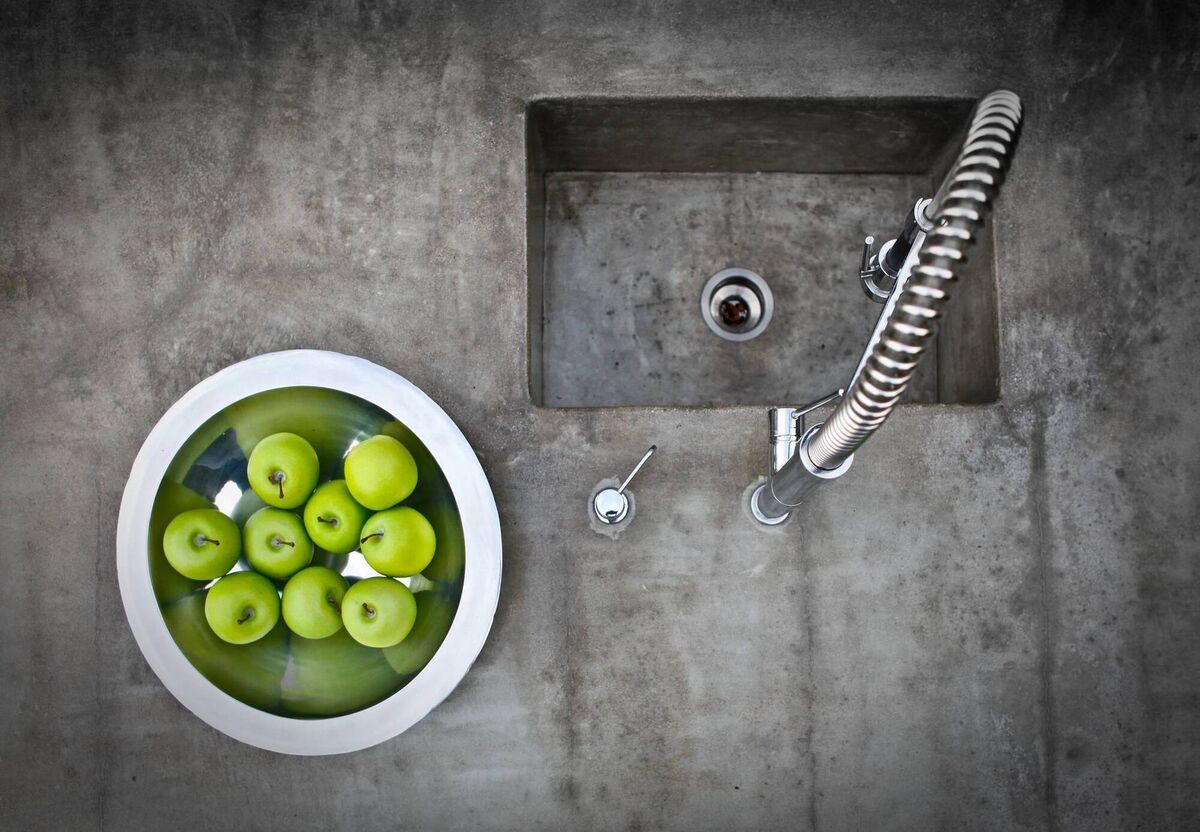
 Concrete relies on good reinforcement, a perfect design and installation that includes the strength of the supporting cabinetry and good sealing. File picture
Concrete relies on good reinforcement, a perfect design and installation that includes the strength of the supporting cabinetry and good sealing. File picture

Once sealed concrete counters are a relatively warm, anti-microbial surface that needs no further maintenance and can be washed with warm, soapy water.

Cons: Compares to granite in price depending on the demands of the installation and requires a very skilled hand to get expansion gaps perfect.

Avoid using ammonia and bleach.

Like stone, the material is unforgiving for dropped dishes. Insufficiently reinforced, supported, or poorly installed concrete can crack. Concrete is porous and must be sealed against staining.

x

More in this section

Revoiced

Newsletter

Sign up to the best reads of the week from irishexaminer.com selected just for you.

Cookie Policy Privacy Policy Brand Safety FAQ Help Contact Us Terms and Conditions

© Examiner Echo Group Limited