Peter Dowdall: Daphne is the perfect winter-flowering shrub 
Whether you're a gardening beginner or expert, Irish Examiner columnist Peter Dowdall has the answer to your questions
Peter Dowdall: Daphne is the perfect winter-flowering shrub 

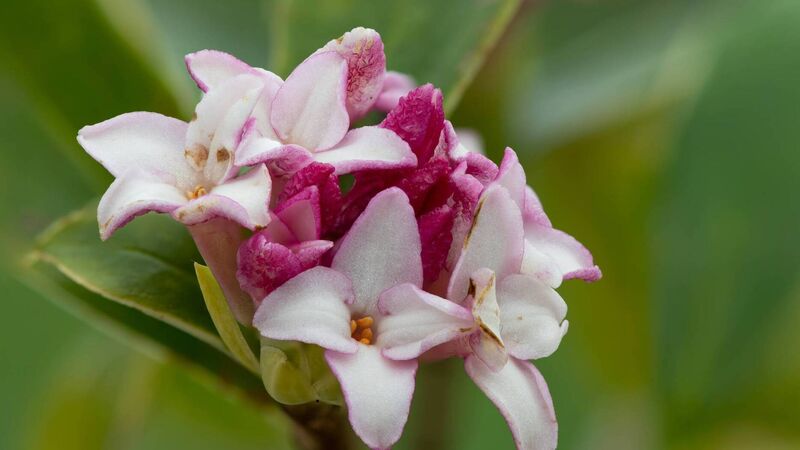
Daphnes are a wonderful, strongly scented and beautiful looking addition to the winter garden but do be careful as all parts are toxic if ingested. Picture: iStock

Isn't daphne just fantastic? No, I don’t mean the lady — though if you have a Daphne in your life then I’m sure she is fantastic too — but rather, I am referring to the winter-flowering shrubs.


You can’t but notice them in gardens right now, they brighten up, even the dullest of days and during the days where we have been enjoying beautiful, crisp, January blue skies, they seem to positively sparkle in the garden.

They are strongly scented and whilst there are over ninety species, we tend to grow only four or five of them in these parts, namely, D. bhloua, referred to as the Nepalese paper plant, D. tangutica, the Tangut daphne, D. mezereum, the February daphne and D. odora.

The species shining bright in gardens right now is most likely D. bhloua and very possibly, the cultivar Jacqueline Postill.

If Jacqueline is growing in your garden, then consider yourself lucky for she is among the best of all winter-flowering shrubs. An evergreen plant, she can reach about 2.5 metres in height with a spread of up to one metre.

What I haven’t spoken of yet — but anyone who grows daphne won’t need telling — is the fragrance from this beauty. I don’t have the vocabulary to describe the scent — suffice to stay that it is magnificent and if I were a bee, I would make a direct line for it.

I have referred previously to the specimen growing in the arboretum in Fota. It is such a magnificent plant that it was a victim of its own success, for not only were bees flocking to it in great numbers, so too were unscrupulous humans, to get close to her.

Many of them felt it would be no harm to just “take a slip” and peel a stem off to bring home with them.

This isn’t just damaging to the plant, it can also be foolish for the human as many can suffer mild to severe skin irritations from the sap, often leading to blistering. A fence had to erected around it in the East Cork garden. I haven’t been there for a while but I’m sure that she is still doing fine and probably still surrounded to keep her safe.

Daphne tangutica is different as it is a smaller shrub, the species itself reaching at most,one metre in height and most of the cultivars such as those of the retusa group staying below 50cm in height. These Daphne retusas are great as they will suit a pot or even the smallest garden, again with scented flowers.

Also, staying below 1 metre in height is D. x transatlantica Eternal Fragrance, another, as the name suggests, strongly scented cultivar.

These are all evergreen varieties as is D. odora and though the textbooks will say that D. odora will flower from December to March, I often find blooms on mine during autumn and later in the spring. D. odora Aureomarginata is of interest as it has variegated foliage, a very attractive golden margin, outlines each leaf, making it very attractive, even when not in full bloom.

All of the plants above produce strongly scented blooms in terminal clusters, made up of many smaller flowerlets and all are different shades of white flushed with pink, depending on the variety but for something a bit different, try Daphne mezereum. This beauty, comes into bloom a bit later than many of the others and it is deciduous, flowering on naked stems as winter begins to turn to spring and the leaf buds begin to burst back into life.

The variety rubra has strong pink flowers and is quite something when in full bloom.

Once finished flowering, daphnes produce berries, normally either black or red in colour. These are loved by birds but very toxic to humans, cats and dogs. In fact, it is not just the sap and berries which are toxic, all parts of the plant are poisonous if ingested so don’t feel inclined to have a munch, enjoy the aroma instead, daphne should be admired but not touched.

Daphnes like to grow in fertile and well-drained soil with a slightly acid pH and plant them somewhere sheltered for best results.

I have found Daphne odora and Daphne bhloua relatively easy to grow from cuttings taken in late summer but specific varieties such as Jacqueline Postill, will most likely need to be grafted.


x

More in this section

Revoiced

Newsletter

Had a busy week? Sign up for some of the best reads from the week gone by. Selected just for you.

Cookie Policy Privacy Policy Brand Safety FAQ Help Contact Us Terms and Conditions

© Examiner Echo Group Limited