Sustainable alternatives to oil and gas central heating

What is the future of heating? We look at the options available to make your home energy-efficient 
Sustainable alternatives to oil and gas central heating

I am so conflicted. In my weekly DIY column, I write in as even-handed a way as possible about the changes that are transforming both market and personal expectations surrounding our homes, specifically energy-efficiency expectations. 

Living in a timber-framed, timber-faced house stuffed to the rafters with insulation and purring away on photovoltaic panels for most of the year, I have a dirty little unsustainable secret. It’s my glossy, black oil-fired range cooker, which heats my radiators.

Granted, this house is snug — you could warm it with a lightbulb. Still, the 1100l of kerosene in the big green bunded tank crouched behind the house is a reminder that I’m consuming fossil fuels and belching those emissions back to the atmosphere year-round. Decarbonising our CH source is pressing on me.

The installation of oil boilers in new builds is banned from next year, with gas boilers going the same way in 2025. The price of oil is already at a worrying level, condensing oil boilers have been kicked off the SEAI’s grant list, and buyers are increasingly aware of a second-hand home’s green credentials.

CLIMATE & SUSTAINABILITY HUB

How exactly do heat pumps work? For more go to the SEAI, seai.ie. Pictured is a ground source heat pump fuelled by an array of pipes buried in the earth. This system with a sip of electricity delivers consistent, comfortable warmth to the emitters (UFH and radiators) and domestic hot water year-round indoors.

There are creative changes we could make as part of the population distant from the mains gas grid. There’s biomass, of course, a pellet stove or a pellet boiler. Even wood gasification might be worth exploring despite the terrifying prospect of a mountain of wood to split. A heat pump? I know what that will mean in terms of a pricey deep retrofit, even to this worthy little wood house, even with the Sustainable Energy Authority of Ireland (SEAI) kicking in up to 30% of the damage.

Change is coming and oil and LPG though available may become expensive enough to tip the balance with many people currently happy to pay for a fill and to ignore the planetary costs. Brian McIntyre, of the SEAI’s deep retrofit programme, explains, “As building Rrgulations evolve, carbon emissions are further limited, and carbon taxes rise, it is highly likely fossil fuels will become a less viable option for a home heating system.

“The typical range for the Seasonal Performance Factor (SPF) of an air source heat pump is approximately at 300%-350% energy efficiency. This is much higher than efficiencies achievable with fossil fuel boilers, which are typically 95% energy efficient. In well-insulated homes, a heat pump system that is properly designed, installed and operated should achieve cost savings compared to fossil fuel boilers.”

Total reliance on electricity, and the electricity market to run a heat pump could rattle some homeowners — it worries me. Just what is the projected cost for running ASHP right now in a (not Passive) but appropriately insulated and tightly detailed home of 200sq m in the area of a B2/2 Watts/Kelvin/sq m?

Heat pumps with a listed average SPF of four (day rate electricity band DD) costs 4.98 cent per kWh of heat delivered and on night rate, just 2.28 cent per kWh of heat delivered,” says Brian. “An oil boiler burning kerosene at 70% efficiency costs (just over) 10 cent per kWh of heat delivered, making an SPF heat pump less than half the running cost of oil, even before night-rate electricity is considered.”

I should add here that quality new condensing oil boilers run at efficiencies in the 90% range. One lateral move using an existing (preferably condensing) boiler with a few hundred Euro conversion, is the use of an alternative biofuel. OFTEC is promoting this very idea in the UK as an alternative to what some in the heating industry see as the knee-jerk leap to heat pumps as standard for every house.

Barry Gorman, National Renewables sales manager with Grant Engineering, supplier of boilers and heat pumps, explains, “The three Cs are what we strive to offer the customer: Comfort, Cost Savings and Carbon savings. It always possible to achieve two of the Cs but to get all three in a retro-fit project can be challenging.

“Replacement oil boilers will be available for a number of years yet as there are estimated to be 1.1 million homes on the island of Ireland, with an estimated 300,000 thousand of these still being inefficient non-condensing oil boilers. All Grant boilers manufactured today are bio fuel ready and biofuels such as HVO (hydrotreated vegetable oil) are available. Oil boilers can take a blend of HVO and kerosene. For example mixes of 30% HVO/70% kerosene or 50/50 mixes or 100% HVO.”

Is the air source heat pump (ASHP) the only choice in upgrading your current carbon belching central heating? Picture: Panasonic Aquarea

The segue options don’t stop there. Barry continues, “A lot of the typical oil homes would need work done to install an air to water heat-pump, some small works but other homes would need a lot of work done, for example, improvements in heat-loss and air tightness and maybe improvements to the heating system with radiators/underfloor and hot water cylinder.

“Another option would be hybrid, a system that allows you to leave the oil or gas boiler in situ and install a heat-pump with it. This would give the customer a start on their carbon-savings journey and over the years as they make improvements to their home the heat pump stays on longer and longer and your oil or gas boiler fires less and less. I think wood pellet boilers will also have a say in some of these homes.”

Developing this parallel, deliberately staged approach, Grant is launching another hybrid product.

Evolink features smart controls and algorithms designed to work with any oil/gas/biomass boiler and a Grant ASHP to keep the heat-pump on as long as it is feasible to put heat into your home at an efficient, comfortable and constant basic temperature.

A high-performance condensing oil boiler picks up on the heating when the outside temp is below 5C and the HP is not running at its most efficient. So, in short, the ASHP is doing the lion’s share of your heating.
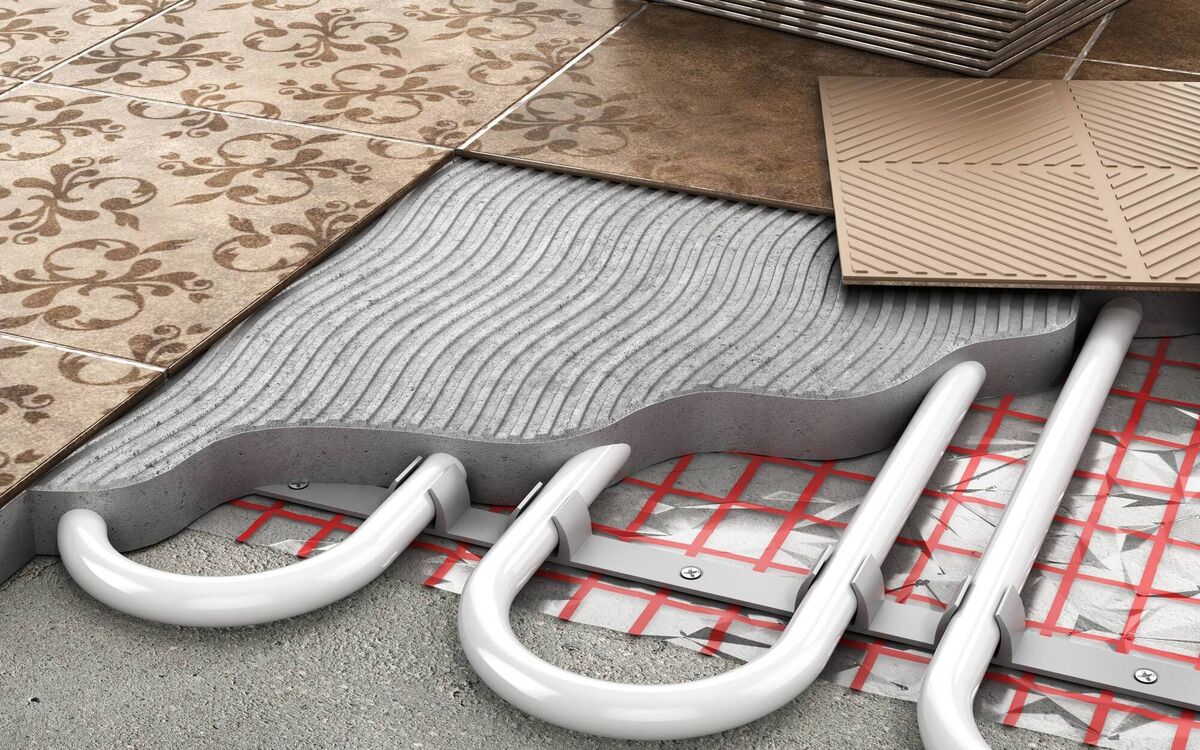
Underfloor heating is the ideal for distributing the heat from an ASHP downstairs at least. However, there are alternatives to ripping into the floor if that’s not financially viable for your situation. Picture: iStock

The SEAI’s view of these hybrids is measured. Brian McIntyre explains, “The risk for homeowners with hybrid systems is that they are potentially locking themselves into a technology for the next 10-15 years that may get more expensive to run as carbon taxes rise.

“SEAI recommends that homeowners consider a complete switch to an optimally sized heat pump that can operate efficiently at all temperatures.”

Asking Barry Gorman about the place of the SEAI grant system in facilitating the change to HPs, he responds “The SEAI are in a difficult situation and have to cover themselves when it comes to compliance and accountability. This has made applying and awarding the grant an ordeal for plumbers/installers who are usually small business and don’t see value in the time of filling out forms.

“I do feel they need to work with the installers homeowners and suppliers to find a solution that works for all, otherwise, the take-up of the SEAI grants will continue to be low. The Heat Loss Indicator (HLI) figure should be reviewed. Installers should see SEAI as a resource they can fall back on for advice. The feeling in the industry currently is that they are there to put up hurdles.”

The SEAI is confident its grant process reflects sound protection for Irish householders decarbonising their heating system. “SEAI has quality processes in place to help protect homeowners, contractors and the taxpayer,” emphasises Brian McIntyre.

“These processes are important because heat pump systems must be properly designed from the outset and installed by qualified technicians.

“Heat pump systems must provide value for money for homeowners, heat homes and achieve carbon savings. SEAI is confident that its processes meet homeowners and installers’ requirements, and engages in continuous improvements to the process.”

More in this section

Revoiced

Newsletter

Had a busy week? Sign up for some of the best reads from the week gone by. Selected just for you.

Cookie Policy Privacy Policy Brand Safety FAQ Help Contact Us Terms and Conditions

© Examiner Echo Group Limited