Vintage View: We celebrate Terence Conran's design legacy
Designer, restaurateur, author, and entrepreneur had a profound influence on lifestyle design from 1950s onwards
Vintage View: We celebrate Terence Conran's design legacy

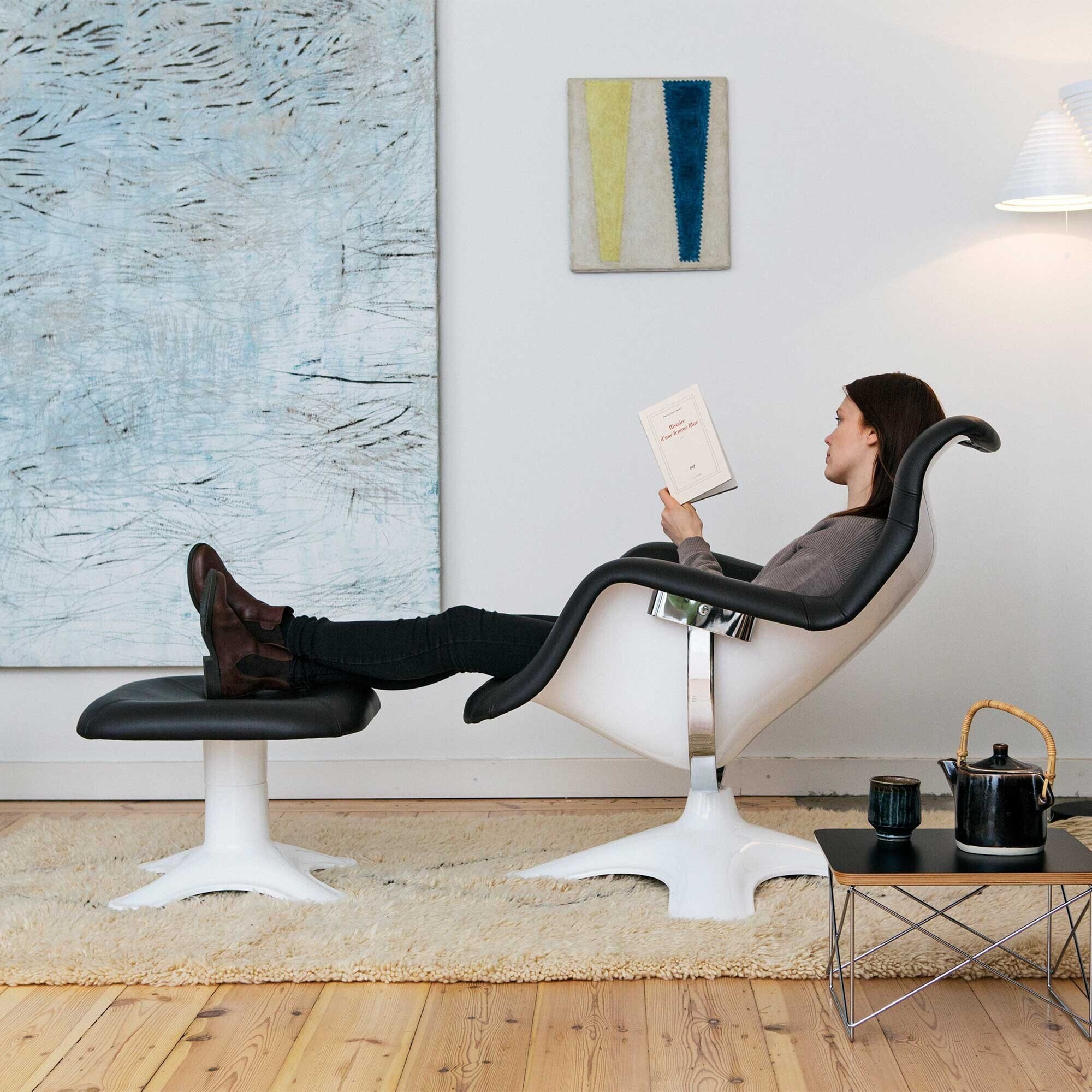
Karuselli chair (1964) by Finnish designers Yrjo Kukkapuro. Still in production. Chair alone, €7,343, finnishdesignshop.com

Anyone who has read my work over the years will know I have a bit of a style crush on Terence Conran (1931–2020). 

I was saddened to hear of his death in October of last year. 

Designer, restaurateur, author, and retail entrepreneur, he had a profound influence on the look of British and western European domestic lifestyle design from the 1950s onward, and would have turned 90 this year.
My sense of communion with his talents was through his books, not the fruits of the Conran empire, much of which was holed up in his London and Dublin outlets of Habitat and the Conran stores, just too far away to drag back any meaningful booty.

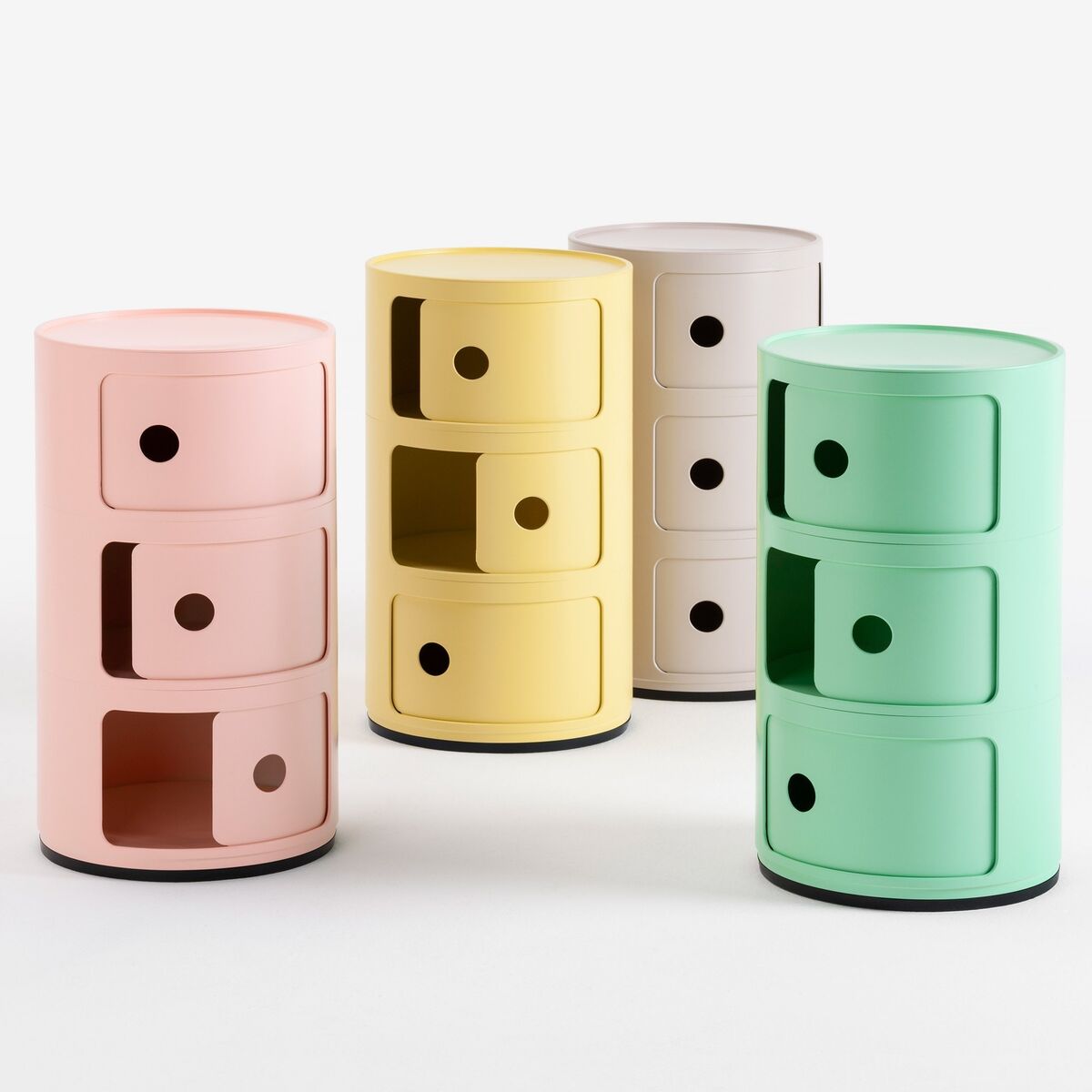
Componibili plastic units by Anna Castelli Ferrieri,co-founder of Kartell, first appeared in 1972. From €100 for a two-drawer, stacking unit with tray top, amara.com and all Kartell suppliers

At one stage I owned 10 books from his cheery opus of around 40 for Conran Octopus. Five were given away in a breathy flourish to startled friends who were displaying the intimidated paralysis of having big tasty ideas and a baked beans budget.

My mother gifted me his original and battered House Book (1974) from her shelves, and looking through it today, it’s all there. Ice-white highly architectural spaces with surprisingly simple furnishings and layouts that effortlessly speak of the regeneration and protection of “home”. He was blind in one eye, but clearly the other was a very, very good one.

Shaped by the utilitarian skills and spirit of post-war England, Sir Terence always
included hands-on projects, encouraging simple carpentry in ply and MDF bookshelves, room dividers, and drinks cabinets.

There’s previous a discussion of the House book and my biography of Conran for Irish Examiner Property & Home in our website’s Home & Outdoors section.

If you love sumptuous colour, and feel cosy and more connected knee-deep in the extraneous, the unnecessary, the ornamental, you’ll simply not enjoy Conran — possibly at all.

I dip in and out of my remaining Sir Terence library, and in particular his Storage (2006) at least once a month. Illustrated compositions — harlequin chairs from Thonets to Eames chattering around a scrubbed kitchen table.

Snowy, uncluttered, open-plan studios. Terraced Mason jars and plain cantilevered plank shelving with staggered queues of monochrome artwork. It’s Conran’s balm for a soul jaded by the add-water-and-stir high street ‘stuff’ hangers. There’s an unpretentious, quiet confidence and purity to these spaces that, to my mind, beats the complex sophistication of far more expensive and elaborate room-sets.

New or second-hand, there is so much to glean from any of his writings. His last book Plain, Simple, Useful (2014) was a modern riff on William Morris’ feted saying “have nothing in your home you do not know to be useful and believe to be beautiful”.

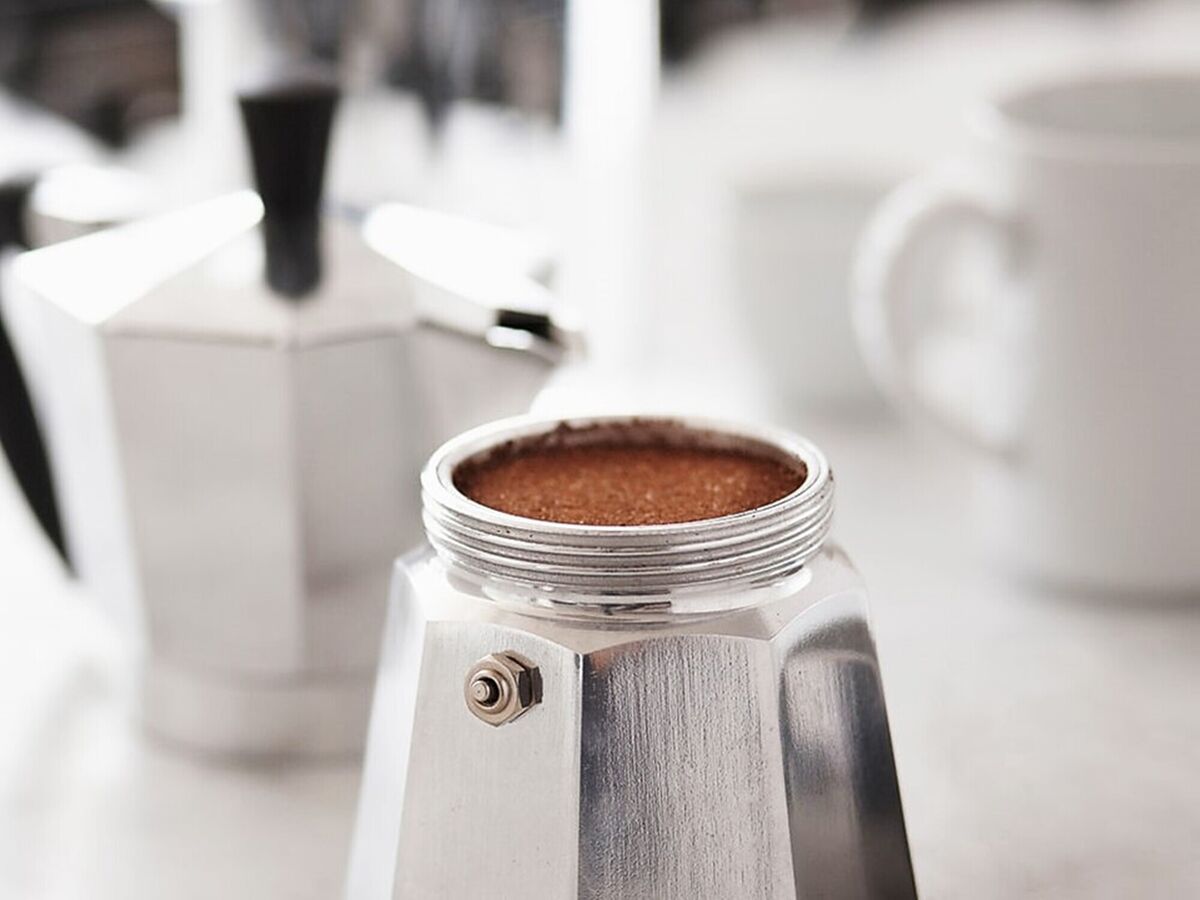
Moka espresso pot developed a by Alfonso Bialetti and patented by Luigi De Ponti came in aluminium with a Bakelite handle. From €20.40 for a small pot from suppliers online including Arnotts, arnotts.ie

I can’t imagine Conran every hanging a roll of Morris’ wallpapers. There’s more of a Shaker soul here, including the efficiency and creativity offered by smaller spaces.

Included in the book are a number of key classic vintage pieces rated by Conran for their well-made, workmanlike quality.

Some are expensive investment buys, others are relatively banal objects.

They offer considerable insight into his taste for unforced finesse and honest materials you can live with for a lifetime, not a season. There’s the invitation to be discriminating in what we bring into our homes, that “a tight budget is a useful restraint”.

That’s what I love about his books, there’s a light-bulb moment on just about every page — meaningful advice to put into practice immediately.

Here are a few of Terence Conran’s intimate, everyday, domestic choices taken from Plain, Simple, Useful.

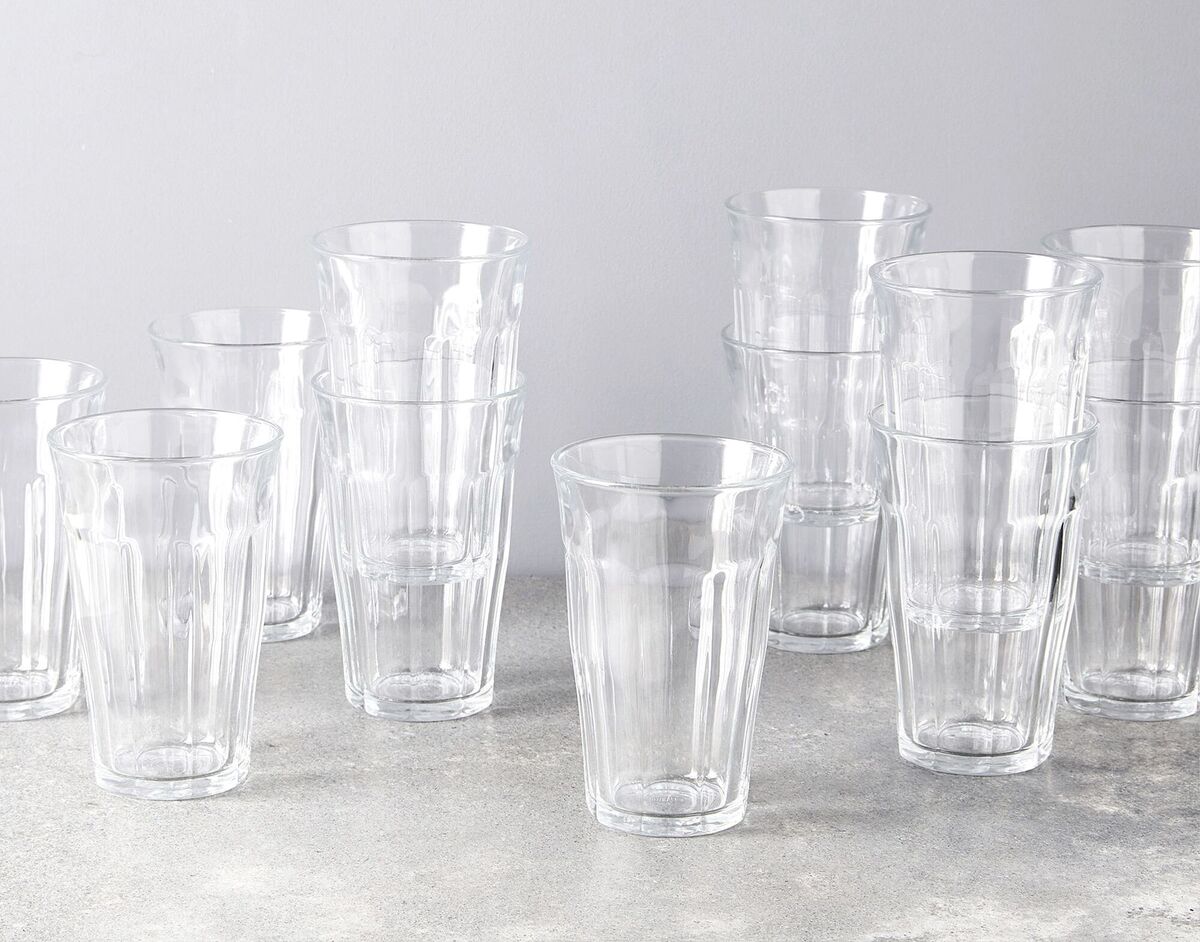
First is a range of glass: chunky, tempered glass tumblers with a fluted taper that’s instantly recognisable, but not obviously dating back to 1935.

Chunky Duralex tempered glass in a classic fluted taper. Cheap, stackable, chip and heat resistant itís a home favourite dating from 1935. From €13.40 for six at suppliers including Nisbets, nisbets.ie

Duralex, the maker of a favourite bistro glass that comes in short forms and high balls, is based in La Chapelle-Saint-Mesmin in north-central France. Conran singles out the Picarde and Provence both for their easy-grip faceted form and because they are heat and shatter-resistant.

These stacking glasses are truly cheap, and you can pick up a pack of French originals for €13.40 for 6 at Nisbets, nisbets.ie

Also under the kitchen section of the book, Conran includes the first espresso maker available to the general public. The Moka espresso pot, developed by Alfonso Bialetti and patented by Luigi De Ponti came in aluminium with a Bakelite handle and, screwed together, it worked on any range-style heat source.

Its design has changed little since its launch in 1933. 

Named after the Yemini city of Mocha, it retains a huge following, and you can buy one for as little as €20.40 online at Arnotts and other suppliers, with electric versions from around €58 at Amazon.

Storage (always a key interest of Conran’s in putting logic and calm in place) includes the Snow chest of drawers by Thomas Sandell and Jonas Bohlin for Swedish firm Asplund, with its neatly cut-out handles and lovely simplicity. Sandell has worked extensively for Ikea — so look out for his touch on their PS collections.

Asplund originals start in the area of €1,049 for a bedside locker, but I would take a look at Ikea Nordli, also in lacquered MDF, which is so similar and starts at just €90 for a three-drawer piece, ikea.ie.

Recently released in an eco-plastic, the slide action Componibili units by Anna Castelli Ferrieri (1920-2006) co-founder of Kartell, first appeared in 1972. 

Conran wrote that Bloomingdales in the US marketed the furniture arranged in a style of New York City skyline. “The modular units stack in any configuration and require only one lid per tower” and calls them “cheerful, functional, and versatile”. Prices start at just €100 for a two-drawer unit with tray top in black, red, silver, and white. amara.com

Conran’s favourite chair (he favoured Hans Wegner’s CH24 Wishbones as diners) is quite controversial. It doesn’t present the airy, streamline presence of, say, a Le
Corbusier or Eames lounge chair. 

It’s the mitten-shaped oddity in fibreglass/polyester by Finnish designers Yrjo Kukkapuro (b.1933) from 1964. The Karuselli chair shot to fame when it appeared on the front of Domus magazine following its launch by Artek at the Cologne Furniture Fair. Conran counted it as the most form-fitting and comfortable chairs he owned.

Surrounding the body, it also moves with the sitter, utilising a chrome-plated steel spring. “A pleasing blend of the functional, ergonomic and the organic” in the words of Conran. €7,343. 

No, you don’t get the footstool! finnishdesignshop.com. 

Look out for the increasingly scare, used leather and fibreglass examples of the ConranGlove Chair (Content by Conran 2002), now becoming increasingly collectable and echoing his admiration for vintage Karuselli.

x

More in this section

Revoiced

Newsletter

Had a busy week? Sign up for some of the best reads from the week gone by. Selected just for you.

Cookie Policy Privacy Policy Brand Safety FAQ Help Contact Us Terms and Conditions

© Examiner Echo Group Limited