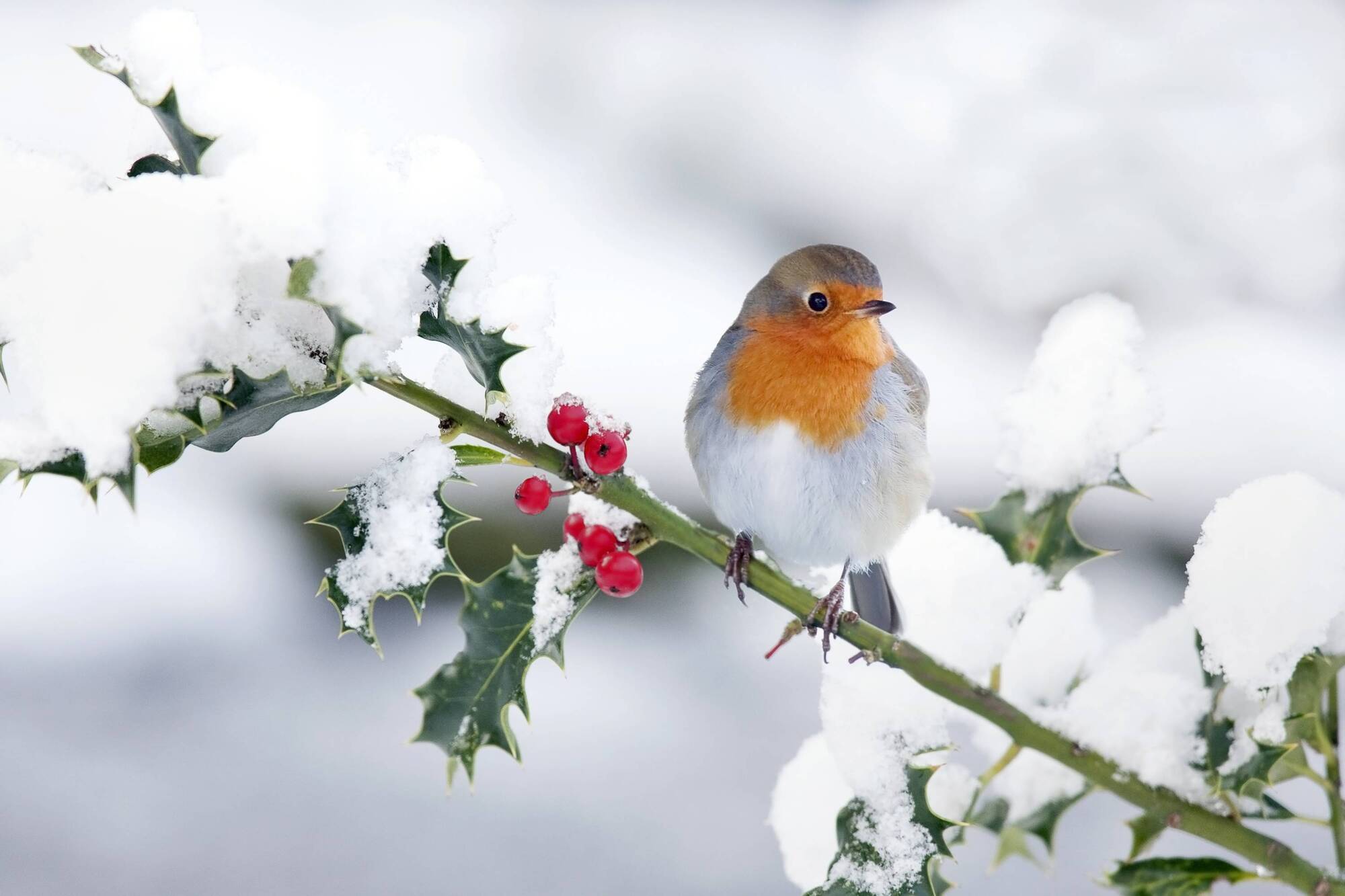
The cheeky, but likeable, robin stands out as the favourite wild bird of Christmas. Apart from its red breast, which contrasts with the white, snowy background, there’s another reason why this little bird is so prominent at this time.
Many people believe it’s because of the robin’s winter song, which brings cheer and hope - and we could all do with plenty of that as 2020 nears its end. Birdwatch surveys show the robin is with us all year round and is found in almost 100% of gardens in winter.
Poet William Wordsworth once asked: “Art thou the bird whom man loves best/The pious bird with the scarlet breast?”
And then there are plenty of folktales, not least the one in which the robin got a red breast as it tried to remove a thorn from Christ’s head as he lay dying on the cross and its feathers were stained with Christ’s blood.
Ever since the practice of sending Christmas cards began around 200 years ago, the robin has featured. Whilst card designs have obviously changed with the passage of time, the robin is still prominent on traditional cards, along with flickering candles and other Dickensian images such as horse-drawn coaches carrying revellers through cobbled streets.
In Irish cards, you’ll see the robin against a background of leafless trees and darting about amid sprigs of red-berried holly.
Another animal that sits easily on cards is the cat, usually curled up on the hearth before a blazing fire. Cats like their comfort and ease into the warmth of the domestic scene at Christmas. In recent times, however, dogs are seen more regularly on cards, often in colourful collars out in the snow.
To cope with the dreary days and longest nights, Christmas has been starting earlier - especially this year when people felt the need to put up lights, trees and decorations much sooner.
Those of us of a certain vintage remember simpler times when homes were decorated just a few days before Christmas or even on Christmas Eve, when our busy mothers sent us out to collect holly and ivy. As darkness fell on December 24, the renowned seanchaí, Eamon Kelly, would tell a story on national radio capturing the mood of the season.
Kelly once described Christmas as “a great pool of light in the midst of darkness”. He graphically pictured the scene on Christmas Eve as candles were lit in every window in every house in the countryside, like clusters of stars.
A white Christmas is, of course, chiefly a Christmas card myth: we don’t get that many, just 17 since modern Met Office monitoring began in 1961, with the last one being in 2010.
Happy Christmas (white or otherwise) to all readers.
CONNECT WITH US TODAY
Be the first to know the latest news and updates