

Artistic vision

Artistic vision

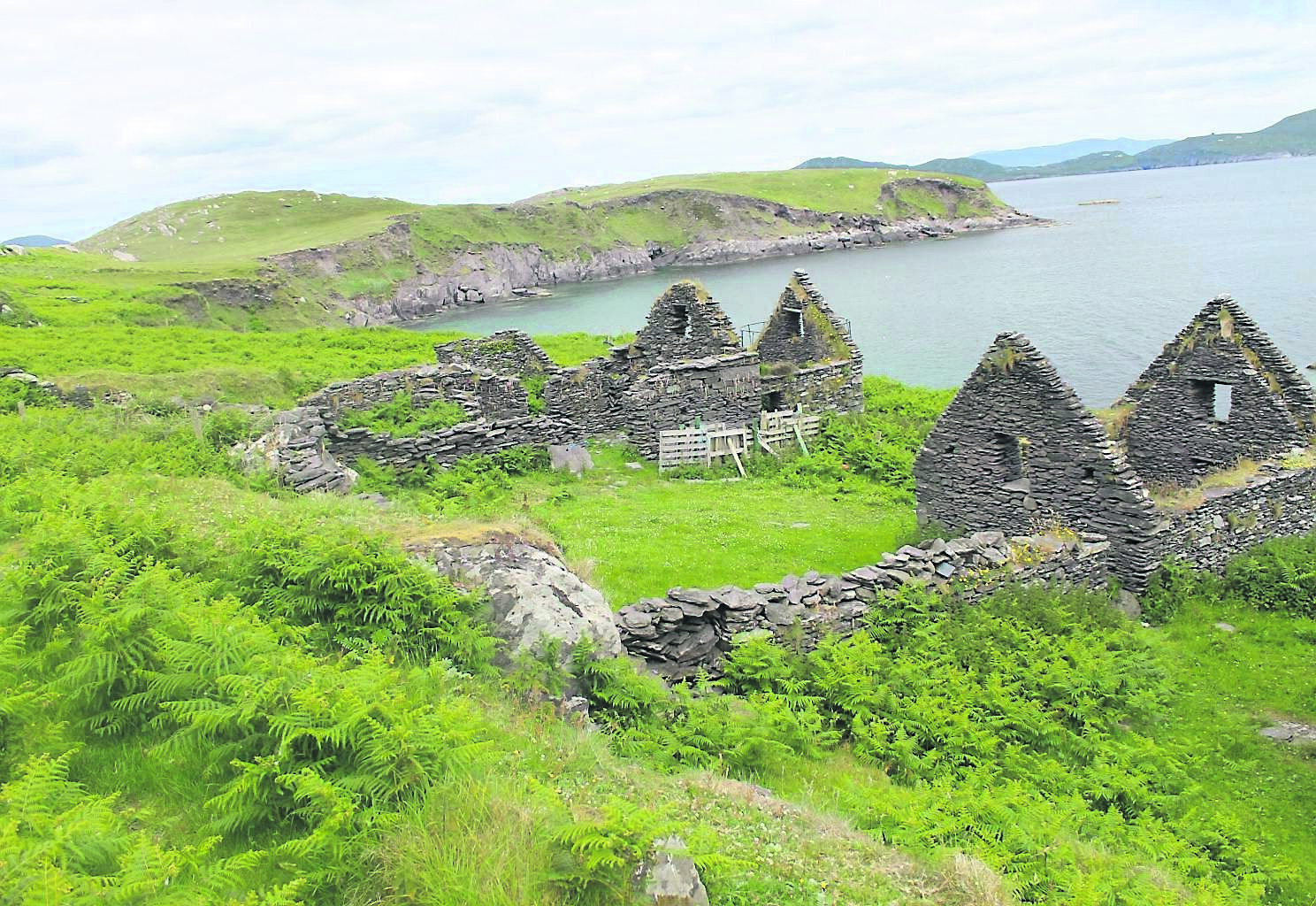
Ruins on Deenish Island, off Derrynane, Co Kerry. The island was once owned by Daniel O’Connell of Derrynane House. Picture: Dan MacCarthy

As the winding road sweeps around one of the most spectacular roads in the country, if not Europe, a spectacular bay studded with islands reveals itself below the pass of Coomakista, Co Kerry, at the end of the Iveragh Peninsula. Two-headed Island and Moylaun lie at the entrance to Derrynane Bay and off the point of Lamb’s Head at the entrance to Kenmare River. These two islands are uninhabited and always were.

At the shore lies Abbey Island, and a bit beyond, surrounded by reeds, the former mansion home of Daniel O’Connell, Derrynane House, from where he ran his election campaigns and campaigned for Catholic emancipation.

The family had a tomb in the cemetery on the nearby Abbey Island where Daniel’s wife Mary and other relatives are interred. O’Connell’s interests extended to possession of Deenish Island.

However, it is the two larger islands that really woo the eye in this dreamy vista.

To think of one without the other is unthinkable. They are as necessary a pair as hand and glove or sword and scabbard. Scariff is the largest and furthest out and is a huge, conical island. Nearer to shore, but still 5km distant, is Deenish, which has a hillier part and a lower-lying area. There is one modern house on the island and a clutch of ruins.

Deenish is one of two such named in the country, the other being in the Fergus Estuary, Co Clare, and which featured here last week. Its name is derived from Dubh Inis or Black Island, though with a verdant sward on its hilly slopes it is hard to see how it acquired this name. Perhaps as viewed from the shore at evening from Lamb’s Head or Derrynane beach it took on a blackish hue.

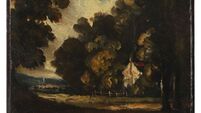
The view from on high has enchanted many artists including Jack B Yeats, who painted several paintings including Deenish in the 1920s. There are other inspiring views too: away to the west lie the Bull and the Calf islands off the lengthy Dursey Island on the Beara Peninsula. To the north lie the incomparable Skelligs.

An entry in Samuel Lewis’s Topographical Dictionary from 1837 confirms O’Connell’s ownership of Deenish. “It is the smaller of two islands called the Hogs, and together with the large one called Scariff, is held by Daniel O’Connell MP, from the Earl of Cork. It is inhabited by three families who are chiefly employed in the care of cattle grazed on the island.”

Four years later the population of the island peaked at 11 people, presumably in the employ of O’Connell. The numbers living on Deenish had dwindled to four by 1911 but gradually increased again to a peak of 14 in 1966. It went down again, however, and by 1971, just six people were left.

The 1911 Census records a family of Curranes living on the island: Patrick (head of family); Ellen (wife); Patrick (son); Denis (son); Bridget (daughter), and Johanna Shea (grand-daughter, aged five).

There is no mention of Johanna’s father. All were illiterate except for Ellen and Bridget. All have their religion recorded as ‘Roman Catholic’.

Patrick is recorded as a ‘farmer’ and his two sons as ‘farm labourers’.

Ellen is recorded as having nine children alive out of 12 she bore. This is probably indicative of the high mortality rate among new-borns at the time. Of the remaining nine only three remained on the island with the family. Six had sought their fortune elsewhere. All of the family spoke English as well as Irish.

The Currane family kept cattle but also raised pigs and kept fowl. Living on the sheltered eastern side, there was sufficient good land for them to grow crops.

Suitably distant from the mainland, Deenish and Scariff are a haven for seabirds. Fulmar, Manx shearwater, lesser black-backed gull, Arctic tern, and storm petrel frequent their shores while chough exult in the isolated sea cliffs.

A licence for the commercial salmon farm on the leeward side of Deenish was revoked last year. The farm had provoked controversy as sea lice are known to infest the farmed salmon and can spread to other fish species, especially sea trout.

How to get there: Inquire at Derrynane pier, or kayak.

Other: https://salmonwatchireland.ie

x

More in this section

Revoiced

Newsletter

Had a busy week? Sign up for some of the best reads from the week gone by. Selected just for you.

Cookie Policy Privacy Policy Brand Safety FAQ Help Contact Us Terms and Conditions

© Examiner Echo Group Limited