How nature can work wonders for body and soul
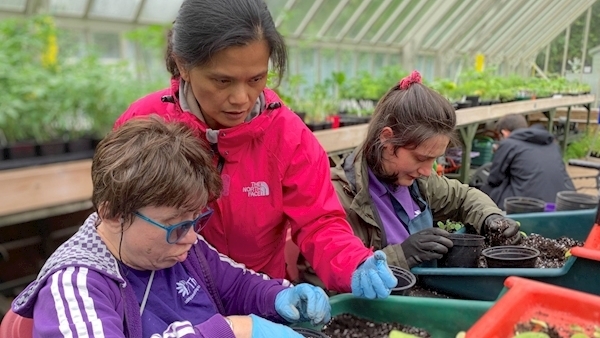
Studies have found that garden environments offer a host of physical and mental health benefits. finds out more
GETTING outside among plants and nature can work wonders for the body and soul, says garden designer Michelle Brandon. Brandon has helped people affected by stroke, ADHD, and mental illness, having worked with organisations such as the UK horticultural therapy charity, Thrive (thrive.org.uk).
She’s preparing a show garden, ‘The Forest Will See You Now’, for the RHS Hampton Court Palace Flower Festival (July 2-7), depicting how nature can help alleviate illness.
What is horticultural therapy?
According to Thrive, social-and-therapeutic horticulture (STH) uses plants and gardens to support both physical and mental health. It can help people to mix socially, improve their communication and thinking skills, learn practical skills, and give them the confidence to become more independent.
Therapists use gardening tasks and projects, or just the garden itself, to build skills according to people’s individual need, working to goals. “There needs to be an aim, whether it be growing or just sitting and taking in the view,” says Brandon.
Everyone, from children to seniors. It can be beneficial for children and adults with learning disabilities, people with mental health issues, or who’ve been affected by stroke and dementia, as well as children with ADHD.
It can be used as part of therapy or rehabilitation programmes for cognitive, physical, social, emotional and recreational benefits, thus improving the person’s body, mind, and spirit. It is also used to reduce feelings of isolation, through the chance to connect with others, and encourage wellbeing, through simply being outside and in touch with nature.
The patient could be referred and funded by their doctor, social worker, or care professional to a garden project. Alternatively, gardening at home might suffice, perhaps starting with something simple, such as sowing seeds or planting bulbs in pots.
“Nurture is a strong, positive action, the process of the person taking responsibility for something, which, in their life, has been taken away from them. It’s about creating positive emotion.”
Damien Newman, Thrive training education and consultancy manager, adds: “At the moment, we are at the beginning of seeing many more people accessing social and therapeutic horticulture (STH), and other green care projects, such as care farms.”
GPs have, for some time, been adopting various forms of “social prescribing” — referring patients to non-clinical activities in a bid to help improve their physical or mental health.
“A doctor might recommend an introduction to a garden project. Green prescriptions are being increasingly used,” says Brandon.
Many horticultural therapists working at garden projects in the UK have completed specialist training programmes, in social and therapeutic horticulture, at Thrive. They may also hold other professional qualifications, in areas such as horticulture, health, and social care.
Community gardens are very welcoming settings, and near enough all will have members who are experiencing loneliness, bereavement, job loss, stress, and other experiences related to mental health.