Richard Collins: Man’s best friend our hunting partner
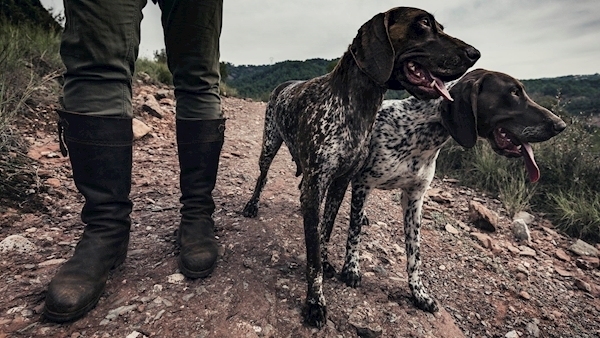
There are about 450,000 dogs in Ireland and, according to one guesstimate, over 500 million worldwide, writes Richard Collins.

Richard Collins: Man’s best friend our hunting partner

There are about 450,000 dogs in Ireland and, according to one guesstimate, over 500 million worldwide, writes Richard Collins.

These numbers include not just pets with definite owners, but waifs and strays living semi-wild around human habitations.

Most dogs, in some parts of the world, are vagrants without identifiable masters. Africans are shocked that Europeans allow dogs into our houses.

The wolf was the ‘mactíre’, ‘son of the countryside’; nor were his descendants, our four-legged friends, admitted to homes.

The origins of dog domestication are shrouded in obscurity. Writing in the journal Science last July, Cambridge Research Fellow Máire Ní Leathlobhair and colleagues traced the ancestry of dogs in America.

DNA analyses showed “the earliest New World dogs were not domesticated from north American wolves but likely originated from a Siberian ancestor”.

Dogs arrived in the New World, with immigrants traversing what is now the Bering Strait, at least 9,000 years ago. However, “after the arrival of Europeans, the native American dogs almost completely disappeared, leaving a minimal genetic legacy in modern dog populations”.

Archaeologists think dogs were bred from grey wolves in southwest Asia around 14,500 years ago.

Wolves, scavenging close to early human settlements, may have been tolerated for their waste-disposal services.

Perhaps children kept puppies as pets which, in due course, became companion animals, their value as security guards and co-operative hunters soon becoming evident.

Researchers from the University of Copenhagen have examined animal remains from an 11,500 year-old settlement in northeast Jordan.

They found conclusive evidence that the site was occupied year round and that dogs and people hunted together.

“Dogs were not kept at the fringes of the settlement, but must have been closely integrated into all aspects of day-to-day life”, writes zoo-archaeologist Lisa Yeomans, lead-author of a paper just published.

Modern wolf packs hunt large animals. We tend to assume, therefore, that the early teams of dogs and people targeted the likes of deer and wild boar.

However, the Copenhagen researchers made a discovery which challenges this; many bones of smaller animals, particularly those of hares, were found at the Jordanian site.

Hares were a source of meat and their bones were used to make beads.

“The surface of a digested bone can display a scalloped appearance”, the authors note.

Hydrochloric acid from a predator’s stomach widens the pores through which blood flows through a bone.

Many of those found in Jordan had passed through a digestive tract.

There were no signs of cut-marks on them, or evidence of burning, and the pieces were too large for humans to have swallowed them.

They must, therefore, have been eaten by dogs which roamed freely around the settlement, scavenging on discarded food.

Why were small animals hunted? Had larger ones become scarce?

The scientists think not. Catching small animals may, instead, be evidence of a change in hunting methods.

Like border collies herding sheep nowadays, dogs were employed to track and target individual hares and foxes, driving them into enclosures or nets.

If the Copenhagen scientists are right, our closest, and most enduring, animal friendship began as a utilitarian one.

Lisa Yeomans et al. Close companions: Early evidence for dogs in northeast Jordan and the potential impact of new hunting methods.

Journal of Anthropological Archaeology, 2019

More in this section

Revoiced

Newsletter

Had a busy week? Sign up for some of the best reads from the week gone by. Selected just for you.

Cookie Policy Privacy Policy Brand Safety FAQ Help Contact Us Terms and Conditions

© Examiner Echo Group Limited