Richard Collins: Humans shunned by many animals
“HELL is other people” declares a character in Sartre’s Huis Clos. According to Kaitlyn Gaynor of the University of California Berkeley, animals and birds are echoing that sentiment; they are shunning us increasingly. In addition to polluting and destroying their habitats, we are changing the behaviour and lifestyles of many wild creatures Gaynor’s team analysed the results of 76 studies on 62 species spread across six continents.
The research, just published in Science, suggests that encroaching human presence is forcing animals, such as deer, coyotes, wild boar and elephants, to remain hidden during the day. It’s not an entirely new finding; a 2012 paper described how tigers in India “offset their activity patterns to be much less active during the day when human activity peaked”. No wonder that, on a visit to India’s Ranthambore National Park, it took our wildlife guides four days to show us tigers.
In response to the presence of humans, wild creatures increased their nocturnality by a factor of 1.36, say Gaynor and her co- researchers. “Human activities of all kinds, including non-lethal pastimes such as hiking, seem to drive animals to make use of hours when we are not around,” they state.
The change “can result in marked shifts away from natural patterns of activity, with consequences for fitness, population persistence, community interactions and evolution”. Such changes “may also have ecosystem-level consequences”, they suggest.
“Species for millions of years have been adapting to diurnal activity, but now we’re driving them back into the night and may be driving natural selection,” Gaynor told the The New York Times.
Reptiles, once rulers of the planet, need the heat of the sun to warm their bodies. During the cool of the night, they must take to their beds. Humble mouse-like mammals first appeared during the age of the dinosaurs. Able to generate their own body heat, they could remain active by day and night. Then, 66m years ago, the notorious giant meteorite strike ushered in a nuclear winter. The cold-blooded fraternity lost out; warm-blooded mammals and birds inherited the Earth.
Are we humans a modern equivalent of that meteorite? In an increasingly crowded world, with wild creatures being marginalised and forced to operate under cover of darkness, is a worldwide form of artificial selection under way? Some species, unable to tolerate our presence, may not even manage to survive.
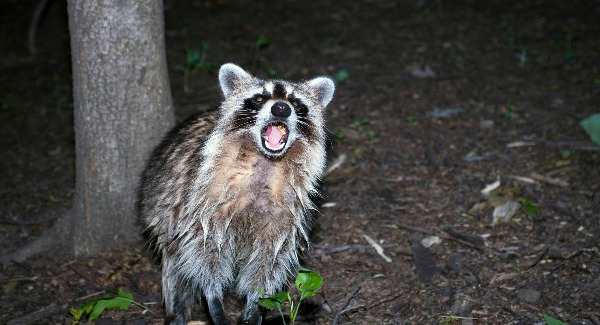
But how widespread is this rejection? Human presence may spell doom for some creatures but, for others, it’s a bonanza. Early this morning, two bold-as-brass young foxes ransacked my neighbour’s wheelie-bin in broad daylight. Herring gulls swooped down and joined in the mayhem, creating an un-holy mess. Once known as “seagulls”, these opportunists began venturing inland, following the plough to pick up creepy-crawlies and scavenge in town dumps. Now they have taken to raising their families on urban roof-tops. Those other squatters, swallows house martins and swifts, nested originally in caves and on cliff-faces. Racoons and grey squirrels, even peregrines, have adapted to city life.
Creatures either love us or leave us. Whooper swans give humans a wide berth, spending the winter on remote wetlands. Their cousins, the mute swans, see things differently; they have embraced us, setting up shop in towns and cities, even begging for handouts from the public.
Gaynor’s conclusions are disturbing. They imply that even benign human activities, such as hill-walking and cycling, may have negative impacts on wildlife. Are bird and whale watching activities also implicated?
Kaitlyn Gaynor et al. ‘The influence of human disturbance on wildlife nocturnality’. Science. 2018