Islands of Ireland: Time and tide wait for none
Among the more resonant placenames in Irish history is Killala Bay.
It evokes deep feelings of what might have been in an incipient republic inspired by the French and American revolutions which ended autocratic power.
On August 22, 1798, a French expedition of 1,000 men under the leadership of General Humbert landed near the village of Killala, Co Mayo, to assist in the United Irishmen uprising organised by Wolfe Tone and others.
The flotilla arrived too late to assist resistance in other parts of the country and ultimately it fizzled out. Plus ça change.
Killala is a wide bay shaped like a funnel, narrowing to meet the River Moy, which flows from 100km distant in the Ox Mountains in Co Sligo.
These are famous surfing waters and Enniscrone, Co Sligo on the east of the bay has some of the best waves in the country, if you are so inclined.
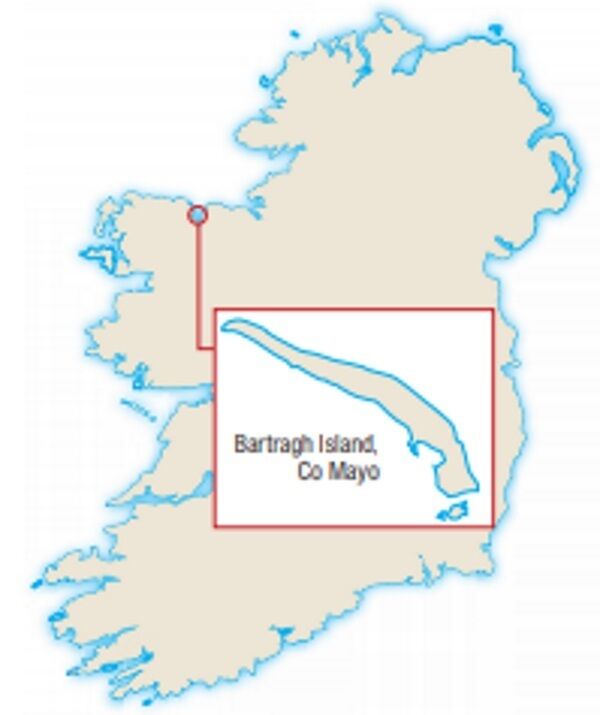
Bartragh Island, An Bheartrach, is the best known of the numerous Killala Bay islands and it acts like a cork in a bottle for the inrushing sea.
In fact it is the only barrier island in the country sheltering the coast from the pounding Atlantic.
Its neighbours, including Freaghillan, Ardillan, Bird Island, and Baunrosmore, are estuarine islands and benefit from the natural sea barrier.
Hectares of multi-coiled lugworms appear when the tide is sucked out to the ocean, making a uniform landmass of these mere scraps of islands.
The seas north of the island are hazardous and over the years have claimed many ships including a Spanish Armada vessel in 1588 and Swedish timber ships and yachts.
There is no ferry to this island of huge quiff-like sand-dunes but would-be picknickers can stroll across at low tide to explore for a few hours.
However, time and tide will not wait.
A measure of safety is provided by the sight of cars with trailers which follow narrow strips on the hardened sand to gather cockles, mussels, clams, or winkles.
Sheep meander through the islands. The island is about 3km in length and arcs northwest from Enniscrone golf club towards Killala village.
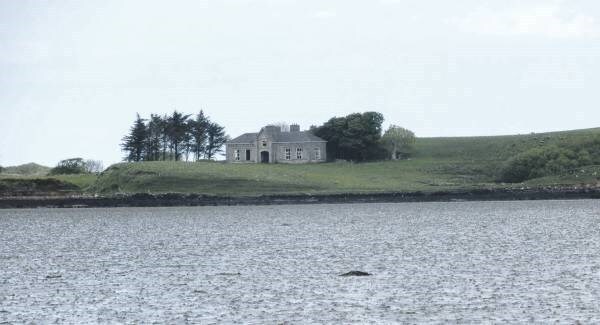
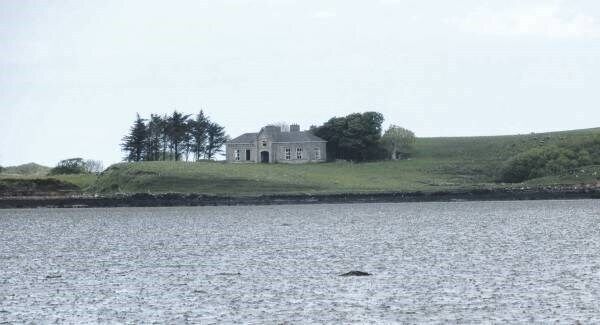
A focal point for visitors is the once-magnificent Bartragh House, which is the only house on the island.
It faces back to the mainland, recalling a lost grandeur or embellished past.
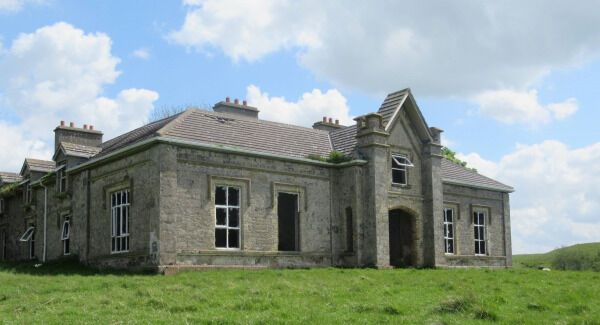
It looks striking to the shoreline visitor perhaps unaware of its floorless, roofless structure where crows throng the exposed beams and the helical staircase has collapsed.
The house was constructed by Charles Kirkwood in the 1830s. Kirkwood fought in the battle of Trafalgar with Admiral Nelson, according to research by author on Irish country houses David Hicks.
The 17-room mansion has some magnificent features, including a collonnaded portico, gothic arches and a courtyard.
Kirkwood married Henrietta Knox and the couple had five children. Kirkwood, however, went insane and died in a lunatic asylum in Dublin.
The island supported a population of 28 in 1841, the extra numbers accounted for by workers on the estate.
The house and island were passed to his descendants and his son was interred on the island when his time came. The family held on to the island until the 1950s, when it was sold.
Psychologist Mary Molloy bought Bartragh Island in 1989 and carried out extensive renovations to the house in the 1990s before an enforced sale saw her dream project of a natural health and education centre come to nought.
A lengthy court battle over ownership recently found in her favour.
British golfer Nick Faldo attempted to construct a golf links on the island in 2003. The house was subject to much vandalism in the last 20 years and is again a wreck.
Hicks writes in his blog on country houses that “the complacent attitude of the powers that be in Ireland allow our heritage to be degraded to a point that its eventual salvage is a lost cause”.
Faldo’s project also failed and the island was left to the redshank, curlew, ringed plover, brent geese, bar-tailed godwit, dunlin, and oystercatcher.
How to get there
Those walking to Bartragh need up-to-date tidal tables as access is of limited duration. Follow signs on the western approach to Killala.
Irish Country Houses: Portraits & Painters, David Hicks, Collins Press; davidhicksbook.blogspot.com

CONNECT WITH US TODAY



Be the first to know the latest news and updates