Exclusive: Munster CEO rejects badly run claims, warns club rugby is 'fragile'
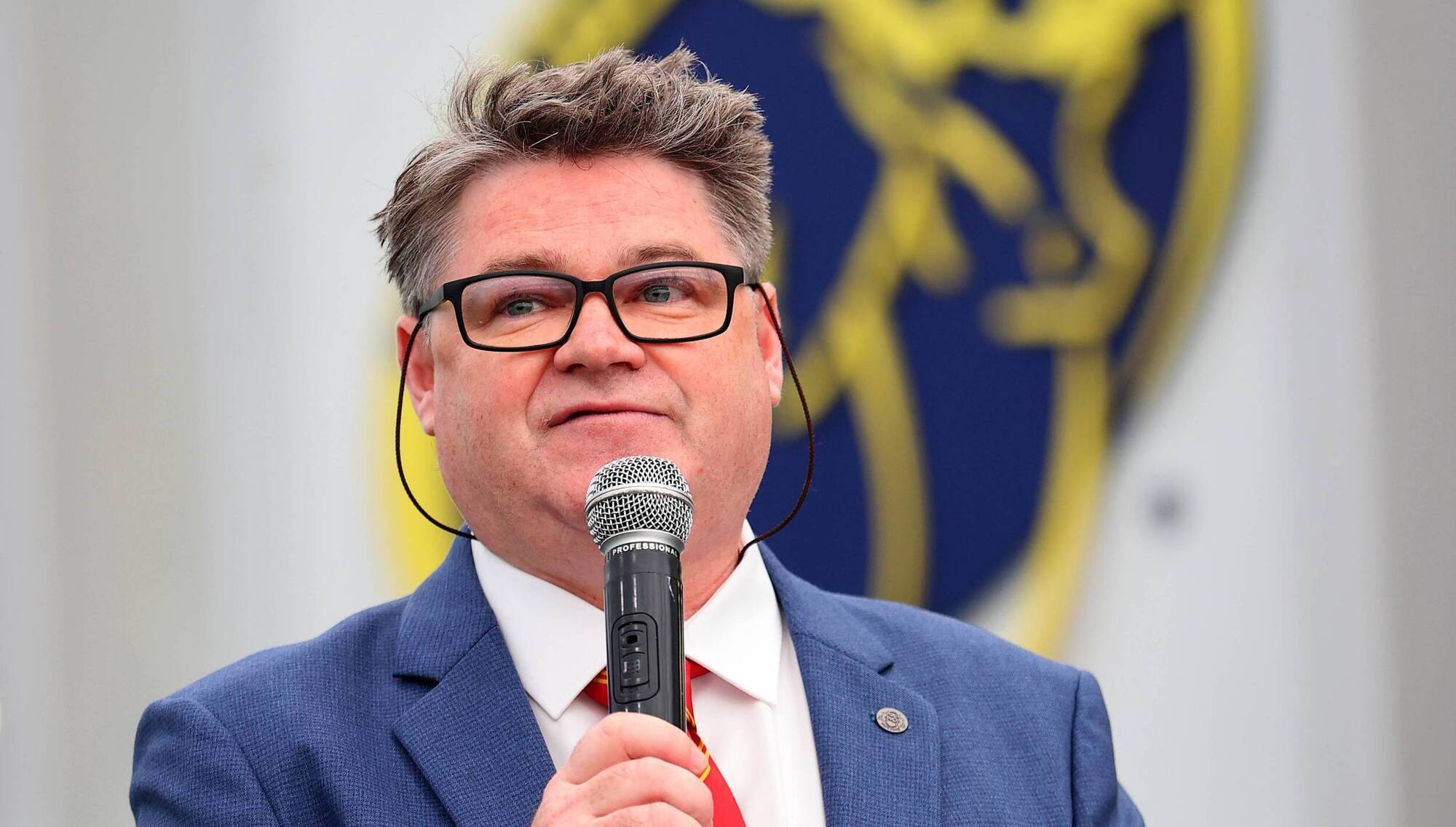
Munster Rugby CEO Ian Flanagan: “You can count on the fingers of one hand across the world, the clubs that are making money.” Pic: ©INPHO/Ryan Byrne
Ian Flanagan has rejected accusations Munster Rugby is badly run following the province’s decision to make redundancies. Rather, he argued professional club rugby as a whole “is a really fragile business model”.
The Munster Rugby CEO told the his organisation was not the only one in club rugby experiencing economic difficulties. He also maintained the province’s recent decision to offer voluntary redundancies and then enforce a “very limited” number of compulsory lay-offs, believed to be less than five members of staff, was the final piece of necessary cost-cutting measures.
Speculation is always swirling around Munster Rugby and no less so regarding potential redundancies, with rumoured numbers exceeding the total workforce of around 100 staff outside the protected professional rugby set-up.
Flanagan said: “We're very newsworthy. We're aware of that. And we take it as a great privilege because there's so many people interested in us, who support us.
“And that's why we get a lot of media commentary as well, because we sell newspapers or whatever the term is these days. But look, we fully understand we have an enormous community out there that's interested in us and behind us and when a significant proportion of that community is of the view that we've got something wrong, it's our job to listen and take that criticism and feedback on board. And that's absolutely what we're doing now.
Read More
“The voluntary redundancy piece is also a significant HR piece, which is obviously difficult for our people. We are a small organisation. The rugby operations on the island are all small businesses. We don't have hundreds and hundreds of people.
“Obviously, it's a confidential process with the individuals involved. There's very little legally we can say. But the numbers involved are very small, very limited.
“We have cost savings that we need to find. Club rugby is a really fragile business model, full stop, across the world, not just for us.
“And I fully understand there's a perception out there that we're badly run, that we're having a bad season and everyone else is doing fine. Now, let me be clear, the business model for club rugby is very stressed, very fragile, right across the board, right across the world.
“You can count on the fingers of one hand across the world, the clubs that are making money.”
The Munster CEO pointed the finger at current broadcast deals for both Champions Cup organisers EPCR and the URC as a root cause of the financial difficulties.
“The secret to every great sports tournament and sports league is a great broadcast deal, that's absolutely the case.
“We are all aware that the broadcast rights fees and the broadcast deals are in place for the two tournaments in which we compete, the EPCR tournament and the URC, those broadcast deals, we believe they should be much higher, but we don't control that. They're sold centrally and the market pays what the market is willing to pay.
“And that means that the revenue we generate by ourselves around our matchday and around our commercial programme is absolutely pivotal. But it's also the difference between us making money or losing money.
“But it's a real struggle. There isn't huge amounts of cash in the system for any of us. The only club league in the world with what I would judge to be a good or a fair TV deal is the Top 14 and the LNR. And again, there are reasons behind that. Canal Plus dropped French football, so had money to invest elsewhere. And the Rugby World Cup was coming up in France and there was a real impetus to invest in rugby to give France the best chance of winning the World Cup. So there were certain circumstances.
“The economics of international rugby are quite different, whereas we are absolutely reliant on playing games, making money on a matchday and growing our commercial programme.
“I think we do a good job in terms of the revenues we control ourselves. Obviously, in terms of the matchday piece, again, people will look at the weather. People will see how the team is playing. People will talk about kick-off times and all of those things that are out there that affect a matchday attendance.
“Our commercial programme is up there with best in class, I think. I think we've got an incredibly strong family and roster of commercial partners. I think we do a very good job for them. And I think the longevity and the strength of some of those relationships that have been in place for many years are testament to the fact that Munster rugby is delivering for our commercial partners as well. But it's a difficult business environment out there.”
Flanagan said there was an active pursuit ongoing for a naming rights partner for its new Cork Centre of Excellence at Virgin Media Park.
“We have several ongoing conversations with potential naming rights partners, but none are over the line yet. And that gives an indication that it's not a straightforward or easy business environment for conducting commercial deals and bringing money in that space.
“So the business model is a difficult business model to make work. What I will say is, we've kept in constant dialogue with all of our commercial partners over the last two months to keep them appraised, keep them in the loop. And they've all been understanding. And as I sit here today, we haven't lost a single commercial partner as a result of what's transpired.
“Now, going back to the rumours that are out there and everything, we're just managing our cost base like every other business is having to do at the moment. The numbers involved, and it's very challenging because we are a small operation, we are dealing with very small numbers of people and the fact is we found our cost savings elsewhere right across the board and we're growing our revenues to try and make up that gap in terms of the cost savings that we need to find to be a sustainable business.
“So we're not relying solely on redundancies to hit that number in terms of cost savings.”


CONNECT WITH US TODAY



Be the first to know the latest news and updates