Your essential guide to setting up your own hen-house
finds its housing, then chicken then egg - as she finds out what’s involved in setting up your very own hen-house.
Chickens, I discover, have ear-lobes. They purr and emit a curious egg-song (yeow!). Who wouldn’t love a feathered pal who keeps you fed with organic eggs?

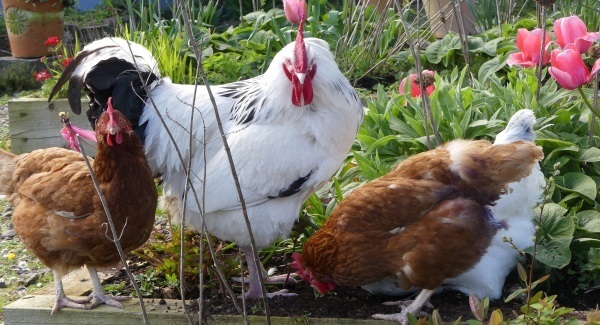
Still, keeping a flock year round? Ensure you know what you’re taking on. Visiting Alice Hatfield and her partner Darragh Mayne, at their exquisite thatched cottage near Knockanore, Co Waterford, the true host turned out to be their officious white Sussex rooster, Anton du Beak.
We sip tea, the flock gossiping beneath our bench, occasionally dodging the dart of a stiff beak aimed at a low swoop of fruit loaf.
“We started out with rescue chickens from a legal ‘chicken liberation day’ in Northern Ireland,” explains Darragh. “They were all Rhode Island reds, ratty-tatty bags of feather that had to be taught to drink normally, starting from an outstretched hand — it was very moving.
“Our rescues are all gone [chickens rarely get more than five years, rescues are deemed survivors at two]. We bought in, or reared, these five Sussex and Rhode Island red hybrids.”
“I don’t even eat eggs,” says Alice, laughing, “still, the chickens are not purely ornamental. There’s no greater pleasure than giving half a dozen eggs away to our friends and neighbours.
“We can count on one egg a day, per girl. Our hens are not clipped [flight feathers taken away on one side] — treat them right and they won’t go anywhere.”
Asked about the cons, the pair struggle, but they are hands-on bird keepers — with ducks peering outraged from behind the house, and fan-tailed doves wheeling overhead.
“You do need someone to let them out and in when you’re away, it’s true, and not everyone is comfortable around hens,” says Alice.
Can the rooster be aggressive?
“Anton’s an utter gentlemen with his ladies,” says Darragh, protectively, “but I have seen him wave his spurs at the cat when challenged.”
Other than that, they describe the twice-weekly clean out of the coop (when the hens are in) as “easy enough”, and the upside is producing nutritious guano for the raised flower beds.
“Every now and then you might have to treat a sick chicken,” says Alice, “give it a warm bath, rub its tummy if it’s egg-bound, but they really do seem to appreciate your help.
“We just had a prolapse fixed by the local vet who struggled to ask for a tenner. People are surprised we would bother for ‘just a chicken’.”
The scarlet-feathered patient plucks through the tulips, its rear a cloud of gentian violet spray, fresh from its ordeal.
“They do play havoc with the flowers,” says Darragh, as a plume of compostricochets from the roses, “but the damage is minimal.”
And the cost for the five feathered friends? They suggest about €10-€15 a week for hobby-feed depending on the weather and season. In summer their hens largely scratch out a living and the couple adapted a standard potting shed to a hen-house, adding a window and ramp.
They do have a commercial Eglu (see panel), which Alice says is well suited to a smaller garden. “What I adore about chickens is their character,” she says, “each one being so different.
“They are such relaxing company, their little sounds, the way they move. They sit with you in the garden, they choose to be with you, they are simply gorgeous.”
Andrew Beirne raises, shows, and sells chickens and ducks from his family’s yard in Fermoy, Co Cork. With over a dozen poultry houses, the air here is surprisingly fresh, the grass nibbled but verdant, and jewelled with familiar heavy chickens and exotic ‘light’ fowl — silver Seabright bantams, Crested and Whistling ducks, and gold laced Wyandottes.
Starting as a teen, Andrew recently picked up the first prize as the Irish Nationals for a light Sussex white hen. With over 300 exhibitions and pet poultry in his care, he says a primary mistake with first-time chicken owners is getting the chicken before the coop.
“It’s very important to get everything ready for your birds — the house, the feeder, the watering arrangements, and their roosting boxes.
“You’ll want them out in the fresh air for at least part of the day. Hens’ greatest enemy is their ability to sit in a tiny space like battery hens do, so they don’t need much room, but thrive best with some outdoor adventure.”
His coops are all adapted garden sheds with sleeping quarters, windows and doors placed depending on their tenants and the position in the yard. Despite extensive fencing around and inside coops, Andrew has had fox massacres and even had chickens nabbed through wire by athletic cats.
“I leave the predators alone if they leave us alone — they are just surviving too,” he says.
Andrew demonstrates how to gently, but firmly lift up a bird — “really, it’s the feet you need to be wary of, they can scratch and kick out, so once you have the legs, you’re fine”.

Does he handle his birds much? “For showing, I would hold a bird once a day for an hour for a few weeks — being tame for the judge is important.
“Hens are full of personality, but it does depend on the breed. There are individual characters within a flock and minor dramas.
“The ‘light’ breeds (fancies) are more sensitive and temperamental, but they can be fantastic layers too. English Cuckoo Maroons – enough, nasty bits of work!”(Even though he does own and clearly cherishes them.) What about those darling little bantams? “Great layers,” he whispers to me, “but so dull.”
Of the 80 birds Andrew would produce from January to May, (about 50/50 male to female), he deems about 10 hens suitable to breed from, and five of those 40 hens would have potential to show.
“I would sell the rest as pet quality for around €10-€15 point-of-lay birds from June forward. Only buy birds at 18-19 weeks, before that they are still too delicate to go to new homes.”
What breeds does he recommend for the starter hen keeper? “Light Sussex and Rhode Island reds for added colour and maybe some gold or silver laced Wyandottes for something special.
“Heavy breeds like the Sussex and Rhode Island reds are quiet, socialise well, and are easy to handle. Most hybrids have some leghorn in them somewhere.
“Breeders, classified ads, and poultry sales are all good sources for point-of-lay hens,” says Andrew, “and no, you don’t need a rooster. That’s a myth — unless you have very understanding neighbours and are yearning for the best alarm clock in the world.”
His best advice for a first-time hen owners?
“Go and talk to another poultry owner with a few years’ experience before doing anything.
“The fowl community, people keeping and breeding birds, are very generous with advice and generally delighted to help anyone get started.”