Resilient ravens show rare species reversal
According to the law of entropy, change occurs in only one direction, writes
You canât get coal back from cinders, nor is it any use crying over spilt milk. Everything is moving relentlessly towards a state of total disorder. The universe will cool to a uniform temperature everywhere. Sometime, in the far distant future, great heaps of amorphous âstuffâ, drifting silently in pitch-black darkness, will be all that remains of our world.
Evolution mirrors entropy in the way it proceeds; populations tend to fragment into races over time. Each line goes its separate way, most soon dying out. Others become species in their own right and then they too fragment. Does the opposite ever happen? Can divided sub-populations come back together and merge? âSpecies reversalâ, or âreticulate evolutionâ, is rare but Anna Kearns of the Smithsonian Genomics centre says two lineages of raven âhave been caught in the actâ of reuniting in north America.
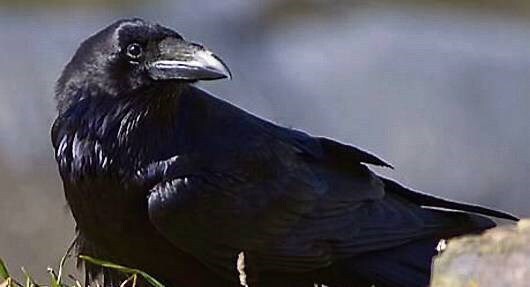
The common raven, the worldâs largest crow, exists on both sides of the Atlantic. Itâs not a migrant, so Old and New World ones donât encounter each other. Long separated by the ocean, and living in very different environments, each of the two populations developed its own unique characteristics. However, all common ravens alive today, including Irish ones, are deemed to belong to a single species.
Eighteen years ago, Kevin Omland of the University of Maryland began examining raven mitochondria. By studying these power sources of the cells, he hoped to find evidence that there had once been separate Old and New World raven types. Analysing data from hundreds of specimens, he managed to identify distinct lineages. It seems that, between one and two million years ago, the raven population split three ways. Each group followed its own evolutionary path, becoming a distinct species. The descendants of one of them, the white-necked raven, still live in Mexico and the southern US. Omland called the other two types âHolarcticâ ravens and âCalifornianâ ones. The Holarctics evolved in what are now Alaska Russia and Norway, while the Californians lived further south.
Two of Omlandâs research students, examining raven mitochondria in the southern US, found evidence that the Californian and Holarctic lines merged. The vagaries of ancient climate change brought the two groups back together. Instead of each one doing its own thing the two populations interbred.
They have been producing viable hybrids for âat least tens of thousands of yearsâ. This according to the authors, writing in Nature Communications, is the strongest evidence yet found of âspecies reversalâ.
These results are of special interest because we ourselves are products of âlineage fusionâ. Homo sapiens first appeared in Africa around 200,000 years ago. Itâs known that at least three other types of human were alive then. The Neanderthals roamed much of Europe and Asia until about 30,000 years ago. Remains of the less well-known Denisovans, who lived in Siberia, also date from that time. A third, even more mysterious, hominid has left traces in modern human DNA.
For reasons unknown, all of these other humans became extinct. Or did they? In a weird sense they didnât disappear, at least not completely. Analysis of our genome shows it contains chunks of DNA from all three of the other hominids. It seems that our ancestors, like those of the American ravens, interbred with their distant cousins. We too are composite beings.
Anna Kearns et al. âGenomic evidence of speciation reversal in ravensâ. Nature Communications. March 2018.