A little work in winter will pay off for your garden next year
I WAS listening to a gardener recently and he was saying how it was difficult to explain to students at the start of the year, during the cold and miserable months of January and February, that a small bit of work done then would result in such great results later in the year.
We were walking around a beautiful garden at the time, which was looking stunning thanks to the time of year, but also thanks to the Trojan and consistent work done by a team of committed gardeners. I suggested that he should perhaps take a different approach.
Show them the end result first and get them excited I said, why not bring them to this garden now, so that they can see what the work done next spring will achieve.
This was a garden that was full of ornamental beauty mixed with edible crops, veg and herbs and was alive with insect life, the bees and butterflies were everywhere. I think if he were to bring next year’s aspiring gardeners to look at landscapes like the one we were in, then he would have little problem getting the enthusiasm going.
Then, in the bleak winter months, that memory would be fresh in their mind and the understanding that seeds planted, would become fresh food on the kitchen table along with a garden full of flowers. So much easier to instil.
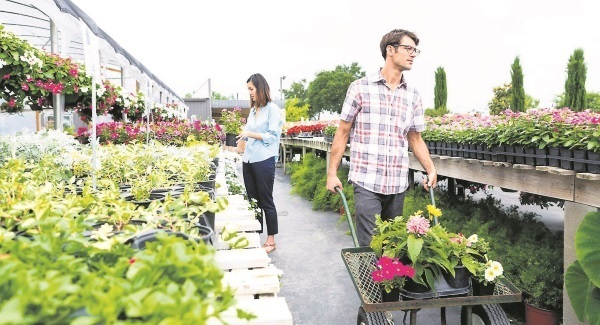
Now is the time to start planning and planting for next year. It’s the right time horticulturally, but also financially, as many garden centres and nurseries will be anxious to start moving summer and autumn stock that may be beginning to look a bit tired, and a bit too big for their pots.
Many don’t want the chore of having to repot and divide plants and then keep them through the winter for display and sale next year, and so they will be happy to offer sales and discounts over the next month or so.
These plants with a small bit of TLC will be absolutely fine for planting out, and then your garden will have the advantage of established plants over the winter, rather than new ones planted next spring.
Sedums such as Autumn Joy and Jose Aubergine are fabulous at this time of the year and are the type of plants that you should be bulking up on now, if the opportunity arrises, so too, phlox, verbena, hostas, astilbes and rudbeckia to name but a few.

Don’t be afraid to go for impact and if your garden has space, then plant three or five per variety for mass and not just individual specimens. Not everything will represent good value, however, do keep an eye out and make sure that the plants are free of disease and while symptoms of slug or caterpillar damage are nothing to worry about, you certainly don’t want to be bringing unwanted pests back to your garden, and in particular, I am talking about the dreaded vine weevil.
Damage caused by adult beetles is quite noticeable, as they munch away at the leaf margins in identifiable notches from the outside. The grubs though, are what cause the most damage and it’s not always noticeable before it’s too late.
They will find themselves a comfortable home in the centre of the rootball of the host plant and munch away unseen on the roots causing the plant to die. It’s during this time of the year that these grubs are growing and doing most damage below the soil surface.
If you see a plant available, and it seems loose in the pot, the crown looks likely to come away from the root system or the compost in the pot seems to be overly wet, and the plant not too healthy, then leave it behind.
I would recommend drenching the garden during the next few weeks with Supernemos. This is a mixture of microscopic parasitic nematodes which works as a biological control for Vine Weevil and many other soil borne grubs. It needs to be used when soil temperatures are above 10 degrees, so use it before the end of September, is my advice.
The soils needs to be wet for these little neamtodes to move around and get to the vine weevil grubs, so water the area well a day before application and again afterwards. Supernemos works on plants that are growing in pots or grobags, as well as in the open ground and again, a drenching of new, shop-bought stock a day or two before planting out, would be no harm at this time of the year.
FOODIE FORAGING COURSE
Fancy finding food for free? The take yourself off to Ballymaloe in East Cork on Saturday, September 23, for a day of autumn foraging with Darina Allen.

In just one day, you’ll learn how to identify and use over 40 wild food plants, flowers, seaweeds and shellfish in season: Rosehips, blackberries, watercress, sloes, carrigeen, mussels, sweet chestnuts and maybe a few edible mushrooms, depending on the weather.
But apart from the skill of identifying wild foods accurately, one needs to know what to do with them in the kitchen. So after a light lunch, you will spend the rest of the day with Darina, learning how to prepare your foraged harvest.
The course is priced at €195 and more details can be found at cookingisfun.ie/cookery-courses/course-details/900387/Autumn-Foraging-with-Darina-Allen
CONNECT WITH US TODAY



Be the first to know the latest news and updates